Hi-vis clothing in Swansea
Last updated
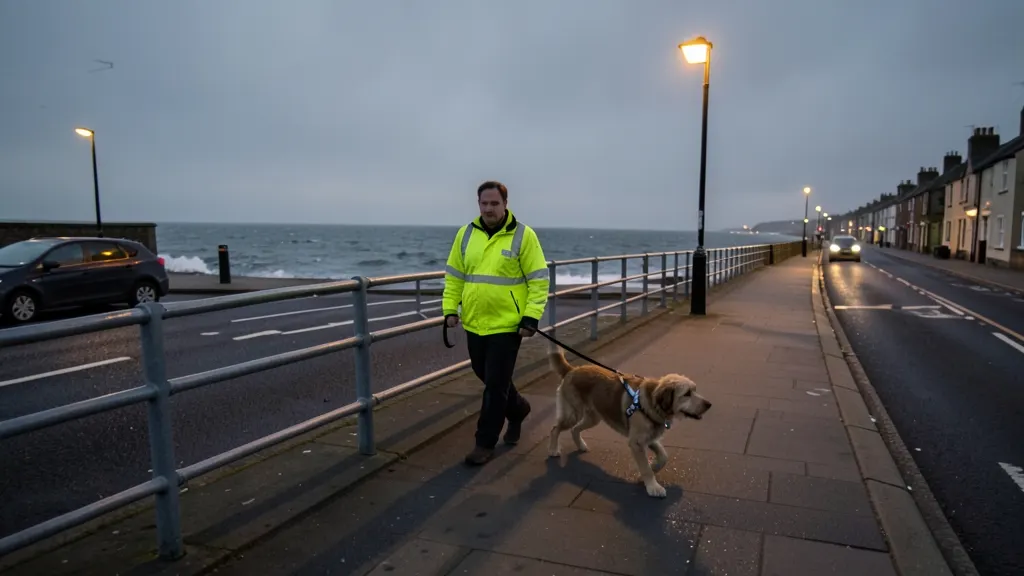
Swansea sits along Swansea Bay in south-west Wales, a city of around 238,500 people (2021 census, Swansea principal area) with the Gower Peninsula inside its boundaries. It grew as a centre for metals and mining, especially copper, and has since moved towards a post-industrial, service sector economy. That history matters for hi-vis clothing, because the working culture and the commuting patterns here grew up around industry and the roads that serve it. Today the city combines busy urban streets, the M4 corridor to the north and a stretch of coast that pulls people outdoors all year round.
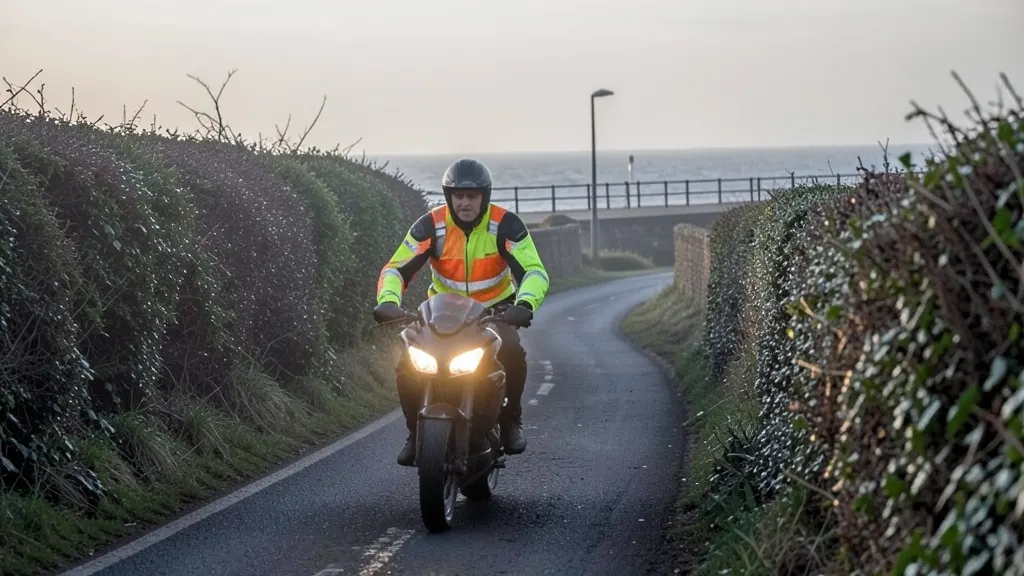
Why visibility matters in Swansea
The daylight figures do the talking. On the winter solstice in Swansea, sunrise is at 08:19 and sunset is at 16:08, giving 7 hours and 49 minutes of daylight. There are 119 days a year here when sunset comes before half past five in the evening or sunrise after quarter to eight in the morning, so a normal commute is partly in the dark. When the clocks go back on 25 October 2026, sunset in Swansea that day is at 17:01, and from there the evenings close in quickly.
If you leave for work in the dark and come home in the dark, you share the roads with drivers who are also dealing with low light, rain and glare. That is true whether you ride a motorcycle, walk the dog before work or fit a run in after the school run. A hi-vis jacket is the simplest way to make sure you are seen.
What this guide covers
We have put together themed pages for the three groups of hi-vis users who write to us most often from this part of Wales:
- Hi-vis for motorcyclists in Swansea. Riders heading out towards the Gower Peninsula and the surrounding countryside cover long distances on fast roads as well as narrow lanes, and side visibility is a real issue. Our motorcycle page covers what to look for in a riding jacket.
- Hi-vis for dog walking in Swansea. The bay and coastal paths are well used by dog walkers, and Clyne Valley Country Park runs from Blackpill to Gowerton, giving plenty of traffic-free routes alongside roads and cycleways. We look at jackets for walkers and dogs.
- Hi-vis for runners in Swansea. The seafront path is popular with runners, and the Swansea Bay cycle route runs from the Maritime Quarter to Knab Rock near Mumbles Pier, so runners share space with cyclists. Our running page covers lightweight options, and there is more in Hi-vis jackets for running: how to choose.
General hi-vis guidance for Swansea
A few principles apply whatever you are doing. The Highway Code makes the case plainly. Rule 3 advises helping other road users to see you, and notes that in the dark reflective materials such as armbands, sashes, waistcoats, jackets or footwear can be seen by drivers using headlights up to three times as far away as non-reflective materials. Rule 17 says simply that at night you should wear something reflective. Fluorescent colours work best in daylight and poor light, while reflective strips and panels are what catch headlights after dark. A good jacket gives you both, and the right choice depends on which of those conditions you spend most time in.
If you are choosing kit for work rather than leisure, standards come into play. EN ISO 20471 has three classes. Class 1 requires a minimum fluorescent background area of 0.14 square metres, class 2 requires 0.50 square metres and class 3 requires 0.80 square metres, with minimum retroreflective areas of 0.10, 0.13 and 0.20 square metres respectively. Class 3 is the highest class. Under the Personal Protective Equipment at Work Regulations 1992, employers must ensure suitable PPE is provided to workers exposed to a risk, and since 6 April 2022 those duties also cover limb (b) workers, with the employer providing the PPE free of charge.
Whatever class you pick, look after the garment. HSE guidance says reusable PPE must be cleaned and kept in good condition, and that hi-vis jackets, trousers and coveralls must be cleaned regularly. Muck from coastal walks, sea salt and winter grime all dull the fabric and the reflective bands, so wash hi-vis on the gentle cycle the label recommends and never tumble dry unless the instructions say otherwise.
Related reading
If you want to widen the picture, Hi-vis jacket Wales: a regional guide sets Swansea in a Welsh context, and Motorcycle hi vis jackets: myths and facts tackles some common misconceptions about what riders wear. For walkers caught in the rain, Waterproof hi vis jackets: myths and facts is worth a read, and Winter hi vis jackets: a practical buyer's guide covers the coldest months. Dog owners may also find Hi-vis jackets for dog walking: how to choose useful alongside our local page.
Swansea at a glance
- Nation: Wales
- Region: Wales
- Population: 238500
| Measure | Time |
|---|---|
| Sunrise on the winter solstice | 08:19 |
| Sunset on the winter solstice | 16:08 |
| Daylight on the winter solstice | 7h 49m |
| Sunset when the clocks go back (2026-10-25) | 17:01 |
| Days a year with a dark commute | 119 |
Frequently asked questions
Is a hi-vis jacket enough to stay visible on Swansea's roads at night?
A fluorescent hi-vis jacket works well in daylight and poor light, but after dark it is the reflective material that matters. Reflective armbands, sashes, waistcoats, jackets or footwear can be seen by drivers using headlights up to three times as far away as non-reflective materials, according to Highway Code Rule 3. A jacket with good reflective panels plus a light or torch gives you the best cover.
Do motorcyclists in Swansea legally have to wear hi-vis?
No law requires motorcyclists to wear hi-vis clothing, but the Highway Code is clear that riders should make themselves as visible as possible. Rule 86 suggests fluorescent clothing or strips to be seen from the side as well as front and rear, and Rule 87 says that when riding in the dark, motorcyclists should wear reflective clothing or strips.
How dark does Swansea get in winter?
On the winter solstice in Swansea, sunrise is at 08:19 and sunset is at 16:08, giving 7 hours and 49 minutes of daylight. There are 119 days a year when sunset comes before half past five in the evening or sunrise after quarter to eight in the morning, so a typical commute happens partly in the dark.
What do the EN ISO 20471 classes mean when choosing a hi-vis jacket?
The standard has three classes. Class 1 requires at least 0.14 square metres of fluorescent background material and 0.10 square metres of retroreflective material, class 2 requires 0.50 and 0.13, and class 3, the highest, requires 0.80 and 0.20. For casual use such as dog walking or running, class 1 or 2 is usually sufficient; for work near traffic, class 2 or 3 is the safer bet.
How should I care for a hi-vis jacket used on coastal walks?
HSE guidance says hi-vis jackets, trousers and coveralls must be cleaned regularly and kept in good condition, and that workers must report any loss, destruction or obvious defect. Salt, sand and mud from coastal paths dull both the fluorescent fabric and the reflective bands, so wash the jacket following the label's instructions and store it dry rather than in a damp porch or boot.