Hi-vis clothing in Sunderland
Last updated
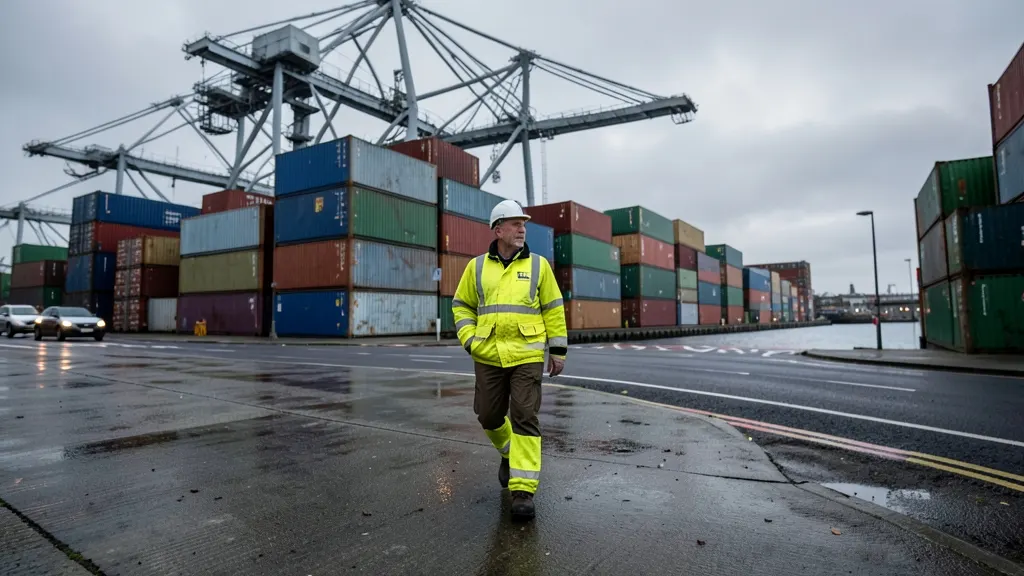
Sunderland sits at the mouth of the River Wear on the North Sea, a port city in North East England with a working waterfront that has shaped daily life for generations. The built-up area is home to 168,315 people, rising to 274,200 across the wider borough according to the 2021 census. After the decline of traditional industries in the late 20th century, the area became an automotive building centre, and Nissan opened its UK factory in Washington in 1986, a plant that has since become the UK's largest car factory.
That industrial background means plenty of outdoor work: docksides, factory grounds, logistics yards and industrial estates. It also means short winter days. On the winter solstice in Sunderland, sunrise is at 08:28 and sunset is at 15:39, giving just 7 hours and 11 minutes of daylight. In total there are 126 days a year when sunset comes before half past five in the evening or sunrise after quarter to eight in the morning, so a normal commute is partly in the dark. When the clocks go back on 25 October 2026, sunset in Sunderland that day is at 16:43, and the dark evenings settle in quickly after that.
What this guide covers
We have split our Sunderland coverage into three practical themes.
Work and site wear. The port, the automotive plant and the surrounding industrial estates provide many outdoor jobs, and hi-vis is often a requirement rather than a choice. Our page on hi-vis for the school run and children in Sunderland covers family journeys, while workplace topics are handled in our general workwear guide. If you work outdoors in the city, see High visibility clothing workwear: choosing a hi vis jacket.
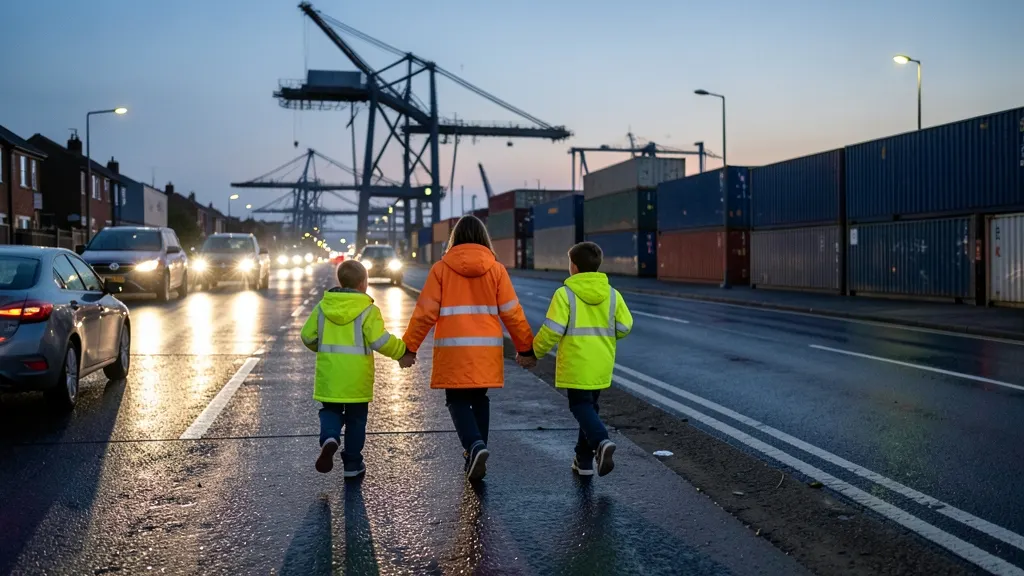
Dark winter commutes. With over a hundred days a year involving a commute at least partly in the dark, pedestrians, cyclists and motorcyclists all benefit from reflective kit. Our page on hi-vis for dark winter commutes in Sunderland goes into detail, and our guide to winter hi vis jackets: a practical buyer's guide helps with choosing something warm as well as bright.
The school run and children. Many school journeys in the city use busy suburban roads, and children are harder for drivers to spot than adults. Our dedicated page on the school run looks at what works for younger walkers and cyclists.
General hi-vis guidance that applies here
Two kinds of material do different jobs. Fluorescent colours, usually yellow or orange, help drivers see you in daylight and poor light such as dusk and overcast weather. Retroreflective strips only shine when a light source hits them, so they work best after dark under headlights. A good jacket for Sunderland conditions combines both, because a commute that starts in daylight will often end in the dark during winter.
For workers, EN ISO 20471 sets three classes of garment. Class 1 has a minimum of 0.14 square metres of fluorescent background material, class 2 requires 0.50 square metres and class 3 requires 0.80 square metres, with minimum retroreflective areas of 0.10, 0.13 and 0.20 square metres respectively. Class 3 is the highest class and suits the riskiest environments, such as working near fast-moving traffic on the A19, the dual carriageway running north to south west of the city, crossing the River Wear at Hylton. Under the Personal Protective Equipment at Work Regulations 1992, employers must ensure suitable PPE is provided to workers exposed to a risk, and since 6 April 2022 these duties also cover limb (b) workers, with the employer providing the PPE free of charge. HSE guidance adds that reusable hi-vis garments must be cleaned regularly and kept in good condition, and workers must report any loss or obvious defect.
For anyone on the road rather than on site, the Highway Code is the key reference. Rule 3 advises helping other road users to see you, noting that reflective materials such as armbands, sashes, waistcoats, jackets or footwear can be seen by drivers using headlights up to three times as far away as non-reflective materials. Rule 59 makes the same point for cyclists: light-coloured or fluorescent clothing helps in daylight and poor light, while reflective clothing or accessories such as belts, arm bands and ankle bands increase visibility in the dark. Rule 60 requires a white front light and red rear light lit at night, plus a red rear reflector. Motorcyclists are covered too. Rule 86 suggests fluorescent clothing or strips to be visible from the side as well as front and rear, and Rule 87 advises wearing reflective clothing or strips when riding in the dark.
Where to read next
Alongside the Sunderland pages above, our wider regional guide at Hi-vis jacket North East England: local guide puts the city in context, covering the same short winter days and busy trunk roads across the region. Cyclists crossing the city, perhaps using the Keel Crossing, the pedestrian and cycle bridge constructed between 2023 and 2025, will find specific advice in hi-vis jackets for cycling: a buyer's guide. Families walking through parks such as Mowbray Park, Roker Park or Barnes Park, or heading out to Herrington Country Park opposite Penshaw Monument at weekends, can also benefit from reflective strips on coats and bags during evening trips home.
If your jacket needs to cope with North Sea drizzle as well as darkness, waterproof hi vis jackets: myths and facts explains what waterproof ratings mean and where reflective panels survive repeated washing. And for children, kids hi vis jackets: myths and facts tackles common misconceptions about sizing, colours and durability.
Whatever your reason for being outdoors in Sunderland, the principle is the same. Wear fluorescent material for daytime visibility, reflective material for after dark, and check your kit regularly for grime and worn strips. A jacket that looked bright when new loses effectiveness if the retroreflective bands are scuffed or dirty.
Sunderland at a glance
- Nation: England
- Region: North East England
- Population: 168315
| Measure | Time |
|---|---|
| Sunrise on the winter solstice | 08:28 |
| Sunset on the winter solstice | 15:39 |
| Daylight on the winter solstice | 7h 11m |
| Sunset when the clocks go back (2026-10-25) | 16:43 |
| Days a year with a dark commute | 126 |
Frequently asked questions
What class of hi-vis jacket do I need for work in Sunderland?
It depends on your risk environment. EN ISO 20471 class 2, with at least 0.50 square metres of fluorescent material, is common for many site and industrial roles. Class 3, with at least 0.80 square metres of fluorescent background and 0.20 square metres of retroreflective material, suits the highest-risk settings such as working near fast traffic. If in doubt, ask your employer, since the Personal Protective Equipment at Work Regulations 1992 place the duty on them.
How dark does Sunderland get in winter?
On the winter solstice, sunrise is at 08:28 and sunset is at 15:39, giving 7 hours and 11 minutes of daylight. There are 126 days a year when sunset comes before half past five in the evening or sunrise after quarter to eight in the morning, so a normal commute is partly in the dark.
Is a hi-vis jacket enough for cycling at night, or do I need lights?
A jacket helps but lights are a legal requirement. Highway Code Rule 60 says a cycle must have a white front light and a red rear light lit at night, plus a red rear reflector. Rule 59 adds that fluorescent clothing helps in daylight and poor light, while reflective clothing or belt, arm and ankle bands increase visibility in the dark.
Does my employer have to provide hi-vis clothing?
If you are exposed to a health and safety risk at work, the Personal Protective Equipment at Work Regulations 1992 require your employer to provide suitable PPE unless the risk is controlled by other means. Since 6 April 2022 this also covers limb (b) workers, and the employer must provide the PPE free of charge.