Hi-vis clothing in Stoke-on-Trent
Last updated
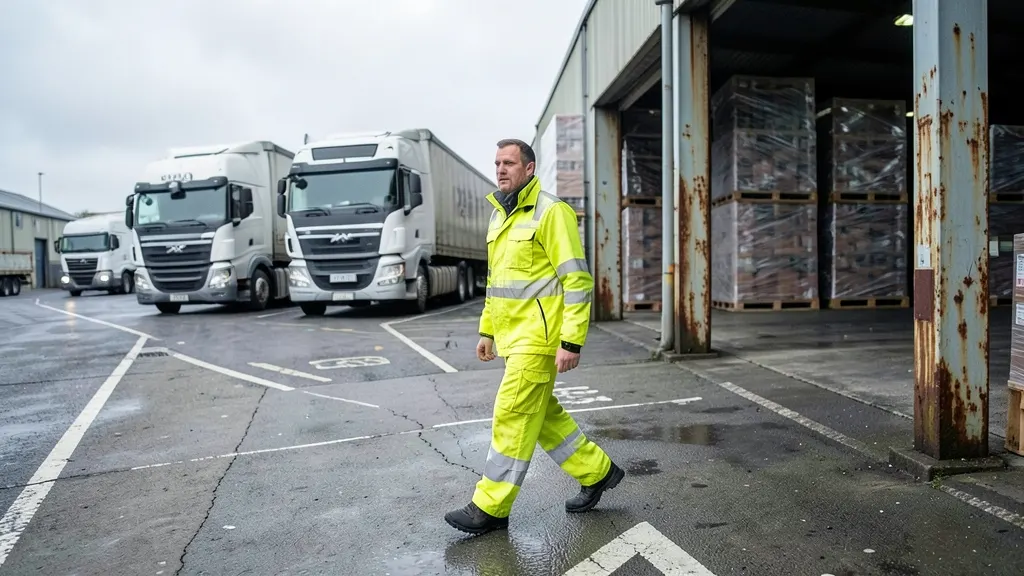
Stoke-on-Trent, in the West Midlands, is a city built on industry. Industrial-scale pottery manufacturing has shaped the place since the 17th century, and while the kilns of that era have largely gone, the city remains a centre for service industries and distribution centres. With an estimated population of 259,965 in 2025, a great many local people work in warehouses, depots and workshops where high visibility clothing is part of the daily kit.
The city's layout adds to the need to be seen. It was formed from the federation of six towns in 1910, and Tunstall, Burslem, Hanley, Stoke, Fenton and Longton all run along the A50. The A500 links the area to the M6 at junctions 15 and 16, and the A50 connects the M6 and the M1, so heavy traffic passes through and around the city all day. Add the short winter days and the case for hi-vis becomes clear. On the winter solstice, sunrise in Stoke-on-Trent is at 08:19 and sunset at 15:53, giving just 7 hours and 34 minutes of daylight. There are 122 days a year here when sunset comes before half past five in the evening or sunrise after quarter to eight in the morning, which means a normal commute is partly in the dark.

What this guide covers
This hub pulls together the situations where visibility matters most in Stoke-on-Trent, and links to detailed pages for each one.
Work and site wear. Warehousing and distribution still employ many local people, and site work often calls for certified hi-vis. Our page on high visibility clothing workwear: choosing a hi vis jacket explains the classes and how to pick the right garment.
Motorcycling. The city lies near the uplands of the Peak District to the north-east, and riders heading for those hills need to be seen on rural roads as well as urban ones. See Hi-vis for motorcyclists in Stoke-on-Trent for a local look at the topic, and our general page on motorcycle hi vis jackets: myths and facts for the wider picture.
The school run. With six towns strung along a busy corridor, many school journeys cross main roads in low light. Our page on Hi-vis for the school run and children in Stoke-on-Trent covers what helps, and the general guide to kids hi vis jackets: myths and facts answers common questions.
Stoke-on-Trent also has plenty of green space and waterways where visibility matters. Each of the six towns has at least one park, Burslem Park is one of the largest registered Victorian parks in the UK, and Park Hall Country Park in Weston Coyney is a national nature reserve. The Trent and Mersey Canal sees traffic of some 10,000 boats a year, and the Caldon Canal branches off at Etruria, so towpath walking and cycling are popular. National Cycle Route 5 runs from Birmingham to Stoke-on-Trent and on to Chester, bringing cyclists through the area.
Hi-vis guidance that applies whatever you are doing
A few principles hold true across work, riding and the school run.
Match the garment to the standard you actually need. EN ISO 20471 has three classes. Class 1 requires a minimum fluorescent background area of 0.14 m2, class 2 requires 0.50 m2, and class 3 requires 0.80 m2. The minimum retroreflective areas are 0.10, 0.13 and 0.20 m2 respectively. Class 3 is the highest, and it is what you should expect on the busiest sites and fastest roads. If you work near railways, note that SATRA, a UK PPE testing body, states that rail standard RIS-3279-TOM requires an orange colour and garments meeting at least class 2 of EN ISO 20471.
Know your rights at work. Under the Personal Protective Equipment at Work Regulations 1992, employers must ensure suitable PPE is provided to workers exposed to a risk to health or safety, unless the risk is adequately controlled by other means. Since 6 April 2022 those duties also cover limb (b) workers, and the employer must provide the PPE free of charge.
Look after the garment. HSE guidance says reusable PPE must be cleaned and kept in good condition, and that hi-vis jackets, trousers and coveralls must be cleaned regularly. Workers must report any loss, destruction or obvious defect. A grubby yellow jacket that has lost its reflective band is not doing its job, whether the wearer is a forklift driver or a parent on the pavement.
Respect the Highway Code. Rule 3 advises helping other road users to see you, and notes that in the dark reflective materials such as armbands, sashes, waistcoats, jackets or footwear can be seen by drivers using headlights up to three times as far away as non-reflective materials. Rule 17 asks pedestrians to wear something reflective at night. Rule 59 recommends light-coloured or fluorescent clothing for cyclists in daylight and poor light, and reflective clothing or accessories in the dark, while Rule 60 requires a white front light, a red rear light and a red rear reflector after dark. For motorcyclists, Rule 86 suggests fluorescent clothing or strips to be visible from the side as well as front and rear, and Rule 87 asks for reflective clothing or strips when riding in the dark.
Think about the seasons. With the clocks going back on 25 October 2026, when sunset in Stoke-on-Trent is at 16:51, the dark evenings arrive early and stay for months. A waterproof or insulated hi-vis jacket earns its keep here. Our guides to waterproof hi vis jackets: myths and facts and winter hi vis jackets: a practical buyer's guide cover the options.
Where to go next
For a wider view of visibility across the region, start with Hi-vis clothing in the West Midlands: a regional guide. Then dive into the Stoke-on-Trent pages for work, riding and the school run, along with the general jacket guides linked above.
Stoke-on-Trent at a glance
- Nation: England
- Region: West Midlands
- Population: 259965
| Measure | Time |
|---|---|
| Sunrise on the winter solstice | 08:19 |
| Sunset on the winter solstice | 15:53 |
| Daylight on the winter solstice | 7h 34m |
| Sunset when the clocks go back (2026-10-25) | 16:51 |
| Days a year with a dark commute | 122 |
Frequently asked questions
What class of hi-vis jacket do I need for warehouse work in Stoke-on-Trent?
It depends on your risk assessment, but many sites and distribution centres ask for at least class 2 under EN ISO 20471, which requires a minimum fluorescent background area of 0.50 m2 and 0.13 m2 of retroreflective material. Class 3, with at least 0.80 m2 of fluorescent background and 0.20 m2 of retroreflective material, is the highest class and suits the fastest roads and highest-risk sites. Your employer must provide suitable PPE free of charge under the Personal Protective Equipment at Work Regulations 1992.
Is a hi-vis jacket useful on dark winter commutes in Stoke-on-Trent?
Yes. There are 122 days a year here when sunset comes before half past five in the evening or sunrise after quarter to eight in the morning, so many commutes are partly in the dark. Rule 3 of the Highway Code notes that reflective materials can be seen by drivers using headlights up to three times as far away as non-reflective materials.
Do motorcyclists in Stoke-on-Trent have to wear hi-vis?
There is no legal requirement to wear hi-vis on a motorcycle, but the Highway Code strongly encourages it. Rule 86 says riders should make themselves as visible as possible from the side as well as the front and rear, for example with fluorescent clothing or strips, and Rule 87 asks for reflective clothing or strips when riding in the dark.
What hi-vis is best for children on the school run?
Reflective strips and bright fluorescent backgrounds both help, but they work in different conditions. Fluorescent colours are most effective in daylight and poor light, while reflective material works best in the dark under headlights. With the clocks going back on 25 October 2026, when sunset in Stoke-on-Trent is at 16:51, children walking home in winter will benefit from reflective details.
How should I care for a hi-vis jacket?
HSE guidance says reusable PPE must be cleaned and kept in good condition, and that hi-vis jackets, trousers and coveralls must be cleaned regularly. Workers must report any loss, destruction or obvious defect. Washing the garment according to its label and replacing it when the fluorescent or reflective material wears out keeps it doing its job.