Hi-vis clothing in Southampton
Last updated
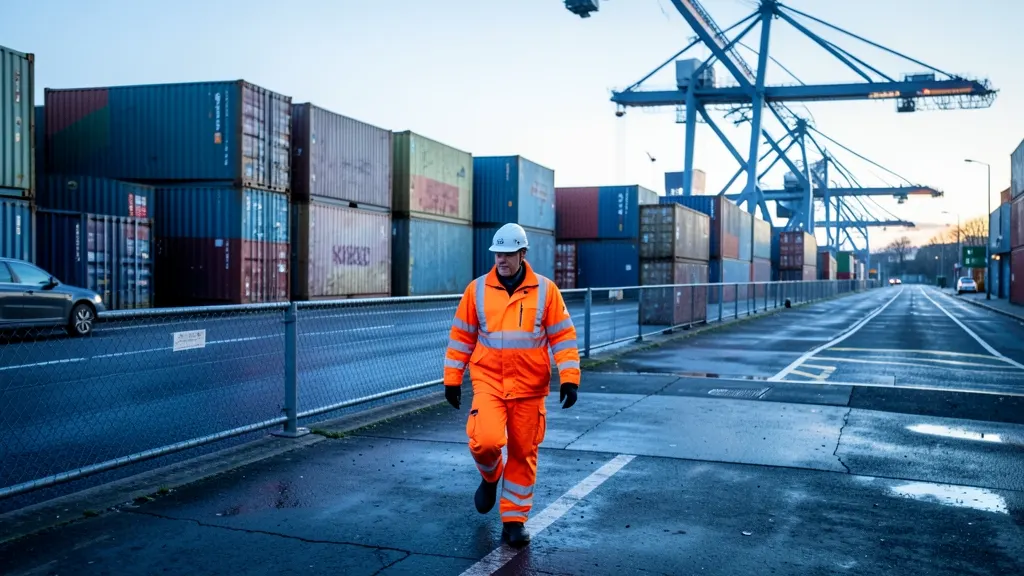
Southampton is a port city in Hampshire with a population of 248,922 at the 2021 census. Its economy is tied closely to the water. The city has the second largest container terminal in the UK and the busiest cruise terminal in the country, with cruise passenger numbers reaching 1.9 million in 2019. The University of Southampton is another notable employer. That mix of dockside work, logistics and a large student population adds up to a lot of people outdoors at either end of the day.
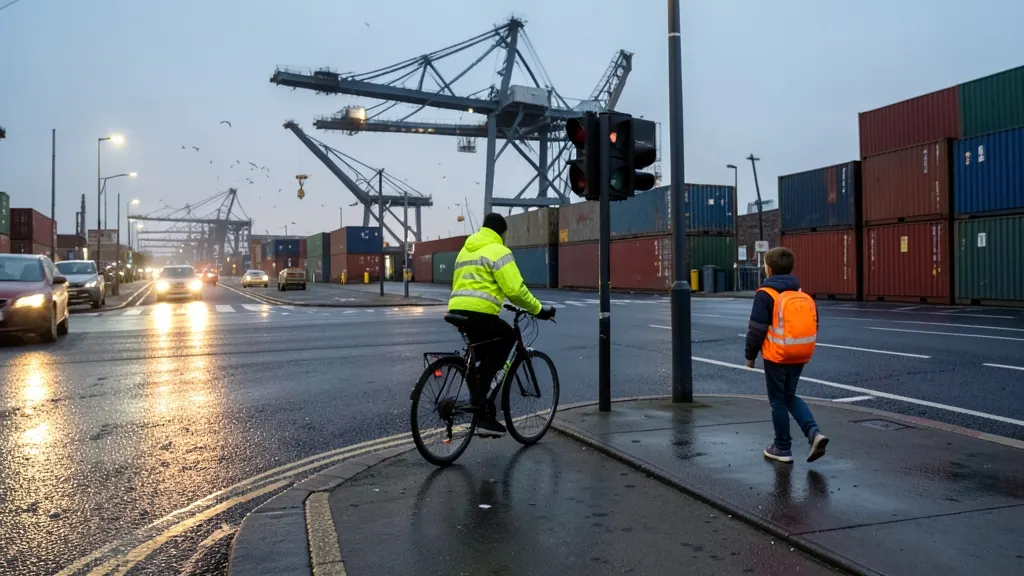
Daylight matters here more than many people realise. On the winter solstice in Southampton the sun rises at 08:05 and sets at 16:01, giving 7 hours and 56 minutes of daylight. There are 118 days a year when sunset comes before half past five in the evening or sunrise after quarter to eight in the morning, which means a normal commute is partly in the dark. The clocks go back on 25 October 2026, when sunset in Southampton is at 16:53, so the dark evenings arrive early even before midwinter. If you work shifts at the terminal, cycle to campus or walk children to school, there will be long stretches of the year when other people need to be able to see you.
What this guide covers
This page is the hub for Southampton. We have three themed pages for the city:
- Hi-vis clothing for work and site wear in Southampton, covering the port, the cruise terminal and the logistics jobs around them
- Hi-vis for cycling and commuting in Southampton, for commuters and students riding between home, campus and the city centre
- Hi-vis for the school run and children in Southampton, for families navigating busy residential streets at drop-off and pick-up times
Each page goes into the details for its own situation. This hub gives you the shared principles first.
Hi-vis that works across the board
The most common hi-vis garment is the jacket, and it is worth understanding what you are buying. The standard behind high visibility clothing is EN ISO 20471, which has three classes. The classes are based on how much fluorescent background material and retroreflective material a garment carries. Class 1 needs at least 0.14 m2 of fluorescent background and 0.10 m2 of retroreflective material, class 2 needs 0.50 m2 and 0.13 m2, and class 3, the highest, needs at least 0.80 m2 of fluorescent material and 0.20 m2 of retroreflective material.
The difference between the two materials is the heart of the matter. Fluorescent yellow, orange and pink fabrics help drivers see you in daylight and poor light. Retroreflective bands only do their job in headlights or other direct light at night, bouncing the light back towards its source. A bright yellow jacket with no reflective banding is not much use on an unlit lane after dark, and reflective strips on a plain black jacket do nothing at midday. The best garment for a Southampton winter, when you may set off in the dark and come home in the dark, has both in generous amounts.
Some roles have extra requirements. If you work on or near the railways, the rail standard RIS-3279-TOM requires an orange colour and garments meeting at least class 2 of EN ISO 20471, according to SATRA, a UK PPE testing body. If your hi-vis is provided by an employer, it counts as personal protective equipment. Under the Personal Protective Equipment at Work Regulations 1992, employers must ensure suitable PPE is provided to workers exposed to a risk to their health or safety, unless that risk is adequately controlled by other means. Since 6 April 2022 those duties also cover limb (b) workers, and the employer must provide the PPE free of charge.
Looking after hi-vis extends its life. HSE guidance says reusable PPE must be cleaned and kept in good condition, and hi-vis jackets, trousers and coveralls must be cleaned regularly. Fabric caked in grime or mud loses both fluorescence and reflectivity. Workers must report any loss, destruction or obvious defect, so a torn jacket gets replaced rather than patched and forgotten. The same logic applies at home: wash your child's coat and your cycling jacket by the label instructions and replace them when the reflective strips start peeling.
For anyone on the roads rather than a site, the Highway Code is the reference point. Rule 3 advises helping other road users to see you, and notes that in the dark reflective materials such as armbands, sashes, waistcoats, jackets or footwear can be seen by drivers using headlights up to three times as far away as non-reflective materials. Rule 59 says light-coloured or fluorescent clothing can help other road users see a cyclist in daylight and poor light, while reflective clothing or accessories such as belts and arm or ankle bands can increase visibility in the dark. Rule 60 requires a cycle used at night to have white front and red rear lights lit and a red rear reflector, whatever you are wearing. Lights and hi-vis do different jobs and you need both.
Where to go next
For workwear around the port and the wider logistics network, start with High visibility clothing workwear: choosing a hi vis jacket, which explains the classes in depth and what suits docks, warehouses and loading yards.
If you ride in the city, read Hi-vis for cycling and commuting in Southampton and Hi-vis jackets for cycling: a buyer's guide. Southampton Common, the largest park and green space in the city at 148 hectares, gives some greener routes, but most commutes still involve shared roads with drivers.
For families, Hi-vis for the school run and children in Southampton covers the practical choices, and Kids hi vis jackets: myths and facts sorts out what actually keeps children visible.
Because Southampton winters are wet as well as dark, two further guides are worth a look: Waterproof hi vis jackets: myths and facts and Winter hi vis jackets: a practical buyer's guide. If you want to compare Southampton with the wider region, Hi-vis clothing in South East England: a regional guide sets the city in context. The M27 motorway runs to the north of the city, and many hi-vis decisions that matter here matter across the whole of the South East.
Southampton at a glance
- Nation: England
- Region: South East England
- Population: 248922
| Measure | Time |
|---|---|
| Sunrise on the winter solstice | 08:05 |
| Sunset on the winter solstice | 16:01 |
| Daylight on the winter solstice | 7h 56m |
| Sunset when the clocks go back (2026-10-25) | 16:53 |
| Days a year with a dark commute | 118 |
Frequently asked questions
What class of hi-vis jacket do I need for work in Southampton?
It depends on the risk at your site. EN ISO 20471 class 2 is the common minimum for many outdoor work settings, and rail work requires at least class 2 in orange under the rail standard RIS-3279-TOM. Class 3, with at least 0.80 m2 of fluorescent background material and 0.20 m2 of retroreflective material, is the highest class and suits high-risk environments such as around live traffic or machinery. If your employer issues the jacket, it should be suitable for the risk and provided free of charge.
How dark does Southampton actually get during the working day?
On the winter solstice, sunrise in Southampton is at 08:05 and sunset is at 16:01, giving 7 hours and 56 minutes of daylight. There are 118 days a year when sunset comes before half past five in the evening or sunrise after quarter to eight in the morning. A normal commute is therefore partly in the dark for a large part of the year.
Do I legally need hi-vis to cycle in Southampton?
No law requires a cyclist to wear hi-vis, but the Highway Code advises it. Rule 59 says light-coloured or fluorescent clothing can help other road users see you in daylight and poor light, and reflective clothing or accessories can increase visibility in the dark. Rule 60 does require a cycle used at night to have white front and red rear lights lit and a red rear reflector, and those are legal requirements.
How often should a hi-vis jacket be washed?
HSE guidance says reusable PPE must be cleaned and kept in good condition, and hi-vis jackets, trousers and coveralls must be cleaned regularly. Dirt and grime reduce both the fluorescent background and the reflective performance. Follow the care label and replace the garment if the reflective strips peel, crack or fall off.
Is a fluorescent jacket enough on its own in winter?
Usually not. Fluorescent material works in daylight and poor light, while retroreflective bands work in headlights after dark, so a winter jacket needs both. Southampton commuters often set off and return in the dark, so a class 2 or class 3 garment with plenty of reflective area is the safer choice.