Hi-vis clothing in Sheffield: a practical local guide
Last updated
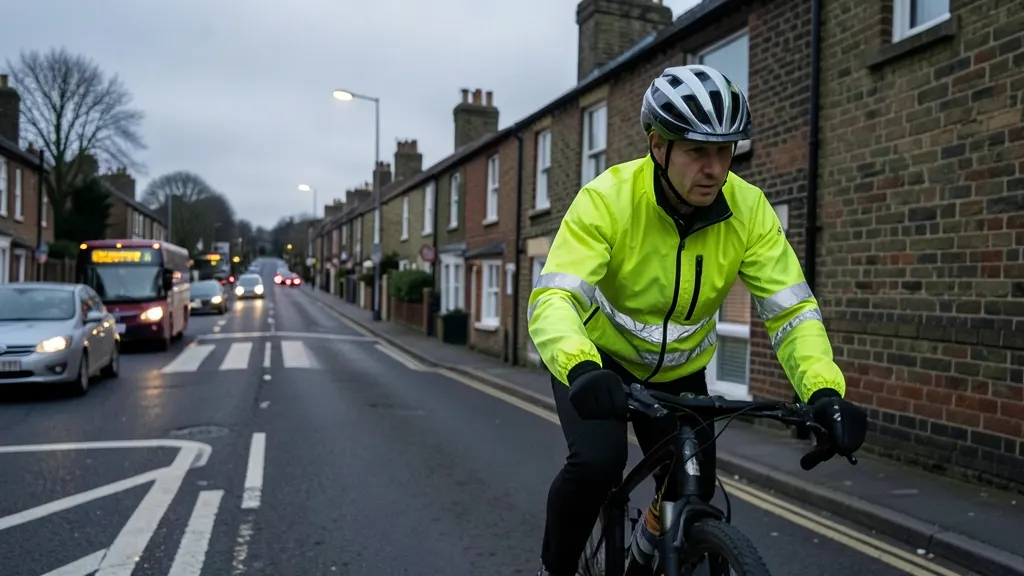
Sheffield sits in Yorkshire on the edge of the Peak District, and it is a city built on iron and steel. Those industries have long shaped the place, and tourism now plays a major role in the economy too. The metropolitan borough has an estimated population of 579,517, many of whom travel to work or school before dawn in the winter months.
That matters because Sheffield is a dark city for much of the working year. On the winter solstice, the sun does not rise until 08:19 and it sets at 15:48, leaving just 7 hours and 30 minutes of daylight. In total, Sheffield has 122 days a year when the sun sets before half past five in the evening or rises after quarter to eight in the morning. If your commute starts or ends in gloom, you are sharing the roads in poor light.
The city also has a distinctive layout. It is famously hilly, yet compact, and cycling is growing as a method of transport. It sits on the Trans-Pennine Trail, a National Cycle Network route, so plenty of people ride through or past the city. The M1 and M18 motorways pass close by, which means commuters and motorcyclists regularly mix with fast-moving traffic.
Then there is the green side of the city. Sheffield has more than 250 parks, woodlands and gardens, thought to hold around 4.5 million trees, and roughly a third of the city lies within the Peak District National Park. That greenery is wonderful, but unlit paths and country lanes after dusk are exactly where being seen makes a difference.
What this guide covers
We have put together themed pages for the situations where visibility matters most in Sheffield.
If you ride to work or cycle for pleasure, read Hi-vis for cycling and commuting in Sheffield. It covers the rules on lights, what the Highway Code says about clothing, and how to choose between fluorescent and reflective materials. Our wider Hi-vis jackets for cycling: a buyer's guide goes into more detail on fits and features.
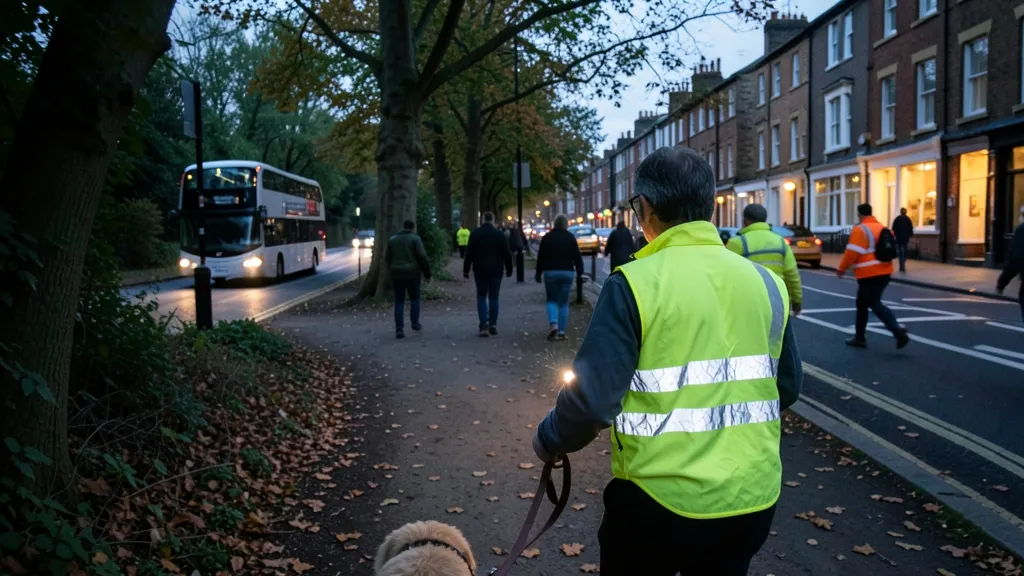
If you walk a dog, see Hi-vis for dog walking in Sheffield. With so much woodland inside the city boundary, many walks happen on paths without street lighting, and the page explains what to wear when the light goes. You might also like Hi-vis jackets for dog walking: how to choose.
Motorcyclists are not forgotten. Riders heading out towards the Peak District face fast rural roads, and there is guidance on making yourself visible from the side as well as the front and rear. Our page on hi vis jackets for motorcyclists deals with the myths and the facts, including what actually helps drivers spot you.
General hi-vis advice that applies to everyone
Fluorescent and reflective do different jobs
Fluorescent colours help in daylight and poor light, such as an overcast morning or dusk. Reflective material only works when a light source hits it, so it matters at night under headlights and torchlight. Most good hi-vis jackets combine both. If you can only pick one extra item for dark evenings, a reflective band or sash is a cheap and effective choice.
The Highway Code is clear on this point for several groups. Rule 59 says light-coloured or fluorescent clothing can help other road users see a cyclist in daylight and poor light, while reflective clothing or accessories such as belts, arm bands or ankle bands increase visibility in the dark. Rule 17 says pedestrians should wear something reflective at night. Rule 3 notes that reflective materials can be seen by drivers using headlights up to three times as far away as non-reflective materials.
Look at the class and the colour
Hi-vis clothing sold as safety wear is usually certified to EN ISO 20471, which has three classes. Class 1 is the lowest, with a minimum fluorescent background area of 0.14 m2. Class 2 needs at least 0.50 m2 of fluorescent material. Class 3 is the highest, requiring at least 0.80 m2 of fluorescent background material plus 0.20 m2 of retroreflective material. For commuting on busy roads, class 2 is a sensible minimum, and class 3 gives the most coverage.
Colour also matters. Yellow and orange fluorescent tones are common for general road use. Anyone working on or near the railways should note that the rail standard RIS-3279-TOM requires an orange colour and garments meeting at least class 2 of EN ISO 20471.
Care keeps hi-vis working
A jacket only performs while the fabric is clean. Grease and dirt reduce both the fluorescent effect and the reflective strips. Health and Safety Executive guidance says reusable PPE must be cleaned and kept in good condition, and hi-vis jackets, trousers and coveralls must be cleaned regularly. Wash yours according to the label, avoid harsh detergents or fabric conditioners if the care instructions say so, and replace anything where the reflective bands have worn thin.
Match the clothing to the light you actually travel in
With 122 days a year involving a commute that is partly in the dark, Sheffield residents should plan for poor light rather than being caught out by it. Check the fit so layers can go underneath in winter, make sure reflective strips sit clear of rucksack straps, and keep a spare jacket by the door for quick evening walks.
Where to read next
Start with the local pages for cycling and dog walking in Sheffield, then follow up with our broader guides. The Hi-vis clothing in Yorkshire: a regional guide explains how the county's mix of city streets and open moorland shapes what people wear. For weather-specific choices, Waterproof hi vis jackets: myths and facts and Winter hi vis jackets: a practical buyer's guide cover staying dry and warm while remaining visible.
A little thought about visibility goes a long way, and in a city where the streetlights come on before most people finish work, it is worth getting right.
Sheffield at a glance
- Nation: England
- Region: Yorkshire
- Population: 579517
| Measure | Time |
|---|---|
| Sunrise on the winter solstice | 08:19 |
| Sunset on the winter solstice | 15:48 |
| Daylight on the winter solstice | 7h 30m |
| Sunset when the clocks go back (2026-10-25) | 16:47 |
| Days a year with a dark commute | 122 |
Frequently asked questions
Do I legally have to wear hi-vis when cycling in Sheffield?
There is no law requiring cyclists to wear hi-vis clothing anywhere in the UK. The Highway Code, under Rule 59, recommends light-coloured or fluorescent clothing in daylight and poor light, and reflective clothing or accessories in the dark. Rule 60 does make lights and a red rear reflector a legal requirement at night.
What is the best class of hi-vis for commuting?
EN ISO 20471 has three classes. Class 2, with at least 0.50 m2 of fluorescent material, is a sensible minimum for riding or walking on busy roads. Class 3, with at least 0.80 m2 of fluorescent material and 0.20 m2 of retroreflective material, offers the highest level of visibility.
How much daylight does Sheffield get in winter?
On the winter solstice the sun rises at 08:19 and sets at 15:48, giving 7 hours and 30 minutes of daylight. There are 122 days a year when the sun sets before half past five in the evening or rises after quarter to eight, so many commutes are partly in the dark.
Does reflective clothing work without headlights?
Reflective material needs a light source, such as car headlights or a torch, to shine back. In daylight or gloom, fluorescent colours are what help you stand out. A good hi-vis jacket combines both, and reflective bands on moving parts such as ankles are especially effective at night.
How should I look after a hi-vis jacket?
Clean it regularly according to the label, because dirt and grease reduce both fluorescent and reflective performance. Health and Safety Executive guidance says reusable PPE must be kept in good condition, and that any loss or obvious defect should be reported and the item replaced.