Hi-vis clothing in Reading
Last updated
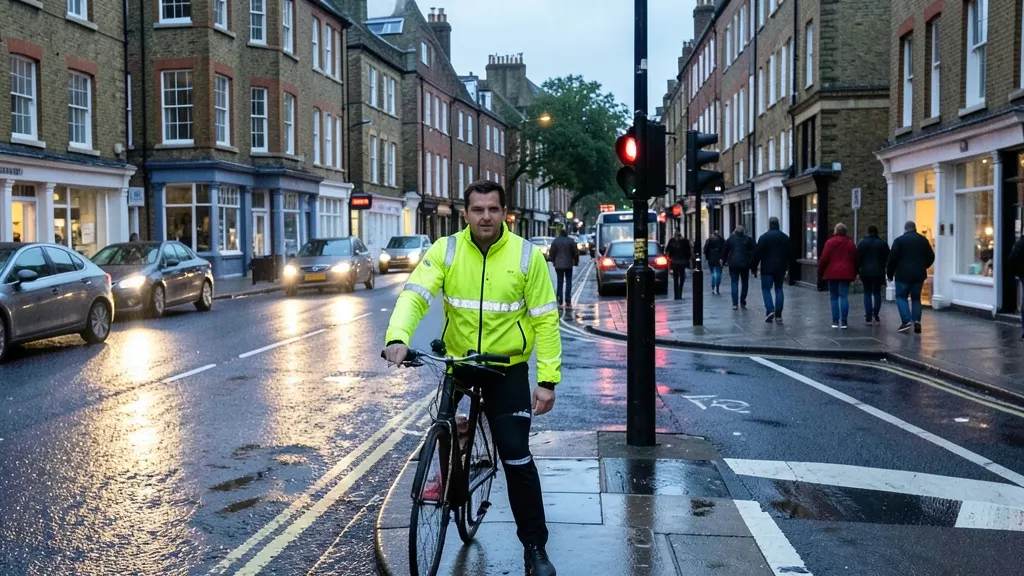
Reading is a busy commercial town on the Thames and Kennet rivers, home to around 203,795 people in its built-up area according to the 2021 census. It is a major centre for information technology and insurance, which means a large working population travelling to and from offices at either end of the day. The M4 curves to the south of the town, and the University of Reading adds to the numbers of people moving about on foot, by bike and by bus.
Why visibility matters in Reading
If you commute in Reading, chances are you do part of your journey in the dark. There are 120 days a year in the town when sunset falls before half past five in the evening or sunrise comes after quarter to eight in the morning, so a normal commute is partly in darkness. On the winter solstice the sun rises at 08:06 and sets at 15:57, leaving just 7 hours and 50 minutes of daylight.
The clocks going back makes a noticeable difference. On 25 October 2026, sunset in Reading is at 16:50, which puts the evening rush hour firmly into dusk and darkness. Cyclists, runners and dog walkers all share space with motor traffic, so being seen early matters.
What we cover for Reading
This hub collects our local guides to hi-vis clothing for the town's most common activities.
Cycling and commuting
Reading's riverside geography, sitting at the confluence of the Thames and Kennet, gives cyclists attractive and practical routes, but commuting often involves roads shared with cars, vans and lorries. Our page on Hi-vis for cycling and commuting in Reading looks at what to wear on the bike and at the office end. For choosing a jacket in general, see Hi-vis jackets for cycling: a buyer's guide.
Running
Green spaces such as Forbury Gardens, a public park on the site of the outer court of Reading Abbey, give runners pleasant places to train. When the light goes, reflective details become essential. Our Hi-vis jackets for running: how to choose page explains what to look for.
Dog walking
The Thames Path, a 185 mile National Trail following the River Thames, passes through Reading and gives dog walkers long stretches of towpath, some of it unlit. Read Hi-vis for dog walking in Reading and Hi-vis jackets for dog walking: how to choose for advice on staying visible on evening walks.
General hi-vis guidance
A few principles apply whatever you are doing.
Fluorescent material works by converting ultraviolet light into visible light, so it is most useful in daylight and poor daytime light, such as overcast or foggy mornings. It does little on its own after dark. Retroreflective material, by contrast, bounces light from headlamps and street lamps straight back towards the source. The Highway Code notes in Rule 3 that reflective materials such as armbands, sashes, waistcoats, jackets or footwear can be seen by drivers using headlights up to three times as far away as non-reflective materials.
For cyclists, Rule 59 of the Highway Code recommends light-coloured or fluorescent clothing to help other road users see you in daylight and poor light, and reflective clothing or accessories such as belts, arm or ankle bands to increase visibility in the dark. Rule 60 is a legal point rather than advice: at night a cycle must have white front and red rear lights lit, and a red rear reflector. A hi-vis jacket supplements these lights, it does not replace them.
If you want a garment certified for visibility, EN ISO 20471 sets three classes. Class 1 requires at least 0.14 m2 of fluorescent background material, class 2 at least 0.50 m2, and class 3, the highest, at least 0.80 m2 of fluorescent material plus 0.20 m2 of retroreflective material. Most everyday commuter and leisure garments sit at class 2, which is a sensible level for road use.
Looking after your gear counts too. Reusable hi-vis items should be cleaned regularly and kept in good condition, because dirt and wear reduce both fluorescence and reflectivity. Check reflective strips and ankle bands before winter sets in, and replace anything with obvious defects.
Related reading
For broader advice, our Hi-vis clothing in South East England: a regional guide covers the region as a whole. Commuters who ride through Reading's rain will find Waterproof hi vis jackets: myths and facts useful, and Winter hi vis jackets: a practical buyer's guide helps with the coldest months, when the town sees so little daylight.
Reading at a glance
- Nation: England
- Region: South East England
- Population: 203795
| Measure | Time |
|---|---|
| Sunrise on the winter solstice | 08:06 |
| Sunset on the winter solstice | 15:57 |
| Daylight on the winter solstice | 7h 50m |
| Sunset when the clocks go back (2026-10-25) | 16:50 |
| Days a year with a dark commute | 120 |
Frequently asked questions
Do I legally need a hi-vis jacket to cycle in Reading?
No, there is no legal requirement for cyclists to wear hi-vis in the UK. However, Rule 59 of the Highway Code recommends fluorescent clothing in daylight and poor light, and reflective clothing or accessories in the dark. Rule 60 does require a cycle used at night to have a white front light, a red rear light lit, and a red rear reflector.
What is the highest class of hi-vis jacket?
Class 3 is the highest class under EN ISO 20471. It requires at least 0.80 m2 of fluorescent background material and 0.20 m2 of retroreflective material. Most people commuting or exercising in Reading will find a class 2 garment sufficient for everyday use.
Why is a hi-vis jacket not enough on its own after dark?
Fluorescent material needs daylight or ultraviolet light to work, so it does little at night. Retroreflective strips are what catch headlamps, and the Highway Code notes that reflective materials can be seen by drivers up to three times as far away as non-reflective ones. Lights on your bike are also a legal requirement after dark.
How dark are winter commutes in Reading?
Very dark for much of the working week. In Reading there are 120 days a year when sunset comes before half past five in the evening or sunrise after quarter to eight in the morning. On the winter solstice, sunrise is at 08:06 and sunset at 15:57, so both ends of a standard commute fall in darkness.
Should my employer provide hi-vis clothing?
Under the Personal Protective Equipment at Work Regulations 1992, employers must provide suitable PPE to workers exposed to a health or safety risk unless that risk is controlled by other means. Since 6 April 2022 these duties also cover limb (b) workers, and the employer must provide the PPE free of charge.