Hi-vis clothing in Preston
Last updated
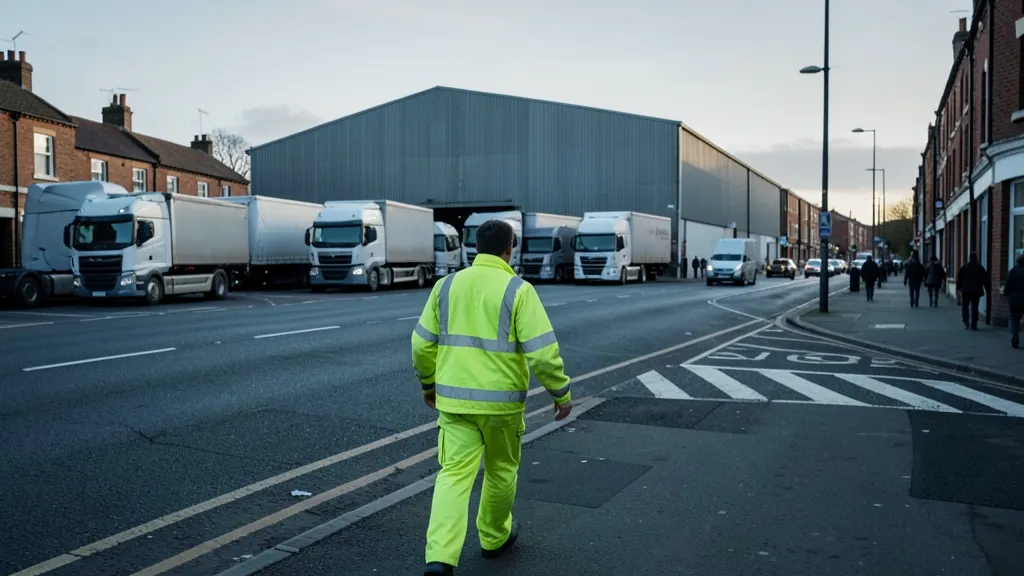
Preston is a city of 147,835 people (2021 census), sitting between the M6, M55, M61 and M65. That position on the motorway network explains why several freight and haulage companies are based here, and why lorries, vans and cars are a constant presence on the roads around the city. If you work in haulage, walk children to school or run before sunrise, you share that road space with heavy traffic.
The winter light makes visibility a real issue. On the winter solstice in Preston the sun rises at 08:26 and sets at 15:51, leaving just 7 hours and 25 minutes of daylight. In total there are 123 days a year here when sunset comes before half past five in the evening or sunrise after quarter to eight in the morning, so many people commute partly or entirely in the dark. When the clocks go back on 25 October 2026, sunset that day is at 16:51, right in the middle of the evening rush.
What this guide covers
We have put together themed pages for Preston, each dealing with a different visibility need:
- Hi-vis for running in Preston. Parks and the riverside around the city are popular with runners, and early morning or evening runs often happen in poor light. This page looks at what to wear and why reflective detail matters after dark.
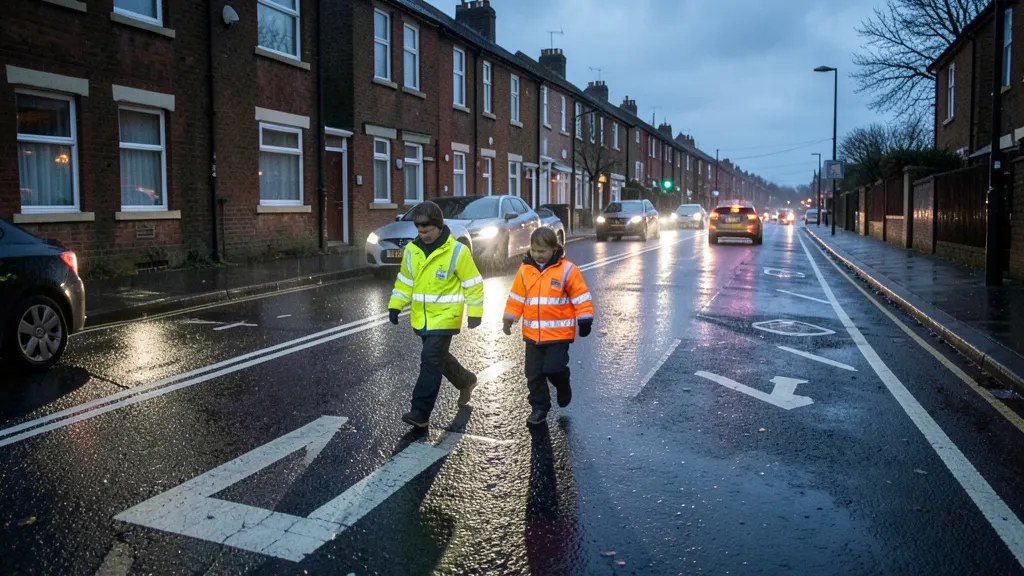
- Hi-vis for the school run and children in Preston. School journeys often coincide with the darkest part of the day in winter. This page covers hi-vis for children, from jackets to accessories, and separates the myths from the facts.
- Work and site wear. Engineering, logistics and construction work are common across the area, and the defence industry and tertiary education are major employment sectors here. Our general guide to high visibility clothing workwear explains how to choose a hi vis jacket for the job.
You can also read our wider guide for the region at Hi-vis clothing in North West England.
Hi-vis guidance that applies whatever you are doing
Understand the classes
EN ISO 20471 has three classes, and the class tells you how much fluorescent and retroreflective material a garment contains. The minimum fluorescent background area is 0.14 m2 for class 1, 0.50 m2 for class 2 and 0.80 m2 for class 3. The minimum retroreflective area is 0.10 m2, 0.13 m2 and 0.20 m2 respectively. Class 3 is the highest, and it is what you should look for where traffic moves fast or there is little separation between people and vehicles.
Fluorescent for day, reflective for night
Fluorescent material helps drivers see you in daylight and poor light. Reflective material is what works after dark, because it bounces headlight back towards the driver. Many garments combine both, which is useful if your day starts in light and ends in the dark, as it often does in Preston in winter. The Highway Code sets this out clearly. Rule 3 says reflective materials such as armbands, sashes, waistcoats, jackets or footwear can be seen by drivers using headlights up to three times as far away as non-reflective materials.
Know the rules for your situation
If you work on or near roads or sites, your employer has duties under the Personal Protective Equipment at Work Regulations 1992. Employers must provide suitable PPE to workers exposed to a risk to health or safety unless the risk is adequately controlled by other means. Since 6 April 2022 those duties also cover limb (b) workers, and the PPE must be provided free of charge.
Cyclists have their own rules. Rule 59 of the Highway Code says light-coloured or fluorescent clothing can help other road users see a cyclist in daylight and poor light, while reflective clothing or accessories such as belts, arm or ankle bands can increase visibility in the dark. Rule 60 requires a white front light and red rear light lit at night, plus a red rear reflector.
Look after your kit
Hi-vis only works if it is clean and in good condition. Health and Safety Executive guidance says reusable PPE must be cleaned and kept in good condition, and that hi-vis jackets, trousers and coveralls must be cleaned regularly. Workers must report any loss, destruction or obvious defect. A fluorescent jacket caked in mud or grease is far less effective than a clean one, so wash it according to the label and replace it when the fabric fades or the reflective bands start to peel.
Think about where you will use it
Preston offers some genuinely pleasant traffic-free routes. The Guild Wheel is a 21-mile cycle and walking route encircling the city (National Cycle Route 622), and National Cycle Route 6 also passes through the city. Walking and cycling along the banks of the Lancaster Canal is popular, and Avenham Park is a natural amphitheatre of a park used for major city events. Even so, most journeys involve crossing or sharing roads at some point, so visible clothing is worth wearing on every leg of the trip, not just the busy bits.
Where to read next
- Choosing a jacket for work: high visibility clothing workwear: choosing a hi vis jacket
- Keeping dry as well as visible: waterproof hi vis jackets: myths and facts
- Colder months: winter hi vis jackets: a practical buyer's guide
- For children: kids hi vis jackets: myths and facts
- For runners: hi-vis jackets for running: how to choose
Each page gives practical, plain advice with no brand names and no jargon, just what you need to be seen on Preston's roads and paths.
Preston at a glance
- Nation: England
- Region: North West England
- Population: 147835
| Measure | Time |
|---|---|
| Sunrise on the winter solstice | 08:26 |
| Sunset on the winter solstice | 15:51 |
| Daylight on the winter solstice | 7h 25m |
| Sunset when the clocks go back (2026-10-25) | 16:51 |
| Days a year with a dark commute | 123 |
Frequently asked questions
What class of hi vis jacket do I need for work in Preston?
It depends on the risk. Class 2 is common for many site and logistics roles, while class 3, with at least 0.80 m2 of fluorescent background material and 0.20 m2 of retroreflective material, is the highest class under EN ISO 20471 and suits high-risk situations such as working near fast traffic. Your employer must assess the risk and provide suitable PPE free of charge under the Personal Protective Equipment at Work Regulations 1992.
Do children need reflective clothing on the school run?
The Highway Code recommends helping other road users to see you, and reflective materials can be seen by drivers using headlights up to three times as far away as non-reflective materials. In Preston there are 123 days a year when a normal commute is partly in the dark, so reflective or fluorescent items on children are a sensible precaution in winter. See our Preston school run page for more detail.
Is fluorescent or reflective clothing better for running after dark?
Reflective is more useful after dark because it returns headlight to the driver, whereas fluorescent material works best in daylight and poor light. A garment combining both is ideal if you run at dawn or dusk. Our page on hi-vis for running in Preston has more specific advice.
How often should a hi vis jacket be washed?
Health and Safety Executive guidance says hi-vis jackets, trousers and coveralls must be cleaned regularly and kept in good condition. Dirt and grease reduce both fluorescent and reflective performance, so follow the care label and report any obvious defect or loss at work.