Hi-vis clothing in Portsmouth: a local guide
Last updated
Why visibility matters in Portsmouth
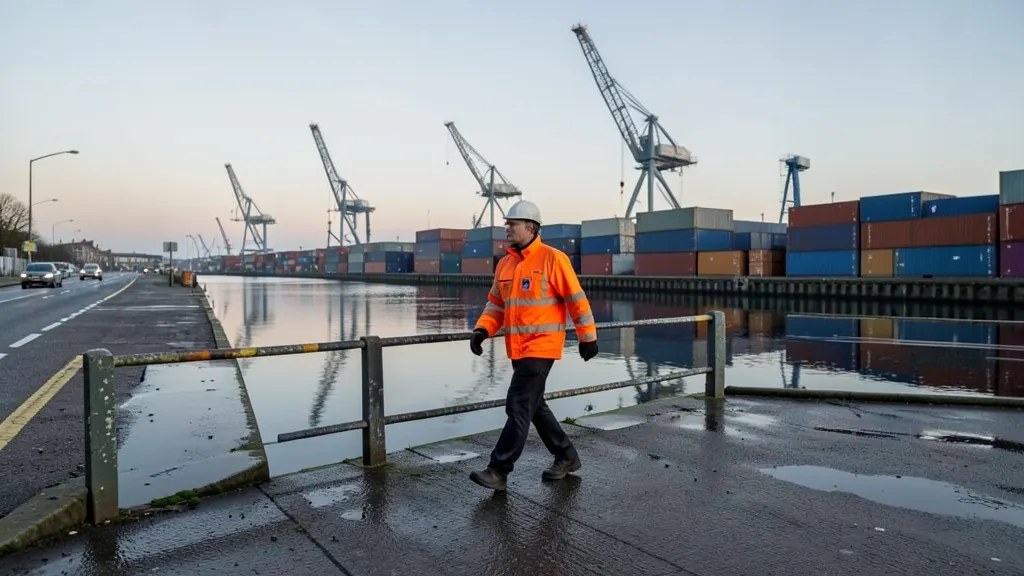
Portsmouth sits mostly on Portsea Island in the Solent, with a population of 211,475 according to the 2025 estimate. It is a working city built around the sea. HMNB Portsmouth is an operational Royal Navy base and home to two thirds of the UK's surface fleet, and Portsmouth International Port handles ferries and cruise ships. Electrical engineering is a major employer alongside the naval base and the port. Between them, these industries support a large number of outdoor and dockside jobs where high visibility clothing is part of daily life.
The city's geography shapes how people get around, too. Most of Portsmouth sits on Portsea Island, linked to the mainland by three road bridges: the M275 motorway, the A3 road and the A2030 road. That island layout means a lot of journeys pass through built-up streets shared by drivers, cyclists and pedestrians, including the many students who study at the University of Portsmouth.
Daylight is in short supply for much of the year. On the winter solstice, sunrise in Portsmouth is at 08:04 and sunset is at 16:00, giving just 7 hours and 57 minutes of daylight. There are 119 days a year here when sunset comes before half past five in the evening or sunrise after quarter to eight in the morning, so an ordinary commute is partly in the dark. When the clocks go back on 25 October 2026, sunset that day falls at 16:52, and it only gets earlier from there.
What this guide covers
We have pulled together themed pages for Portsmouth so you can find advice that matches how you actually spend your time outdoors in the city.
If you work outdoors, whether around the port, on a site or in engineering, our page on hi-vis for work in Portsmouth explains what to look for in a work jacket. Runners will find route-specific advice in our guide to hi-vis for running in Portsmouth, and parents can read about kit for the darker school run in our page on hi-vis for the school run and children in Portsmouth.
General hi-vis guidance for Portsmouth
Whatever you are doing, the same basic principles apply across work, running and the school run.
Check the class before you buy a hi vis jacket
EN ISO 20471, the standard for high visibility clothing, has three classes. Class 1 requires a minimum of 0.14 m2 of fluorescent background material and 0.10 m2 of retroreflective material. Class 2 steps up to 0.50 m2 of fluorescent material and 0.13 m2 of retroreflective material. Class 3 is the highest, with at least 0.80 m2 of fluorescent background and 0.20 m2 of retroreflective material. A class 3 hi vis jacket is the usual choice for work on or near live traffic, while class 2 suits many lower-risk outdoor jobs.
Know your rights at work
Under the Personal Protective Equipment at Work Regulations 1992, employers must provide suitable PPE to workers exposed to a risk to their health or safety, unless the risk is controlled by other means. Since 6 April 2022 these duties also cover limb (b) workers, and the employer must provide the PPE free of charge. If you are unsure what your employer should be supplying, it is worth asking directly.
Reflective material beats fluorescent in the dark
Florescent colours work well in daylight and poor light, but they do little once the sun has gone down. The Highway Code, Rule 3, advises road users to wear reflective materials in the dark, such as armbands, sashes, waistcoats, jackets or footwear. These can be seen by drivers using headlights up to three times as far away as non-reflective materials. With 119 dark commute days a year in Portsmouth, that extra distance matters.
Look after what you own
HSE guidance says reusable PPE must be cleaned and kept in good condition, and hi-vis jackets, trousers and coveralls must be cleaned regularly. Grime and wear reduce both fluorescence and retroreflection. Workers should report any loss, destruction or obvious defect so a replacement can be issued.
Matching topic pages
For a wider view across the region, our guide to hi-vis clothing in South East England covers the broader picture. To dig deeper into a specific type of jacket, try our advice on choosing a hi vis jacket for workwear, the facts about waterproof hi vis jackets, our practical winter hi vis jacket buyer's guide, tips on hi-vis jackets for running, and the facts behind kids hi vis jackets.
Portsmouth at a glance
- Nation: England
- Region: South East England
- Population: 211475
| Measure | Time |
|---|---|
| Sunrise on the winter solstice | 08:04 |
| Sunset on the winter solstice | 16:00 |
| Daylight on the winter solstice | 7h 57m |
| Sunset when the clocks go back (2026-10-25) | 16:52 |
| Days a year with a dark commute | 119 |
Frequently asked questions
What class of hi vis jacket do I need for dockside work in Portsmouth?
Many port and dockside employers specify class 2 or class 3 under EN ISO 20471. Class 2 requires at least 0.50 m2 of fluorescent background material and 0.13 m2 of retroreflective material, while class 3 requires 0.80 m2 and 0.20 m2 respectively. Check with your employer, since under the Personal Protective Equipment at Work Regulations 1992 they must provide suitable PPE free of charge where there is a risk.
How many dark commutes can I expect in Portsmouth?
There are 119 days a year in Portsmouth when sunset comes before half past five in the evening or sunrise after quarter to eight in the morning. On the winter solstice itself, sunrise is at 08:04 and sunset is at 16:00. A normal commute is therefore in the dark for a large part of the year, so reflective material is worth wearing.
Is a fluorescent jacket enough for running in the dark?
Fluorescent material works in daylight and poor light but not in darkness. The Highway Code, Rule 3, says reflective materials can be seen by drivers using headlights up to three times as far away as non-reflective materials. If you run before sunrise or after sunset, choose a jacket with plenty of retroreflective panels.
Do children need reflective clothing for the school run?
Yes, in winter most school journeys in Portsmouth happen in low light or darkness. Reflective strips, armbands or a hi-vis jacket make children easier for drivers to spot. Our page on hi-vis for the school run and children in Portsmouth has more detailed advice.