Hi-vis clothing in Plymouth
Last updated
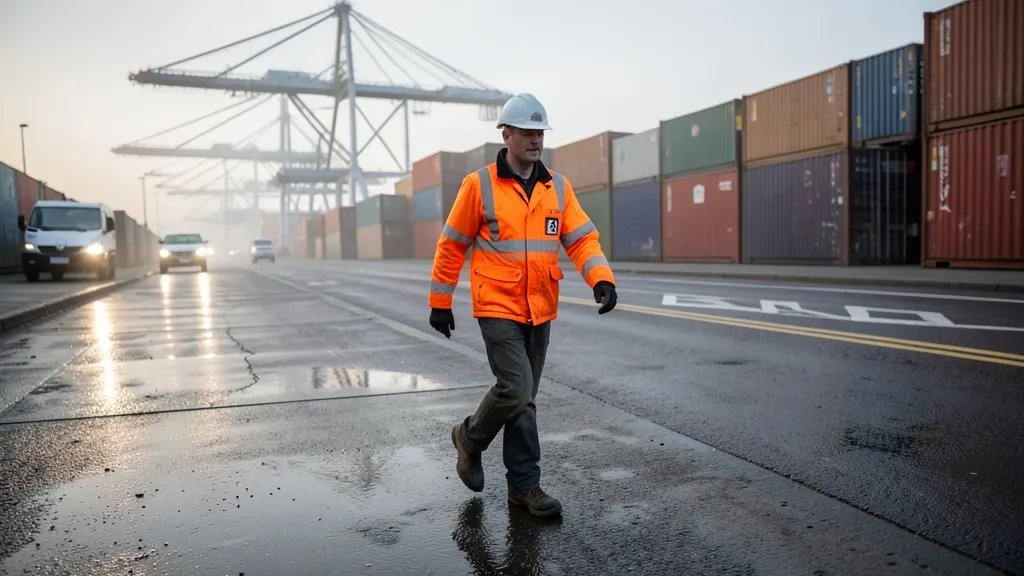
Plymouth sits on the coast of Devon in South West England, a port city with a population estimated at 271,361 in 2025. Its working identity is tied to the sea. HMNB Devonport is the largest naval base in Western Europe and the sole nuclear repair and refuelling facility for the Royal Navy, and the ferry port runs links to Brittany and Spain. Since the 1990s the economy has been largely service-based, but the dockyard, ferries and marine trades keep thousands of people working outdoors in all weathers.
That matters for visibility. The city has 116 days a year when sunset falls before half past five or sunrise comes after quarter to eight, so a normal commute is partly in the dark. On the winter solstice, sunrise in Plymouth is at 08:14 and sunset at 16:15, giving just 8 hours and 1 minute of daylight. Anyone who works early, walks a dog after tea or squeezes a run into the edges of the day will spend real time in poor light, and on a wet evening by the water the drivers you share the road with need every bit of help to spot you.
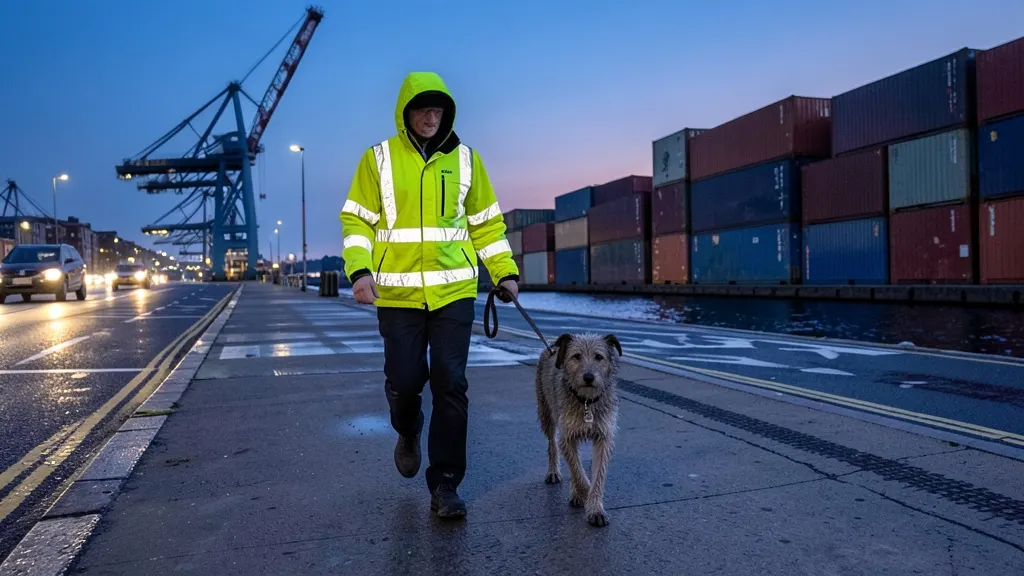
What this page covers
This is a hub page. It introduces hi-vis in Plymouth as a whole and points you to themed pages with more detail:
- Hi-vis for dog walking in Plymouth, for walkers on the coast and the moor
- Hi-vis for running in Plymouth, for runners training through dark evenings and mornings
- High visibility clothing workwear: choosing a hi vis jacket, for site and dockside workers
Dog walkers in Plymouth are well served for routes. Plymouth Hoe is a large south-facing open public space with views across Plymouth Sound and Drake's Island, the city has 28 parks, and the South West Coast Path, England's second-longest waymarked long-distance footpath at 630 miles from Minehead to Poole Harbour, passes through the area. Dartmoor, a national park of 954 square kilometres in southern Devon granted protection in 1951, sits close by. Runners cover much the same ground, mixing seafront miles with trips to the moorland edges, and both groups need kit that works when the light goes.
Hi-vis guidance that applies across themes
Standards and classes
EN ISO 20471 sets three classes based on how much fluorescent background and retroreflective material a garment carries. The minimum fluorescent background area is 0.14 m2 for class 1, 0.50 m2 for class 2 and 0.80 m2 for class 3, with minimum retroreflective areas of 0.10, 0.13 and 0.20 m2 respectively. Class 3 is the highest, and it is the level most often expected on roads and in higher-risk work environments. If your employer specifies a class, follow that.
Rail workers have a separate requirement. SATRA, a UK PPE testing body, notes that rail standard RIS-3279-TOM requires an orange colour and garments meeting at least class 2 of EN ISO 20471.
Employer duties
Under the Personal Protective Equipment at Work Regulations 1992, employers must provide suitable PPE to workers exposed to a risk to their health or safety, unless the risk is adequately controlled by other means. Since 6 April 2022 those duties also cover limb (b) workers, and the employer must provide the PPE free of charge. If you work at the dockyard, the ferry terminal or a marine yard and you have not been issued hi-vis, ask the question.
HSE guidance adds practical points: reusable PPE must be cleaned and kept in good condition, hi-vis jackets, trousers and coveralls must be cleaned regularly, and workers must report any loss, destruction or obvious defect. A jacket caked in salt spray and grime does not reflect properly, so washing it is part of the safety routine, not just housekeeping.
Advice for everyday road users
The Highway Code applies whatever you are doing. Rule 3 says to help other road users see you, and in the dark to use reflective materials such as armbands, sashes, waistcoats, jackets or footwear, which drivers using headlights can see up to three times as far away as non-reflective materials. Rule 17 asks pedestrians to wear something reflective at night. Rule 59 says light-coloured or fluorescent clothing helps drivers see a cyclist in daylight and poor light, while reflective clothing or accessories increase visibility in the dark, and Rule 60 requires a white front light, red rear light and red rear reflector after dark. Motorcyclists get similar advice: Rule 86 suggests fluorescent clothing or strips to be visible from the side as well as front and rear, and Rule 87 recommends reflective gear when riding in the dark.
A few habits carry across everything. Fluorescent material works in daylight and poor light but does little on its own at night; reflective strips need headlights to bounce back, so the two work as a pair. Check zips, cuffs and hems, because dirt and wear cut reflectivity. Replace anything with torn or missing strips rather than trusting a faded jacket.
Where to go next
For your specific situation, read the page that fits:
- Hi-vis for dog walking in Plymouth
- Hi-vis for running in Plymouth
- High visibility clothing workwear: choosing a hi vis jacket
Rain and spray are part of life in a port city, so also read Waterproof hi vis jackets: myths and facts. For the short days around the solstice, Winter hi vis jackets: a practical buyer's guide covers warmth, layering and light. If you are buying for work, dog or running anywhere else in the region, start with Hi-vis clothing in South West England.
Plymouth at a glance
- Nation: England
- Region: South West England
- Population: 271361
| Measure | Time |
|---|---|
| Sunrise on the winter solstice | 08:14 |
| Sunset on the winter solstice | 16:15 |
| Daylight on the winter solstice | 8h 01m |
| Sunset when the clocks go back (2026-10-25) | 17:05 |
| Days a year with a dark commute | 116 |
Frequently asked questions
What class of hi-vis jacket do I need for work in Plymouth?
It depends on your risk environment. EN ISO 20471 has three classes, with class 3 the highest, requiring at least 0.80 m2 of fluorescent background material and 0.20 m2 of retroreflective material. Roadside and higher-risk work generally calls for class 3, while lower-risk areas may accept class 2. Your employer must provide suitable PPE free of charge under the Personal Protective Equipment at Work Regulations 1992.
Is a hi-vis jacket enough for walking my dog at night in Plymouth?
A jacket with reflective strips is a good start, but reflective material only works when headlights shine on it. Carry a torch as well, stick to routes you know, and keep your dog visible too, with a reflective collar, harness or lead. Plymouth has 116 days a year when a normal commute or evening walk is partly in the dark, so night walking is a routine matter, not a rarity.
When do the clocks change in Plymouth in 2026?
The clocks go back on 25 October 2026, and sunset in Plymouth that day is at 17:05. From then on, evening runners, dog walkers and commuters will be out in darker conditions, so autumn is a sensible time to check your hi-vis kit and lights.
How do I keep a hi-vis jacket working properly?
Clean it regularly. HSE guidance says hi-vis jackets, trousers and coveralls must be cleaned regularly and reusable PPE kept in good condition, and any loss, destruction or obvious defect must be reported. Dirt, salt and grime reduce both fluorescence and reflectivity, so follow the wash label and replace the garment if strips are torn or missing.
Do cyclists in Plymouth need hi-vis clothing by law?
Hi-vis clothing is not a legal requirement for cyclists, but the Highway Code advises it. Rule 59 says light-coloured or fluorescent clothing helps other road users see you in daylight and poor light, and reflective accessories help in the dark. What is legally required at night is a white front light, a red rear light and a red rear reflector on the bike itself.