Hi-vis clothing in Nottingham: what to wear and when
Last updated
Nottingham sits in the East Midlands and is home to around 323,632 people, according to the 2021 census. It is a university city, with the University of Nottingham, Nottingham Trent University and the Nottingham campus of the University of Law all drawing students into the area. It also has cycling in its bones: the Raleigh Bicycle Company was established in Nottingham in 1886.
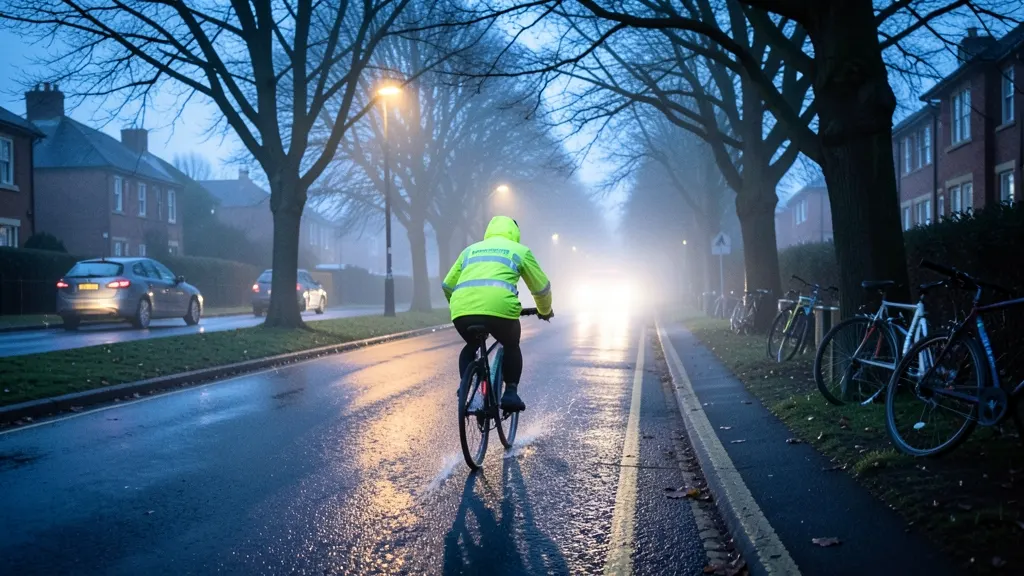
All of this adds up to a city where a great many people are out on foot, on bikes and on public transport, often at either end of the day. Visibility matters here for a simple reason. In Nottingham there are 122 days a year when sunset comes before half past five in the evening or sunrise after quarter to eight in the morning, so a normal commute is partly in the dark. On the winter solstice the sun rises at 08:15 and sets at 15:49, leaving just 7 hours and 34 minutes of daylight. If you leave home early and return late, you will be sharing the roads with drivers who may struggle to pick you out.
What this guide covers
We have put together themed pages for Nottingham, each looking at how hi-vis and reflective clothing fits a particular routine.
Cycling and commuting
Trams returned to the city in 2004 with the opening of a new network, and National Cycle Route 6 runs through the western suburbs, passing Beeston, Bulwell and Hucknall. With three universities feeding students and staff into the city centre every day, cycling is a genuinely practical way to get around, and it often happens in low light. Our page on hi-vis for cycling and commuting in Nottingham goes into the detail, and our hi-vis jackets for cycling: a buyer's guide covers the clothing side more generally.
Running
Nottingham has plenty of green space for runners. Wollaton Park is a Grade II listed 500-acre park which includes a deer park, and The Arboretum was the first designated public park in Nottingham, opened in 1852. Riverside paths and parks are popular with runners, including student clubs, and many train early in the morning or after work in winter. See our page on hi-vis for running in Nottingham and, for choosing a jacket, hi-vis jackets for running: how to choose.
The school run and children
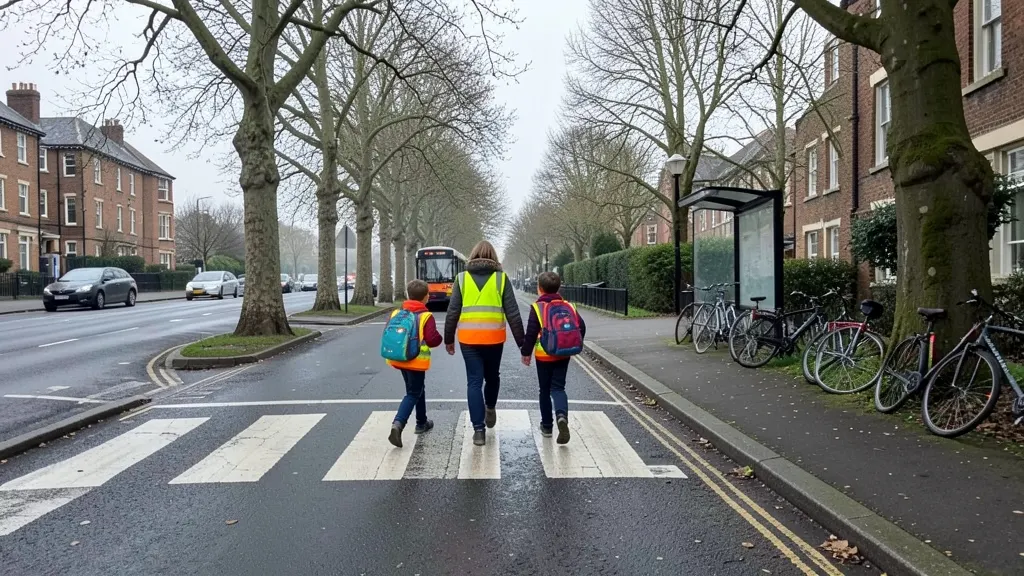
Busy suburban roads and the tram network mean children walking to school often cross traffic that is moving fast and stopping suddenly. A reflective band or a bright jacket is a cheap way to make a child easier to spot. Our kids hi vis jackets: myths and facts page explains what actually helps.
General hi-vis guidance
A few principles apply whatever you are doing in Nottingham.
Fluorescent colours work in daylight and poor light, but they do little in the dark. Reflective material is what catches headlights. The Highway Code makes this distinction directly. Rule 59 says light-coloured or fluorescent clothing can help other road users see a cyclist in daylight and poor light, while reflective clothing or accessories, such as a belt or arm or ankle bands, can increase visibility in the dark. Rule 3 puts a number on it: reflective materials such as armbands, sashes, waistcoats, jackets or footwear can be seen by drivers using headlights up to three times as far away as non-reflective materials.
If you are buying a jacket for regular use rather than work wear, the EN ISO 20471 classes are still a useful guide to how much fluorescent and retroreflective fabric you are getting. Class 1 requires a minimum fluorescent background area of 0.14 m2, class 2 requires 0.50 m2 and class 3 requires 0.80 m2, with minimum retroreflective areas of 0.10, 0.13 and 0.20 m2 respectively. Class 3 is the highest class. A commuter or runner does not need class 3, but knowing the scale helps you compare two jackets on a rail.
Cyclists have legal duties as well. Rule 60 requires a cycle used at night to have white front and red rear lights lit, and a red rear reflector. Rule 69 requires cyclists to obey all traffic signs and traffic light signals. Clothing and lighting work together; neither replaces the other.
Look after what you buy. Dirt and grime reduce both fluorescence and reflectivity, so wash hi-vis garments according to the label and check them over now and then. HSE guidance on reusable PPE says hi-vis jackets, trousers and coveralls must be cleaned regularly and kept in good condition. That is good practice for everyday wear too.
Finally, think about winter timing. The clocks go back on 25 October 2026, when sunset in Nottingham is at 16:47. From that point onwards, the afternoon school run and the evening commute both happen closer to dusk. Our winter hi vis jackets: a practical buyer's guide and our page on waterproof hi vis jackets: myths and facts cover what to look for in the colder, wetter months.
Where to read next
For a wider view of the region, see our hi-vis jacket East Midlands: a regional guide. For Nottingham itself, start with the cycling and running pages above, then read the children's page if you are kitting out a family.
Nottingham at a glance
- Nation: England
- Region: East Midlands
- Population: 323632
| Measure | Time |
|---|---|
| Sunrise on the winter solstice | 08:15 |
| Sunset on the winter solstice | 15:49 |
| Daylight on the winter solstice | 7h 34m |
| Sunset when the clocks go back (2026-10-25) | 16:47 |
| Days a year with a dark commute | 122 |
Frequently asked questions
Do I legally need to wear hi-vis when cycling in Nottingham?
There is no law requiring cyclists to wear hi-vis clothing anywhere in the UK. However, Rule 59 of the Highway Code says light-coloured or fluorescent clothing can help other road users see a cyclist in daylight and poor light, while reflective clothing or accessories can increase visibility in the dark. What the law does require, under Rule 60, is that a cycle used at night has white front and red rear lights lit, plus a red rear reflector.
What is the difference between fluorescent and reflective clothing?
Fluorescent material makes you more visible in daylight and poor light by converting UV light into extra visible brightness. Reflective material returns light from a source such as car headlights back towards the driver, which is why it works at night. Rule 3 of the Highway Code notes that reflective materials can be seen by drivers using headlights up to three times as far away as non-reflective materials.
Which EN ISO 20471 class should a commuter or runner look for?
There is no legal requirement for everyday wear, so the classes are simply a guide to how much visible material a garment has. Class 1 has a minimum fluorescent background area of 0.14 m2, class 2 has 0.50 m2 and class 3 has 0.80 m2, with corresponding minimum retroreflective areas of 0.10, 0.13 and 0.20 m2. Most commuters and runners will be well served by a class 2 garment.
How dark does it actually get in Nottingham during winter?
On the winter solstice, sunrise in Nottingham is at 08:15 and sunset is at 15:49, giving 7 hours and 34 minutes of daylight. Across the year there are 122 days when sunset comes before half past five in the evening or sunrise after quarter to eight in the morning, so a normal commute will be partly in the dark.
How should I care for a hi-vis jacket?
Wash it regularly according to the care label, because dirt reduces both fluorescence and reflectivity. HSE guidance on reusable PPE says hi-vis jackets, trousers and coveralls must be cleaned regularly and kept in good condition. Check the reflective strips and fabric for wear and replace the garment if it has become visibly tired or damaged.