Hi-vis clothing in Milton Keynes
Last updated
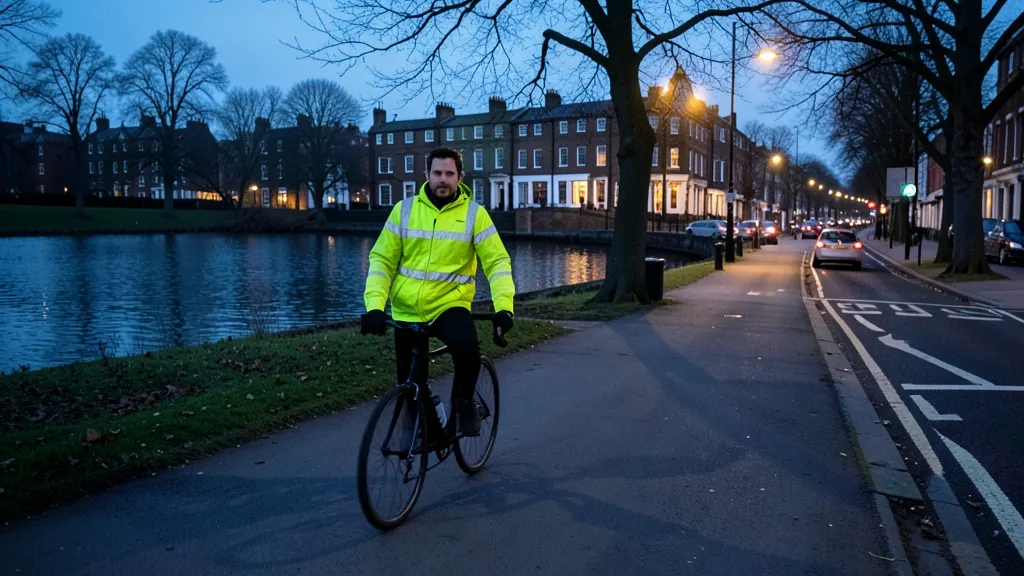
Milton Keynes is a city in South East England with an urban population of 264,349 at the 2021 census. It was designed around its own road pattern: major distributor roads run between communities rather than through them, and the M1 sets up a north-south axis across the area. That layout means much of daily life happens away from main traffic, on shared paths and in green spaces, but it also means many journeys cross or run alongside roads at points where drivers may not be expecting someone on foot or on a bike.
The city has plenty of space to be outdoors. Parks, lakes and green spaces cover about 25% of Milton Keynes, and an extensive network of shared-use paths for leisure cyclists and pedestrians criss-crosses the linear parks. The redways are a network of shared-use paths in their own right, linking neighbourhoods across the city. Willen Lake is a balancing lake and public park, built to mitigate flooding from the River Ouzel, and it draws walkers and cyclists all year round. The Open University is based here too, adding to the flow of commuters travelling into and around the city for work. Employment is about 90% service industries and 9% manufacturing.
Why does visibility matter so much here? The short winter days are the main reason. On the winter solstice in Milton Keynes, sunrise is at 08:09 and sunset at 15:53, giving 7 hours and 44 minutes of daylight. There are 121 days a year when sunset comes before half past five in the evening or sunrise after quarter to eight in the morning, so a normal commute is partly in the dark. The clocks go back on 25 October 2026, and sunset in Milton Keynes that day is at 16:48, right in the middle of the evening rush home. If you cycle, run or walk the dog after work in winter, you will be doing some of it in low light or darkness.
What this guide covers
We have put together themed pages for the three activities that take most Milton Keynes residents out onto paths and roads in poor light:
- Cycling and commuting. Shared-use paths keep you away from traffic for much of a journey, but every crossing and stretch beside a distributor road is a moment when you want to be seen. Our page on Hi-vis for cycling and commuting in Milton Keynes goes into detail.
- Running. With so much green space, running here is popular and easy to fit into a day, but short daylight hours push many runs into the dark.
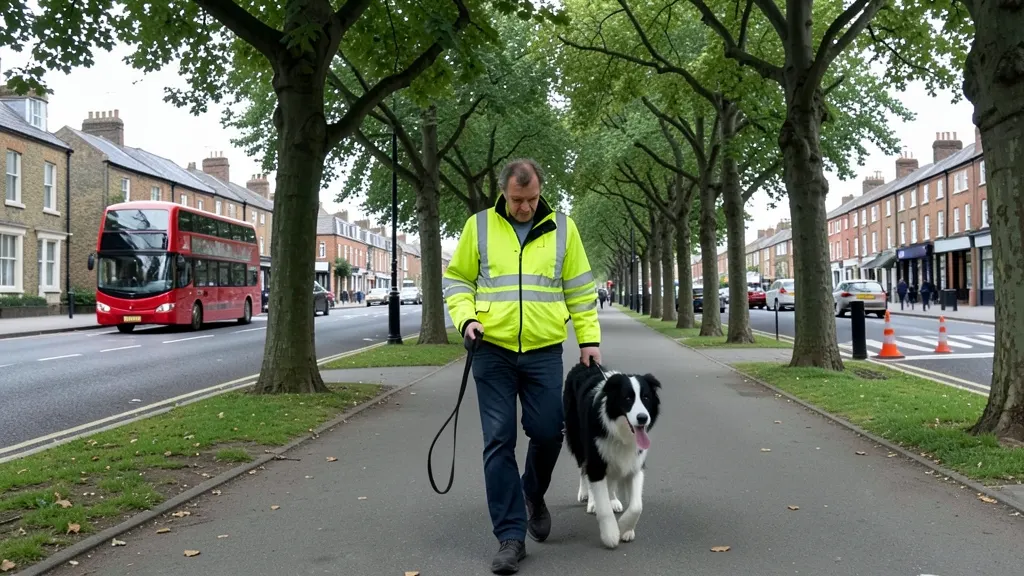
- Dog walking. Linear parks and lakeside routes give dog walkers plenty of options, and these are exactly the places where lighting is thin and drivers are not looking out for pedestrians. See Hi-vis for dog walking in Milton Keynes.
Hi-vis guidance that applies to everything
A few principles carry across all three activities. The Highway Code makes the legal side straightforward for cyclists. Rule 59 says light-coloured or fluorescent clothing can help other road users see a cyclist in daylight and poor light, while reflective clothing or accessories such as belts, arm or ankle bands can increase visibility in the dark. Rule 60 requires a cycle used at night to have a white front light and a red rear light lit, plus a red rear reflector. Hi-vis is a supplement to good lights, never a replacement for them. Rules 17 and 3 make the same point for pedestrians: in the dark, wear something reflective, because reflective materials can be seen by drivers using headlights up to three times as far away as non-reflective materials.
The key point to hold onto is the difference between fluorescent and reflective. Fluorescent material helps in daylight and poor light by making you stand out against a grey or green background. It does very little in darkness. Retroreflective material is what works at night, bouncing headlight beams straight back at the driver. A jacket that combines both, with reflective bands placed where movement catches the eye, covers the full journey from dusk to dark. Ankles and knees are worth attention, because moving reflective parts draw the eye more than a static panel on the chest.
If you need certified gear, EN ISO 20471 has three classes. Class 1 requires a minimum fluorescent background area of 0.14 m2 and 0.13 m2 of retroreflective material is the class 2 minimum; class 3, the highest, needs at least 0.80 m2 of fluorescent background material and 0.20 m2 of retroreflective material. Most commuters and leisure users do not need certified clothing, but if your employer issues hi-vis, the Personal Protective Equipment at Work Regulations 1992 require suitable PPE to be provided where there is a risk to health or safety, and since 6 April 2022 those duties also cover limb (b) workers, with the employer providing the PPE free of charge.
Look after whatever you buy. HSE guidance says reusable PPE must be cleaned and kept in good condition, and hi-vis jackets, trousers and coveralls must be cleaned regularly, with workers reporting any loss, destruction or obvious defect. The same logic applies to your own kit: a dirty reflective strip reflects poorly, and a jacket left crumpled in a pannier loses its shape and some of its effectiveness. Wash according to the label, avoid harsh scrubbing of the reflective bands, and check stitching and strips now and then.
Where to go next
For the general background on the wider region, start with Hi-vis clothing in South East England: a regional guide. If cycling is your main concern, Hi-vis jackets for cycling: a buyer's guide explains what to look for before you buy, and because winter commuting here means rain as well as darkness, Waterproof hi vis jackets: myths and facts and Winter hi vis jackets: a practical buyer's guide are both worth a read. Runners can go straight to Hi-vis jackets for running: how to choose, and dog walkers to Hi-vis jackets for dog walking: how to choose. Whichever activity fills your evenings, the Milton Keynes themed pages above cover the local detail.
Milton Keynes at a glance
- Nation: England
- Region: South East England
- Population: 264349
| Measure | Time |
|---|---|
| Sunrise on the winter solstice | 08:09 |
| Sunset on the winter solstice | 15:53 |
| Daylight on the winter solstice | 7h 44m |
| Sunset when the clocks go back (2026-10-25) | 16:48 |
| Days a year with a dark commute | 121 |
Frequently asked questions
Do I legally have to wear hi-vis when cycling in Milton Keynes?
No. The Highway Code does not make hi-vis a legal requirement for cyclists, but Rule 59 recommends light-coloured or fluorescent clothing in daylight and poor light, and reflective clothing or accessories in the dark. Rule 60 does require a white front light, a red rear light and a red rear reflector when you ride at night, so lights are the legal part and hi-vis is strongly advised on top.
Why does hi-vis matter so much in winter here?
On the winter solstice in Milton Keynes the sun rises at 08:09 and sets at 15:53, and there are 121 days a year when sunset comes before half past five in the evening or sunrise after quarter to eight in the morning. That means a normal commute is partly in the dark for a large part of the year.
Is fluorescent or reflective clothing better for evening dog walks?
Reflective, without question, once it is properly dark. Fluorescent material works in daylight and poor light by standing out against the background, but it does little at night. Reflective material can be seen by drivers using headlights up to three times as far away as non-reflective materials, according to Highway Code Rule 3.
What do the EN ISO 20471 classes mean?
The standard has three classes based on how much visible material a garment contains. Class 1 requires a minimum fluorescent background area of 0.14 m2, class 2 requires 0.50 m2 and class 3 requires 0.80 m2, with retroreflective minimums of 0.10, 0.13 and 0.20 m2 respectively. Class 3 is the highest class and is what you would expect on motorway or rail workwear.
How should I look after a hi-vis jacket?
Clean it regularly and follow the care label. HSE guidance says reusable PPE must be cleaned and kept in good condition, and hi-vis garments must be cleaned regularly, with workers reporting any loss, destruction or obvious defect. Dirt and wear reduce how well the reflective strips work, so check them periodically, and replace the jacket when the reflective bands have gone dull.