Hi-vis clothing in Manchester
Last updated
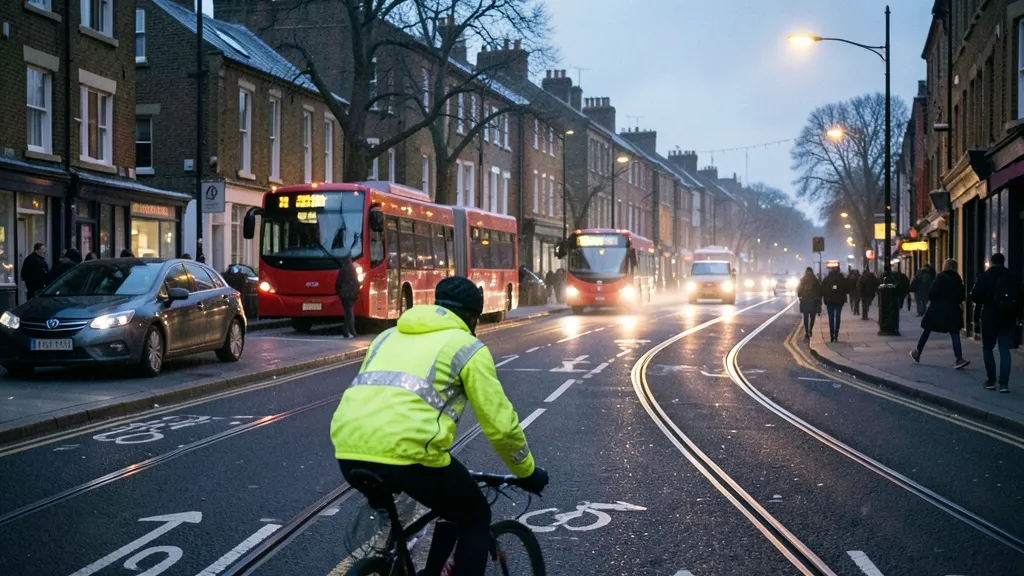
Manchester is a city built on industry, and a good deal of that industry is still visible on its streets. With a population of 552,000 at the 2021 census, it is one of England's largest cities, and its history as a textile manufacturing centre, once known as cottonopolis, is part of why the place looks and works the way it does today. People here move around in a mixture of ways: on foot, by tram, by bike and by van, often on the same streets at the same time. That mixture is exactly why being seen matters.
The light is a real factor too. On the winter solstice, sunrise in Manchester comes at 08:22 and sunset at 15:51, which leaves just 7 hours and 28 minutes of daylight. There are 123 days a year when sunset falls before half past five in the evening or sunrise comes after quarter to eight in the morning, meaning a normal commute often happens partly in the dark. Whatever your reason for being out on the pavement, the towpath or the road, high visibility clothing is one of the simplest ways to make sure you are spotted in good time.
What this guide covers
This hub pulls together the main reasons people in Manchester wear hi-vis, and points you to more detailed pages for each one.
Cycling and commuting
Cycling is a growing part of how the city moves. Around 2% of journeys in Manchester were made by bicycle in 2023, and cycle routes form part of the Bee Network, the region's integrated transport system. National Cycle Route 6 enters the city via the Fallowfield Loop and passes through the city centre, so plenty of riders mix with traffic at some point on their trip. If you ride to work, even part of the way, a hi-vis jacket is one of the cheapest pieces of insurance you can buy. Our page on hi-vis for cycling and commuting in Manchester goes into local detail, and the general hi-vis jackets for cycling buyer's guide covers what to look for.
Work and site wear
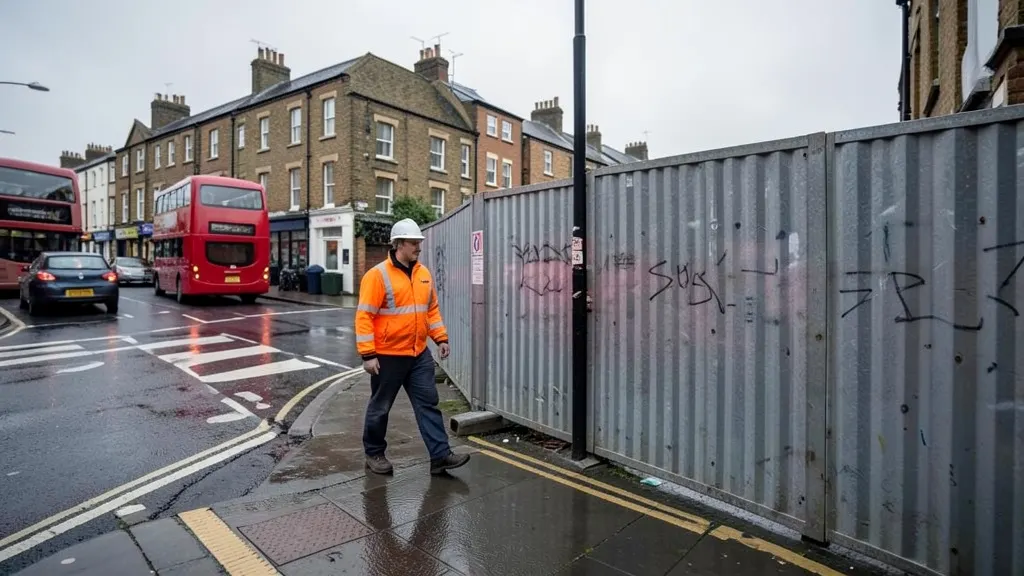
Manchester has been rebuilding itself for a long time. Extensive investment and regeneration followed the 1996 Manchester bombing, and construction and redevelopment work continues to be a regular feature of the city centre and the surrounding districts. Anyone working on or near live roads, in a yard or around moving plant should be wearing hi-vis that meets the right standard. If you work in the trades, our high visibility clothing workwear guide explains the classes and what your employer should be providing.
Running
Runners in the city are well served for routes. Heaton Park is the largest open space in the city, and the canal network adds miles of flat, traffic-free towpath. The Bridgewater Canal, Britain's first wholly artificial waterway, opened in 1761 to bring coal into central Manchester, and the towpaths built alongside waterways like this are now used by far more joggers than barge horses. Many runners fit their miles in after work, which in winter means running in the dark. See our page on hi-vis for running in Manchester for route-specific advice, and the general guide on hi-vis jackets for running for what to buy.
General hi-vis guidance for Manchester
A few principles hold true whichever activity brings you out onto the city's streets.
Understand the difference between fluorescent and reflective. Fluorescent colours, usually yellow or orange, help you stand out in daylight and poor light such as overcast mornings and drizzly afternoons. They do very little in the dark. Reflective material only works when a light source hits it, so it is what saves you after sunset. The Highway Code makes this distinction too. Rule 59 advises cyclists that light-coloured or fluorescent clothing helps in daylight and poor light, while reflective clothing or accessories such as belts, arm and ankle bands increase visibility in the dark. Rule 3 adds that reflective materials can be seen by drivers using headlights up to three times as far away as non-reflective materials. Most good hi-vis jackets combine both.
Check the standard for work wear. Garments certified to EN ISO 20471 come in three classes. Class 1 has a minimum of 0.14 square metres of fluorescent background material, class 2 has 0.50 and class 3, the highest, has 0.80. The minimum retroreflective areas are 0.10, 0.13 and 0.20 square metres respectively. Under the Personal Protective Equipment at Work Regulations 1992, employers must provide suitable PPE free of charge to workers exposed to a health or safety risk, and since 6 April 2022 that duty has also covered limb (b) workers. HSE guidance says reusable PPE must be cleaned regularly and kept in good condition, and workers must report any loss or obvious defect, so a filthy or torn jacket is not just scruffy, it is out of compliance.
Do not rely on clothing alone. Rule 60 requires a cycle used at night to have a white front light and red rear light lit, plus a red rear reflector. A hi-vis jacket complements lights and reflectors, it does not replace them. The same logic applies to runners and walkers: a head torch helps you see hazards on the towpath while reflective panels help others see you.
Plan for the clocks going back. In 2026 the clocks go back on 25 October, and that evening the sun sets in Manchester at 16:50. The week after the change is when many people suddenly find themselves commuting home in the dark, so it is a sensible moment to check your kit, replace worn straps and tidy up faded jackets. Our guide to waterproof hi vis jackets and the winter hi vis jackets buyer's guide both help with the wet, cold part of the year, which in this city is a long one.
Where to read next
If you want the wider picture for the county, including the towns around the city, see our guide to hi-vis clothing in Greater Manchester. For activity-specific advice, start with the pages on cycling and commuting, running and workwear. Each one covers the standards, the fit and the features worth paying attention to, written for conditions you will actually meet on Manchester's streets.
Manchester at a glance
- Nation: England
- Region: Greater Manchester
- Population: 552000
| Measure | Time |
|---|---|
| Sunrise on the winter solstice | 08:22 |
| Sunset on the winter solstice | 15:51 |
| Daylight on the winter solstice | 7h 28m |
| Sunset when the clocks go back (2026-10-25) | 16:50 |
| Days a year with a dark commute | 123 |
Frequently asked questions
What class of hi-vis do I need for work in Manchester?
It depends on the risk. EN ISO 20471 class 2 is the common requirement for work on or near roads, while class 3, with at least 0.80 square metres of fluorescent material and 0.20 square metres of retroreflective material, is the highest class and suits the riskiest settings, such as high-speed roads. Your employer should assess the risk and provide suitable PPE free of charge under the Personal Protective Equipment at Work Regulations 1992.
Is a hi-vis jacket enough for cycling at night?
No. Rule 60 of the Highway Code requires a white front light and red rear light, lit, plus a red rear reflector, whenever you ride at night. A hi-vis jacket with reflective panels helps drivers pick you out at greater distance, but it works alongside lights, not instead of them.
Does fluorescent clothing help in the dark?
Very little. Fluorescent material works by converting ultraviolet light into visible light, so it is most useful in daylight and poor daytime light such as overcast weather. In the dark you need retroreflective material, which returns light from headlights and street lighting back towards the source. With sunset at 15:51 on the winter solstice in Manchester, the reflective panels on your jacket do most of the work for much of the year.
How do I look after a hi-vis jacket?
Wash it regularly following the care label, because dirt and grime cut both the fluorescent effect and the reflective performance. HSE guidance says reusable PPE must be cleaned and kept in good condition, and workers must report any loss or obvious defect. If the reflective strips have cracked or the fabric is permanently grey, it is time to replace the garment.
When should I switch to winter hi-vis kit?
A good trigger is the clocks going back, which in 2026 falls on 25 October, when sunset in Manchester is at 16:50. From then on, morning and evening commutes happen in low light or darkness. Check that reflective material is intact and consider a waterproof hi-vis jacket for the wetter months.