Hi-vis clothing in Liverpool
Last updated
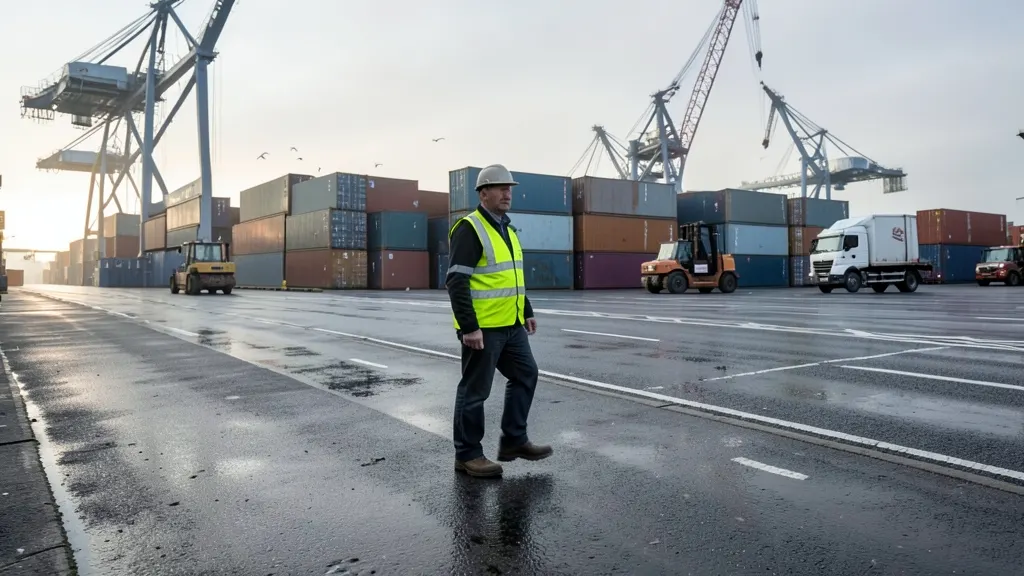
Liverpool is a port city in Merseyside with a population of 486,100 at the 2021 census. It grew up around its docks, and the water still shapes working life here. The Port of Liverpool extends from Brunswick Dock to Seaforth Dock and includes the Birkenhead Docks, and the first of the Liverpool docks was constructed in 1715. That dock system grew into a large interconnected network that still supports maritime trade today. Alongside the port, the city's industries include tourism, culture, hospitality, healthcare, life sciences, advanced manufacturing and the creative and digital sectors.
All of this means plenty of people are outdoors near traffic, water and moving machinery, often in poor light. Liverpool sits far enough north that winter days are short. On the winter solstice, sunrise is at 08:25 and sunset at 15:54, giving just 7 hours and 29 minutes of daylight. There are 123 days a year when sunset comes before half past five in the evening or sunrise comes after quarter to eight in the morning, so a normal commute is partly in the dark. The clocks go back on 25 October 2026, when sunset in Liverpool is at 16:53. That is the point in the year when reflective clothing starts to earn its keep.
What this guide covers
We have put together themed pages for Liverpool, each looking at one situation where being seen matters.
For workwear, there is a lot of dockside, yard and logistics work in this city, and much of it happens outdoors. Our page on hi-vis for work and site wear in Liverpool covers what to look for in a work jacket, including the classes of EN ISO 20471 and what your employer should provide.
For runners, hi-vis for running in Liverpool looks at the riverside routes and the gear that keeps you visible on dark evenings.
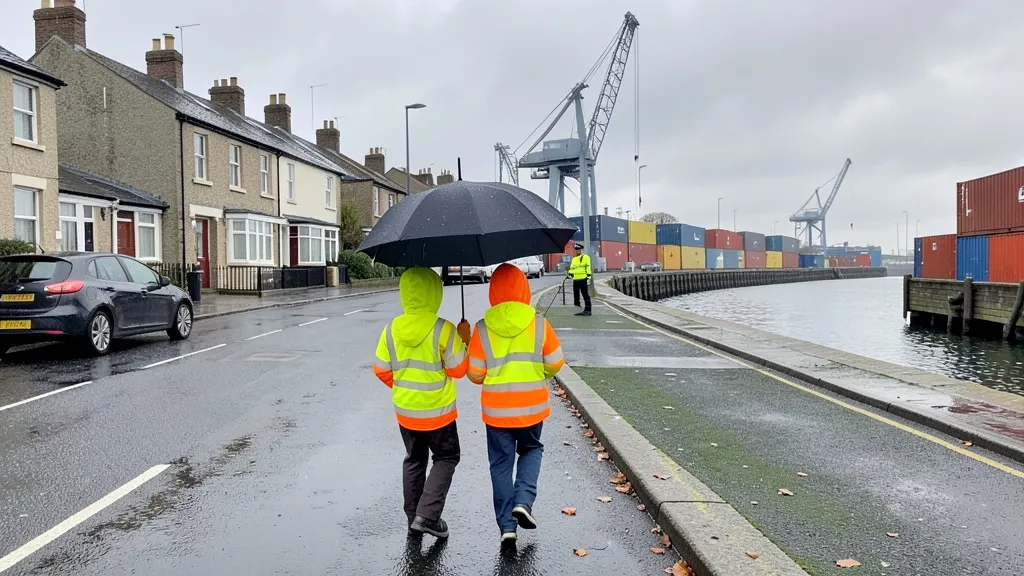
For families, hi-vis for the school run and children in Liverpool covers children's hi-vis jackets and how to make the walk to school safer on gloomy mornings.
General hi-vis guidance for Liverpool
A few principles apply whatever you are doing, and they are worth knowing before you buy anything.
Understand the difference between fluorescent and reflective. Fluorescent material helps drivers see you in daylight and poor light such as dusk and overcast weather. Reflective material only works properly in the dark, when it bounces light from headlights back towards the source. Because Liverpool has so many days with a commute in the dark, you really need both, and most hi-vis jackets combine them.
If you are buying for work, check the class. EN ISO 20471 has three classes. Class 1 has a minimum fluorescent background area of 0.14 m2 and retroreflective area of 0.10 m2. Class 2 requires 0.50 m2 of fluorescent material and 0.13 m2 of retroreflective material. Class 3 is the highest, with at least 0.80 m2 of fluorescent background material and 0.20 m2 of retroreflective material. For most site and roadside work, class 2 is the usual starting point, and higher-risk settings call for class 3.
If your employer asks you to wear hi-vis, they should be the ones supplying it. Under the Personal Protective Equipment at Work Regulations 1992, employers must ensure suitable PPE is provided to workers exposed to a risk to health or safety, unless the risk is adequately controlled by other means. Since 6 April 2022 these duties also cover limb (b) workers, and the employer must provide the PPE free of charge.
For anyone walking, running or cycling, the Highway Code is worth a read. Rule 3 says to help other road users to see you, and in the dark to use reflective materials such as armbands, sashes, waistcoats, jackets or footwear, which can be seen by drivers using headlights up to three times as far away as non-reflective materials. Rule 17 says that at night you should wear something reflective. Rule 59 tells cyclists that light-coloured or fluorescent clothing helps in daylight and poor light, while reflective clothing or accessories such as belts and arm or ankle bands increase visibility in the dark, and Rule 60 requires white front and red rear lights lit at night plus a red rear reflector.
Look after what you own. HSE guidance says reusable PPE must be cleaned and kept in good condition, and hi-vis jackets, trousers and coveralls must be cleaned regularly. A grubby jacket loses fluorescence, and a jacket with damaged reflective strips is much less effective. Workers must report any loss, destruction or obvious defect. Wash hi-vis inside out, keep it out of strong sunlight when stored, and replace it when the reflective bands start to look dull.
Where to read next
Start with the theme that fits your day. If you work outdoors, see our page on hi-vis for work and site wear in Liverpool and our general guide to high visibility clothing workwear: choosing a hi vis jacket. Liverpool weather being what it is, the waterproof and winter guides are worth a look too: waterproof hi vis jackets: myths and facts and winter hi vis jackets: a practical buyer's guide deal with rain, cold and dark commutes.
Runners should head to hi-vis for running in Liverpool and our wider guide to hi-vis jackets for running. Parents can read hi-vis for the school run and children in Liverpool along with kids hi vis jackets: myths and facts. If you travel further afield for work or training, our regional guide to hi-vis clothing in Merseyside covers the wider area, including the motorway routes to the north and east of the city: the M58 to the north, and the M62 and M57 to the east. Cyclists can also make use of National Cycle Route 56, National Cycle Route 62 and National Cycle Route 810, which all run through Liverpool, and runners and walkers will find riverside paths along the Mersey at Otterspool Promenade, with a footpath and cycling lane continuing north to the Albert Dock. Sefton Park, the largest public park in Liverpool and the Liverpool City Region, is another spot where reflective gear still matters on short winter days, even away from traffic.
Liverpool at a glance
- Nation: England
- Region: Merseyside
- Population: 486100
| Measure | Time |
|---|---|
| Sunrise on the winter solstice | 08:25 |
| Sunset on the winter solstice | 15:54 |
| Daylight on the winter solstice | 7h 29m |
| Sunset when the clocks go back (2026-10-25) | 16:53 |
| Days a year with a dark commute | 123 |
Frequently asked questions
What class of hi-vis jacket do I need for work in Liverpool?
It depends on the risk. EN ISO 20471 has three classes: class 1 is the lowest, class 2 requires 0.50 m2 of fluorescent material and 0.13 m2 of retroreflective material, and class 3 requires at least 0.80 m2 of fluorescent and 0.20 m2 of retroreflective material. For most outdoor and yard work, class 2 is the common choice, with class 3 for higher-risk environments. If in doubt, ask your employer or safety officer.
Does my employer have to provide my hi-vis jacket?
In most cases, yes. Under the Personal Protective Equipment at Work Regulations 1992, employers must ensure suitable PPE is provided to workers exposed to a risk to health or safety, unless the risk is adequately controlled by other means. Since 6 April 2022 these duties also cover limb (b) workers, and the employer must provide the PPE free of charge.
Is fluorescent or reflective material better for dark Liverpool mornings?
They do different jobs. Fluorescent material works best in daylight and poor light such as dusk, while reflective material works in the dark by returning light from headlights to the driver. With 123 days a year when the commute is partly in the dark in Liverpool, the best jacket combines both.
How do I keep a hi-vis jacket working well?
HSE guidance says reusable PPE must be cleaned and kept in good condition, and hi-vis jackets, trousers and coveralls must be cleaned regularly. Dirt reduces fluorescence and damaged strips lose reflectivity. Workers must report any loss, destruction or obvious defect, and a jacket with worn or dull reflective bands should be replaced.