Hi-vis clothing in Lincoln
Last updated
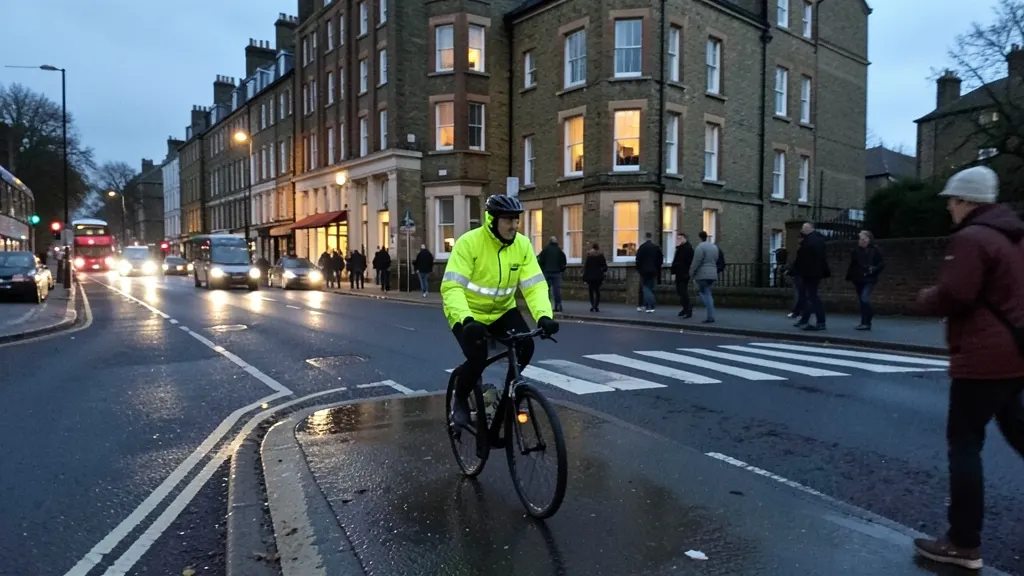
Lincoln is a compact cathedral city in the East Midlands with a population of 103,813 in the city district at the 2021 census. It grew on heavy engineering, from locomotives to gas turbines, and the University of Lincoln now occupies former industrial space. The city sits on the A57, A46, A15 and A158, so traffic cuts through and around it on fast main roads. That mix of busy routes, green space and waterways makes visibility a real concern for anyone who walks, rides, runs or cycles here.
Lincoln's weather and daylight also argue for hi-vis. Waddington station recorded 115.5 days a year with 1.0 mm or more of rain between 1991 and 2020, so grey, wet conditions are common. On the winter solstice, sunrise in Lincoln is at 08:14 and sunset at 15:45, giving just 7 hours and 31 minutes of daylight. There are 122 days a year here when sunset falls before half past five in the evening or sunrise comes after quarter to eight in the morning, which means a normal commute is partly in the dark. The clocks go back on 25 October 2026, when sunset in Lincoln is at 16:44, and from that point the dark evenings settle in.
What this guide covers
This hub page pulls together the hi-vis topics that matter most in Lincoln, with a dedicated page for each.
Horse riding
Riders in the county around Lincoln share narrow country lanes with cars, tractors and lorries. A horse and rider in dark clothing is surprisingly hard to spot at speed. Our page on Hi-vis for horse riding in Lincoln covers what to wear on horseback, from rider jackets to leg bands for the horse, and it links to the wider Hi-vis jackets for horse riding: a buyer's guide.
Dog walking
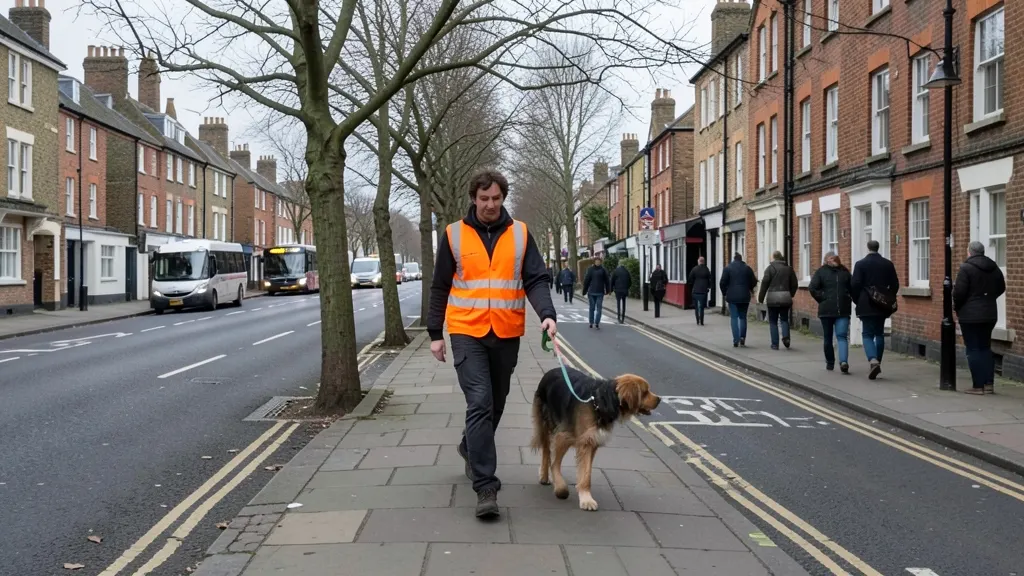
Lincoln has plenty of green space for dog owners, including Hartsholme Country Park, which covers more than 200 acres and is Grade II listed, and the 22-acre Lincoln Arboretum, a Grade II park designed by Edward Milner. The Foss Dyke, possibly the oldest canal in England still in use, runs from the River Trent at Torksey to Lincoln and gives walkers a long waterside route. If you walk your dog along the water or across the fields in the evening, our Hi-vis for dog walking in Lincoln page is for you, and the general advice sits in Hi-vis jackets for dog walking: how to choose.
Running
Runners in Lincoln cover everything from city pavements to riverside paths. Racing has a long history here too: the Lincoln Grand Prix one-day cycle race has been held since 1956, and plenty of locals take their own training seriously. If you run before work or after dark, see Hi-vis jackets for running: how to choose.
Hi-vis guidance that applies across all of Lincoln
A few principles hold true whatever you are doing.
Fluorescent colours work in daylight and poor light, but they do little in the dark. Reflective material is what catches headlights. The Highway Code makes this distinction clearly. Rule 3 advises using reflective materials such as armbands, sashes, waistcoats, jackets or footwear in the dark, and notes that drivers using headlights can see them up to three times as far away as non-reflective materials. Rule 17 says simply that at night you should wear something reflective. Rule 59 gives the same advice for cyclists, and Rule 86 and Rule 87 tell motorcyclists to make themselves visible from the side as well as the front and rear, and to wear reflective clothing or strips when riding in the dark.
If you need a garment for work rather than leisure, look at the EN ISO 20471 standard. It has three classes. Class 1 requires a minimum of 0.14 m2 of fluorescent background material and 0.10 m2 of retroreflective material. Class 2 requires 0.50 m2 and 0.13 m2 respectively. Class 3, the highest, requires at least 0.80 m2 of fluorescent material and 0.20 m2 of retroreflective material. For most people who ride or walk on rural lanes, a class 2 garment is the sensible everyday choice, with class 3 reserved for high-risk situations such as working on live roads.
Care matters too. Reusable PPE must be cleaned and kept in good condition according to HSE guidance, which says hi-vis jackets, trousers and coveralls must be cleaned regularly, and that workers must report any loss, destruction or obvious defect. A jacket caked in mud loses much of its brightness, so wash yours as the label directs and check the reflective strips still shine.
Lincoln rain also means waterproofing deserves a thought. A soaked jacket that stays bright is worth more than a dry one left at home. Our page on Waterproof hi vis jackets: myths and facts explains the options.
Where to read next
Start with the theme that matches what you do:
- Hi-vis for horse riding in Lincoln
- Hi-vis for dog walking in Lincoln
- Hi-vis jackets for running: how to choose
If you want the wider picture, including nearby towns and counties, read the Hi-vis jacket East Midlands: a regional guide. For the coldest months, Winter hi vis jackets: a practical buyer's guide covers insulation, layers and staying visible through the shortest days of the year.
Lincoln at a glance
- Nation: England
- Region: East Midlands
- Population: 103813
| Measure | Time |
|---|---|
| Sunrise on the winter solstice | 08:14 |
| Sunset on the winter solstice | 15:45 |
| Daylight on the winter solstice | 7h 31m |
| Sunset when the clocks go back (2026-10-25) | 16:44 |
| Days a year with a dark commute | 122 |
Frequently asked questions
Do I need hi-vis in Lincoln during the day?
Yes, on dull or wet days it makes a real difference. Lincoln sees 115.5 days a year with 1.0 mm or more of rain, and fluorescent colours stand out in poor light even when it is not fully dark. Reflective details matter most after sunset.
How many days a year is a Lincoln commute in the dark?
There are 122 days a year in Lincoln when sunset comes before half past five in the evening or sunrise comes after quarter to eight in the morning. A normal commute is therefore partly in the dark on those days, so reflective clothing is worth wearing.
What hi-vis class should a rider or dog walker choose?
EN ISO 20471 class 2, with at least 0.50 m2 of fluorescent background material and 0.13 m2 of retroreflective material, suits most everyday use on rural lanes and footpaths. Class 3, with at least 0.80 m2 and 0.20 m2 respectively, is for higher-risk settings such as work on live roads.
How often should I wash a hi-vis jacket?
HSE guidance says reusable PPE must be cleaned and kept in good condition, and that hi-vis jackets, trousers and coveralls must be cleaned regularly. Follow the care label, and check the reflective strips still shine when headlights hit them.
Is fluorescent or reflective material more important?
They do different jobs. Fluorescent colours help in daylight and poor light, while reflective material works at night. Rule 3 of the Highway Code notes that reflective materials can be seen by drivers using headlights up to three times as far away as non-reflective materials.