Hi-vis clothing in Leicester
Last updated
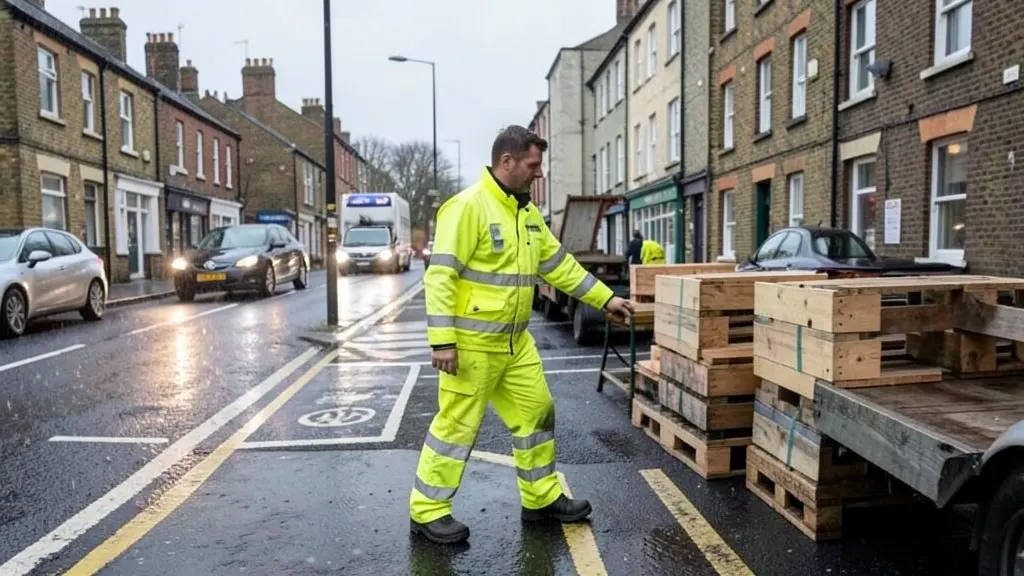
Leicester is a city of 368,581 people (2021 census, covering the unitary authority area), sitting in the East Midlands where the M1 and M69 motorways meet the A6 and A46 trunk routes. It grew on hosiery, textiles and footwear, and although service sector work, particularly retail, replaced many industrial jobs from the 1970s and 1980s onwards, the city still has plenty of people working outdoors, in warehouses and around transport.
Why does visibility matter here? Partly it is the light. On the winter solstice in Leicester, sunrise is at 08:13 and sunset is at 15:51, which leaves only 7h 38m of daylight. There are 121 days a year when sunset comes before half past five in the evening or sunrise after quarter to eight in the morning, so an ordinary commute is partly in the dark. The clocks go back on 25 October 2026, and sunset in Leicester that day is at 16:48, a useful reminder that dark evenings arrive early here. With motorways and trunk routes converging on a busy built-up city, being seen clearly is a practical daily concern for workers, parents, runners and riders alike.
What this guide covers for Leicester
We have put together themed pages for the city, each looking at hi-vis in a specific context.
The first theme is work and site wear. Leicester's industrial roots in hosiery, textiles and footwear have given way in part to services, yet logistics, distribution and manufacturing still employ many people who spend their shifts outdoors, on loading areas or around moving vehicles. Our High visibility clothing workwear: choosing a hi vis jacket page explains the practical choices, and if you work across the wider region, the Hi-vis jacket East Midlands: a regional guide adds a broader view.
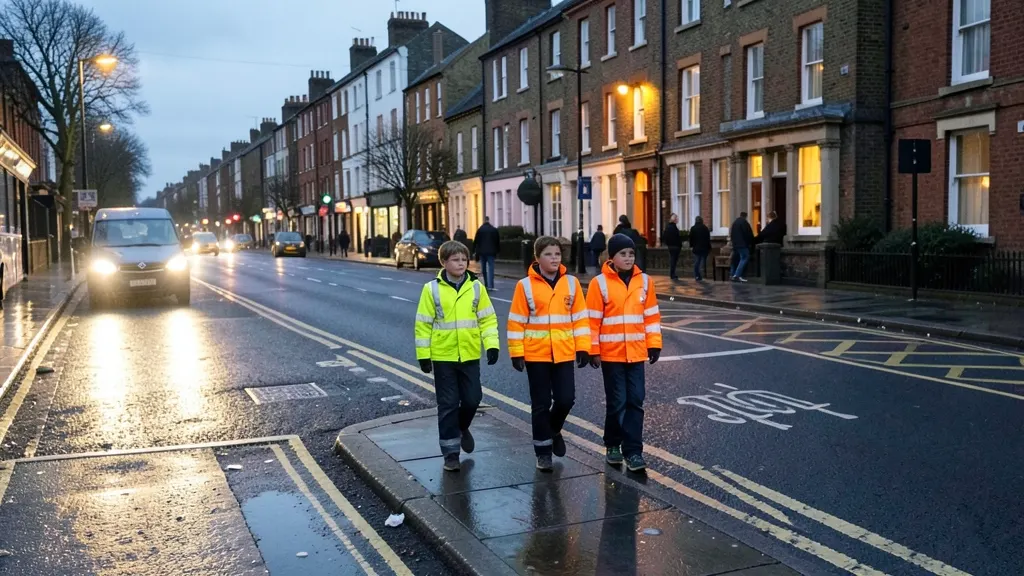
The second theme is children and the school run. Leicester is a dense, busy city where many school journeys happen on built-up roads, and dark winter mornings make a reflective layer over a school coat genuinely useful. Our Hi-vis for the school run and children in Leicester page covers the details, and Kids hi vis jackets: myths and facts sorts the claims from the evidence.
The third theme is running. Riverside and canal routes are popular here, with Abbey Park, the city's premier park opened in 1882, Watermead Country Park's network of artificial lakes in the river valley in and north of the city, and the arm of the Grand Union Canal that runs to Leicester all giving traffic-free options. National Cycle Route 6, running from London to the Lake District, passes through Leicester too, so shared paths are common. For gear advice, see Hi-vis for running in Leicester and our general Hi-vis jackets for running: how to choose page.
Hi-vis guidance that applies across all of these uses
Whatever you are doing, the same principles hold.
Know the classes. EN ISO 20471 has three classes. The minimum fluorescent background area is 0.14 m2 for class 1, 0.50 m2 for class 2 and 0.80 m2 for class 3, with minimum retroreflective areas of 0.10, 0.13 and 0.20 m2. Class 3 is the highest, with at least 0.80 m2 of fluorescent background material and 0.20 m2 of retroreflective material. Workers near fast traffic or on motorway-linked routes generally need class 3; a class 2 jacket is often enough for warehouse yards and lower-risk sites.
Understand the difference between fluorescent and reflective. Fluorescent material helps in daylight and poor light. Reflective material only works when a light source, usually headlights, is shining on it. With dark evenings arriving early in Leicester, you often need both in the same garment. The Highway Code (Rule 3) notes that reflective materials such as armbands, sashes, waistcoats, jackets or footwear can be seen by drivers using headlights up to three times as far away as non-reflective materials. Rule 17 says simply that at night you should wear something reflective.
Match the garment to the job or journey. Cyclists should follow Rule 59, which says light-coloured or fluorescent clothing can help other road users see a cyclist in daylight and poor light, while reflective clothing or accessories such as belts or arm and ankle bands can increase visibility in the dark. Rule 60 requires white front and red rear lights lit at night plus a red rear reflector, and Rule 69 requires cyclists to obey all traffic signs and traffic light signals. Motorcyclists should follow Rules 86 and 87, making themselves visible from the side as well as the front and rear, with fluorescent clothing or strips by day and reflective clothing or strips in the dark.
If you are an employer, know the law. Under the Personal Protective Equipment at Work Regulations 1992, employers must ensure suitable PPE is provided to workers exposed to a risk to health or safety, unless the risk is adequately controlled by other means. Since 6 April 2022 these duties also cover limb (b) workers, and the employer must provide the PPE free of charge.
Look after what you own. HSE guidance says reusable PPE must be cleaned and kept in good condition, and hi-vis jackets, trousers and coveralls must be cleaned regularly. Workers must report any loss, destruction or obvious defect. A grubby jacket loses fluorescent brightness, so washing matters as much as buying well.
Consider the weather. Winter in Leicester mixes rain, grey light and long dark hours, so waterproof and insulated options earn their keep. Our Waterproof hi vis jackets: myths and facts and Winter hi vis jackets: a practical buyer's guide pages cover those choices.
Finding the right page
Pick the page that matches what you do. If you work outdoors or around vehicles, start with the workwear guide. If you walk or cycle children to school in the dark, start with the school run page. If you run along the canal or through the parks before or after work, start with the running page. Each one digs into the specifics, and the regional East Midlands page sits alongside them if you travel for work or leisure beyond the city.
Leicester at a glance
- Nation: England
- Region: East Midlands
- Population: 368581
| Measure | Time |
|---|---|
| Sunrise on the winter solstice | 08:13 |
| Sunset on the winter solstice | 15:51 |
| Daylight on the winter solstice | 7h 38m |
| Sunset when the clocks go back (2026-10-25) | 16:48 |
| Days a year with a dark commute | 121 |
Frequently asked questions
What class of hi-vis jacket do I need in Leicester?
It depends on where you wear it. EN ISO 20471 class 2, with at least 0.50 m2 of fluorescent background material and 0.13 m2 of retroreflective material, suits many warehouse and lower-risk settings. Class 3, with at least 0.80 m2 of fluorescent background and 0.20 m2 of retroreflective material, is the highest class and is the safer choice near fast traffic.
Does my employer have to provide a hi-vis jacket?
Under the Personal Protective Equipment at Work Regulations 1992, employers must ensure suitable PPE is provided to workers exposed to a risk to health or safety, unless the risk is adequately controlled by other means. Since 6 April 2022 the duties also cover limb (b) workers, and the employer must provide the PPE free of charge.
How dark does Leicester get in winter?
On the winter solstice, sunrise in Leicester is at 08:13 and sunset is at 15:51, giving 7h 38m of daylight. There are 121 days a year when sunset comes before half past five in the evening or sunrise after quarter to eight in the morning, so a normal commute is partly in the dark.
Do children need reflective clothing on the school run?
The Highway Code (Rule 17) says that at night you should wear something reflective to make it easier for others to see you. Rule 3 notes that reflective materials can be seen by drivers using headlights up to three times as far away as non-reflective materials. In a busy, built-up city, that makes a reflective jacket or armbands a sensible choice for dark winter school journeys.
How should I care for a hi-vis jacket?
HSE guidance says reusable PPE must be cleaned and kept in good condition, and that hi-vis jackets, trousers and coveralls must be cleaned regularly. Workers must report any loss, destruction or obvious defect. Regular washing keeps the fluorescent brightness and reflective strips working as they should.