Hi-vis clothing in Leeds
Last updated
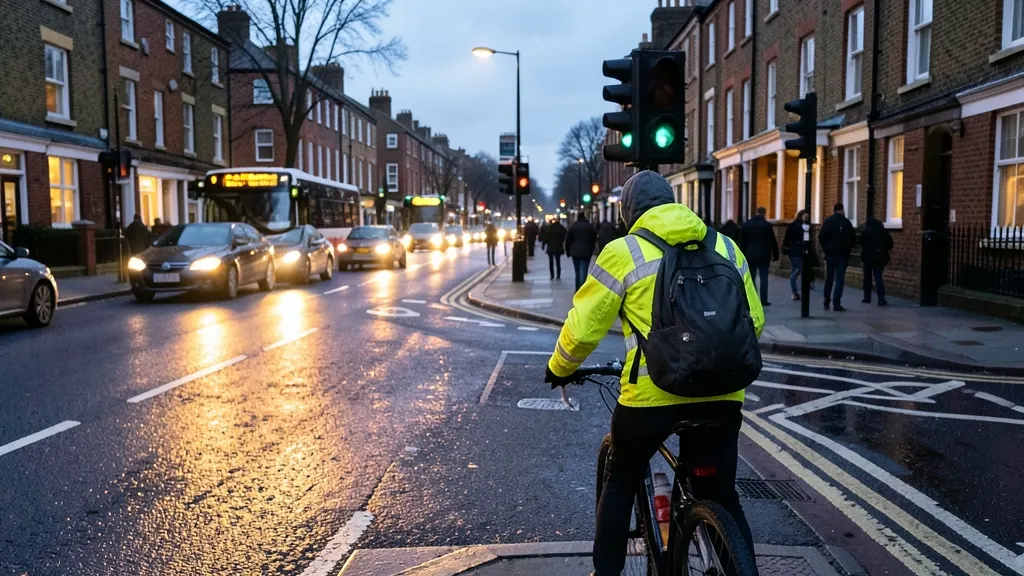
Leeds is a city that keeps people moving. With a population of 812,000 in the City of Leeds district at the 2021 census, it is one of the largest local authority areas in England, and its mix of finance, retail, leisure, construction and manufacturing means the roads carry a great deal of traffic at both ends of the working day. Motorway links such as the M1, M62 and A1(M) feed commuters in from across Yorkshire, while many people travel the last part of their journey on foot or by bike.
The light, or rather the lack of it, is the reason visibility matters so much here. On the winter solstice in Leeds, sunrise is at 08:21 and sunset is at 15:46, which leaves just 7 hours and 25 minutes of daylight. In total, Leeds has 124 days a year when the sun sets before half past five in the evening or rises after quarter to eight in the morning, so a normal commute falls at least partly in the dark for a good chunk of the year. The clocks go back on 25 October 2026, when sunset in Leeds is 16:47, and from that point the evening journey home is a low-light affair. A hi vis jacket in Leeds is not a fashion choice; it is the difference between being seen and being a shape a driver notices too late.
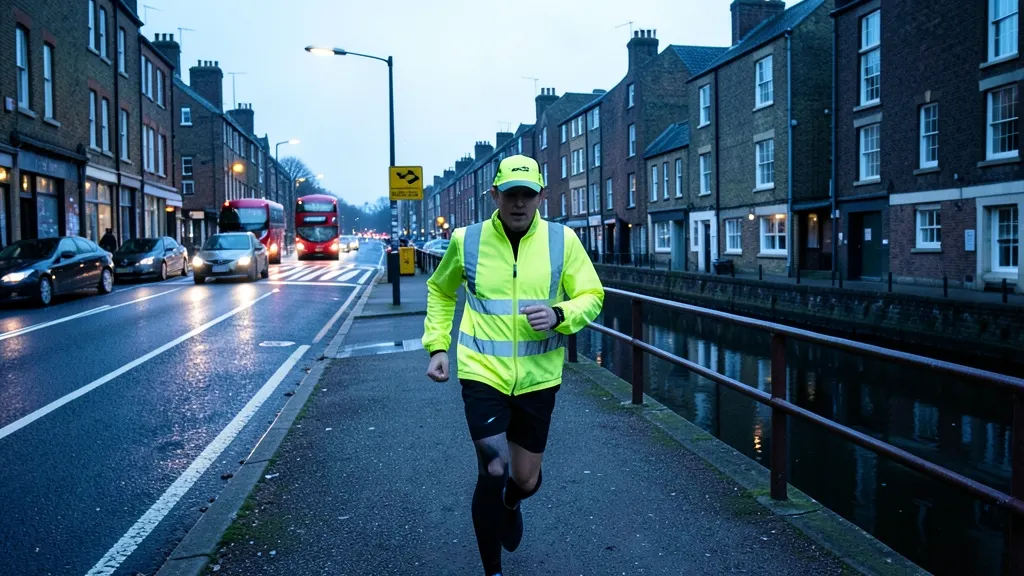
What this guide covers
This hub page gathers our Leeds-specific advice in one place, so you can go straight to the activity that matters to you.
- If you ride into work, hi-vis for cycling and commuting in Leeds covers what to wear on busy roads and off-road routes alike.
- If you run before or after work, hi-vis for running in Leeds looks at jackets and accessories for towpaths, parks and darker suburban streets.
- Families walking or cycling children to school will find practical advice on jackets, backpack covers and accessories that children will actually keep on.
Each themed page sits within our wider hi-vis clothing in Yorkshire: a regional guide, which covers the county as a whole.
Where Leeds life meets visibility
Leeds sits on the northern section of the Trans Pennine Trail, which walkers and cyclists can follow, and the towpath of the Leeds and Liverpool Canal gives the city another car-free walking and cycling route. Away from the towpaths, everyday journeys often involve main roads, roundabouts and bus lanes, so visibility needs to work both off-road and in traffic.
The city is also greener than many people expect. Over 60% of the Leeds district is green belt land, and there are sizeable parks such as Temple Newsam Park and House, Rothwell Country Park, Middleton Park and the grounds around Kirkstall Abbey ruins. Runners and dog walkers use these spaces year round, including in winter, and the same rules about being seen apply on a park path as on a dual carriageway.
Leeds is served by five universities and has the fourth largest student population in the country. That adds a large number of people walking and cycling at all hours, often in dark or wet conditions, and often on roads shared with buses, taxis and delivery vans.
Hi-vis guidance that applies across themes
Whichever activity brings you outdoors, the same principles hold.
Fluorescent colours work in daylight and poor light, but they do not help much in the dark. Reflective material is what catches headlights. The Highway Code makes this distinction clearly: Rule 59 says light-coloured or fluorescent clothing helps drivers see a cyclist in daylight and poor light, while reflective clothing or accessories such as belts, arm bands or ankle bands increase visibility in the dark. Rule 3 adds that reflective materials such as armbands, sashes, waistcoats, jackets or footwear can be seen by drivers using headlights up to three times as far away as non-reflective materials, and Rule 17 simply advises wearing something reflective at night.
If you are buying a jacket for cycling in traffic, or you work somewhere that requires certified hi-vis, look at the EN ISO 20471 classes. Class 1 requires at least 0.14 square metres of fluorescent background material, class 2 requires 0.50 square metres and class 3 requires 0.80 square metres, with matching minimum retroreflective areas of 0.10, 0.13 and 0.20 square metres. Class 3 is the highest class and is what you want where traffic moves fast or visibility is poor. A jacket alone will usually reach class 2; adding trousers can reach class 3.
For working riders and site visitors, the Personal Protective Equipment at Work Regulations 1992 require employers to provide suitable PPE to workers exposed to a health or safety risk unless that risk is controlled by other means. Since 6 April 2022 those duties also cover limb (b) workers, and the employer must provide the PPE free of charge. HSE guidance adds that reusable PPE must be cleaned and kept in good condition, so wash hi-vis jackets regularly, because dirt and grime flatten both the fluorescent colour and the reflective strips.
Practical habits matter as much as the garment. Move reflective strips so they are not hidden under a backpack or a scarf, and choose accessories that make your movement visible, because ankles and knees in motion catch a driver's eye better than a static panel on your back. Cyclists should also remember Rule 60: at night a cycle must have white front and red rear lights lit, plus a red rear reflector. Lights and hi-vis work together rather than one covering for the other.
Finding the right jacket
From here, the themed pages go deeper. Our hi-vis jackets for cycling: a buyer's guide explains classes, fits and features for commuters, while hi-vis jackets for running: how to choose covers lighter, more breathable options that still show up in headlights. Parents should read kids hi vis jackets: myths and facts, which tackles what children actually need on the walk to school.
Leeds winters are wet as well as dark, so it is worth pairing this page with waterproof hi vis jackets: myths and facts and winter hi vis jackets: a practical buyer's guide. The right jacket is the one that fits what you do, where you do it, and what time of day you are out there doing it.
Leeds at a glance
- Nation: England
- Region: Yorkshire
- Population: 812000
| Measure | Time |
|---|---|
| Sunrise on the winter solstice | 08:21 |
| Sunset on the winter solstice | 15:46 |
| Daylight on the winter solstice | 7h 25m |
| Sunset when the clocks go back (2026-10-25) | 16:47 |
| Days a year with a dark commute | 124 |
Frequently asked questions
Do I legally have to wear a hi vis jacket when cycling in Leeds?
No law requires cyclists to wear hi-vis anywhere in the UK. The Highway Code advises it, though. Rule 59 says fluorescent clothing helps other road users see you in daylight and poor light, and reflective clothing or accessories increase visibility in the dark. Rule 60 does create a legal requirement at night: your cycle must show a white front light, a red rear light and a red rear reflector.
What do the EN ISO 20471 classes actually mean?
The standard has three classes based on how much visible material a garment carries. Class 1 needs at least 0.14 square metres of fluorescent background material and 0.10 square metres of retroreflective material. Class 2 needs 0.50 and 0.13 square metres respectively, and class 3 needs 0.80 and 0.20. Class 3 is the highest and suits the riskiest settings, such as fast or poorly lit roads.
Is fluorescent or reflective clothing better for dark mornings?
Reflective wins in the dark, because fluorescent material needs daylight or artificial light to glow. The Highway Code notes that reflective materials can be seen by drivers using headlights up to three times as far away as non-reflective materials. The best approach is a fluorescent jacket with reflective strips, so you are covered in poor light as well as in full darkness.
How bad are Leeds winters for visibility?
On the winter solstice in Leeds, sunrise is 08:21 and sunset is 15:46, giving only 7 hours 25 minutes of daylight. There are 124 days a year in the city when sunset comes before half past five or sunrise after quarter to eight. That means a standard commute is partly in the dark for a large part of the year.
Does my employer have to provide hi-vis clothing?
Under the Personal Protective Equipment at Work Regulations 1992, employers must provide suitable PPE to workers exposed to a health or safety risk, unless the risk is adequately controlled by other means. Since 6 April 2022 this duty also covers limb (b) workers, and the PPE must be provided free of charge. HSE guidance says reusable PPE must be cleaned and kept in good condition, and any loss or obvious defect must be reported.