Hi-vis clothing in Inverness: a local guide
Last updated
Inverness sits at the northern end of the Great Glen, where the River Ness flows from Loch Ness out to the Moray Firth. It is a market town grown into a regional hub, home to some 48,248 people (2022, urban area west of the A9, National Records of Scotland definition), and it serves the Highlands and Islands with healthcare, education and research, business and economic services, public administration, and culture and leisure. The administrative centre for The Highland Council region, it was once the county town of Inverness-shire.
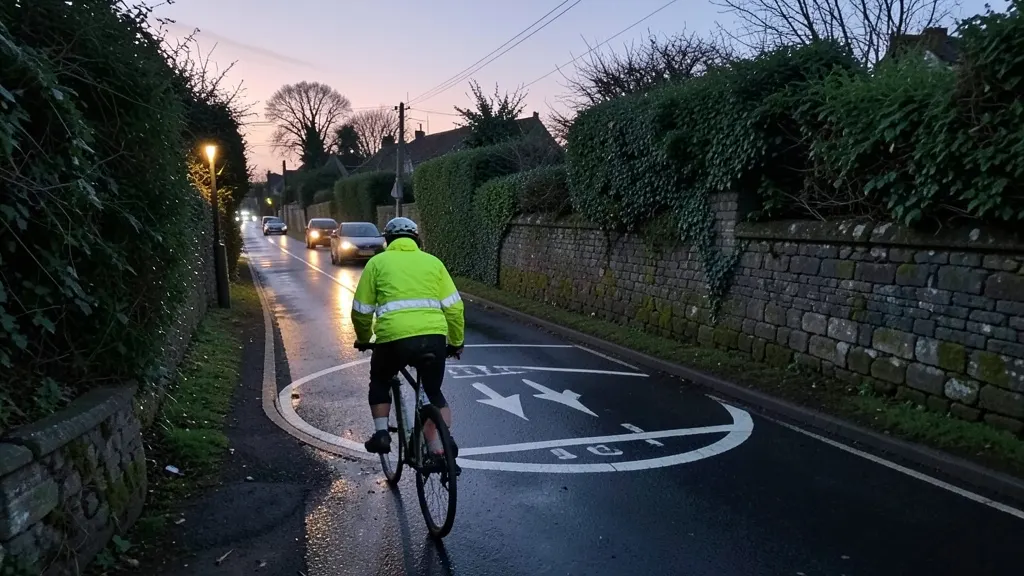
Visibility matters here for one reason above all: the light, or the lack of it. On the winter solstice the sun rises at 08:57 and sets at 15:32, giving just 6h 36m of daylight. Across the year there are 131 days when sunset comes before half past five in the evening or sunrise after quarter to eight in the morning, which means an ordinary commute is partly in the dark for a good chunk of the calendar. When the clocks go back on 25 October 2026, sunset in Inverness that day is at 16:47. If you walk, cycle or ride to work through the colder months, being seen is a daily concern rather than an occasional one.
The roads around the city add to the picture. Three trunk roads link Inverness with the rest of Scotland: the A9 north and south, the A82 to Glasgow via Fort William, and the A96 to Elgin and Aberdeen. These are busy routes shared by commuters, lorries, agricultural traffic, cyclists and riders, often in low light or wet weather.
What this guide covers
We have put together themed pages for Inverness, each looking at hi-vis through the lens of a particular activity:
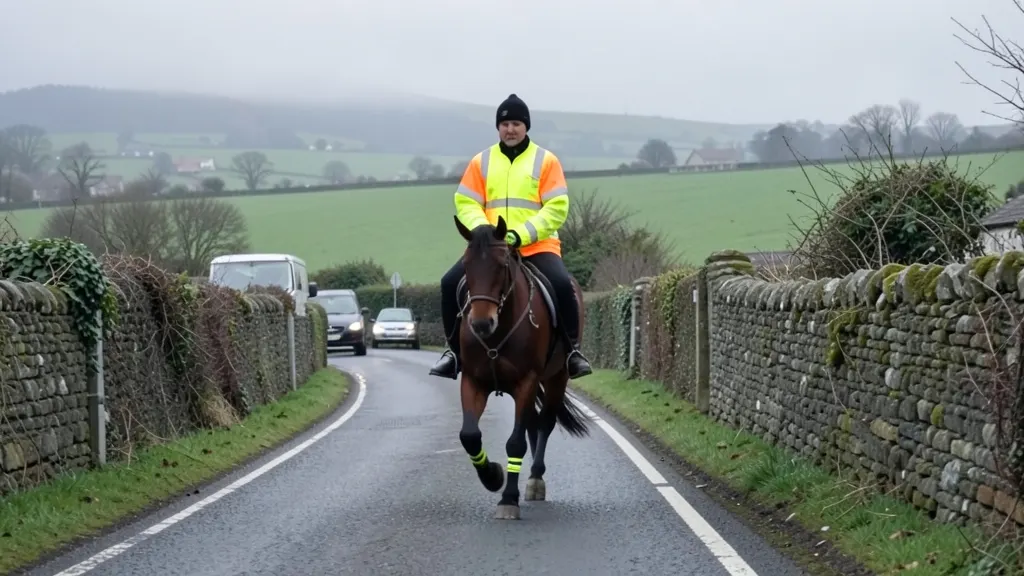
- Hi-vis for horse riding in Inverness, for riders who use the rural roads around the city.
- Hi-vis for motorcyclists in Inverness, for riders using the city as a base for touring.
- A dark commutes page for the winter months, when journeys to and from work fall outside daylight hours.
Each page explains what to wear, which standards to look for, and how the local geography and daylight hours shape the choices you make.
Hi-vis guidance that applies to everyone
Whatever your activity, a few principles hold true across the board.
Fluorescent material works in daylight and poor light, but it needs daylight to do its job. Reflective material is what catches headlights after dark. The Highway Code makes the distinction plainly. Rule 3 advises helping other road users to see you, noting that in the dark reflective materials such as armbands, sashes, waistcoats, jackets or footwear can be seen by drivers using headlights up to three times as far away as non-reflective materials. Rule 17 adds that at night you should wear something reflective, full stop.
If you are choosing a garment to a standard, EN ISO 20471 is the one to look for. It has three classes. The minimum fluorescent background area is 0.14 m2 for class 1, 0.50 m2 for class 2 and 0.80 m2 for class 3, with minimum retroreflective areas of 0.10, 0.13 and 0.20 m2 respectively. Class 3 is the highest class. For most everyday uses on or near roads, class 2 is a sensible benchmark; go higher when traffic is fast, roads are unlit, or you are working on or beside the carriageway.
For workers, the legal backdrop is the Personal Protective Equipment at Work Regulations 1992, under which employers must ensure suitable PPE is provided to workers exposed to a risk to health or safety, unless that risk is adequately controlled by other means. Since 6 April 2022 these duties have also covered limb (b) workers, and the employer must provide the PPE free of charge.
Care matters as much as purchase. HSE guidance says reusable PPE must be cleaned and kept in good condition, and hi-vis jackets, trousers and coveralls must be cleaned regularly. Mud, road grime and general wear all dull fluorescent fabric and clog reflective tape, so wash garments as directed and inspect the tape for damage. Workers must report any loss, destruction or obvious defect. The same discipline applies to clothing you buy for yourself: a grubby jacket with peeling tape is doing a fraction of the work it did new.
Fit matters too. A hi-vis layer that flaps or rides up covers less of you and hides its own reflective strips. Choose a cut that suits your activity, whether that is a closer fit under a motorcycle jacket or something roomy enough to go over a fleece on the school run.
Going further
For the national picture, including law, standards and seasonal advice, see Hi-vis clothing in Scotland: where you need it. If you are shopping for a specific activity, our buyer's guides go into more detail: Hi-vis jackets for horse riding: a buyer's guide, Motorcycle hi vis jackets: myths and facts and Winter hi vis jackets: a practical buyer's guide. Cyclists who ride the 125 km Great Glen Way from Fort William to Inverness, a route commonly cycled in 2 to 3 days, will find Hi-vis jackets for cycling: a buyer's guide useful, and Rule 60 of the Highway Code is worth remembering too: at night a cycle must have white front and red rear lights lit, plus a red rear reflector.
Start with the themed pages above for advice tuned to Inverness, then use the buyer's guides when you are ready to choose a garment.
Inverness at a glance
- Nation: Scotland
- Region: Scotland
- Population: 48248
| Measure | Time |
|---|---|
| Sunrise on the winter solstice | 08:57 |
| Sunset on the winter solstice | 15:32 |
| Daylight on the winter solstice | 6h 36m |
| Sunset when the clocks go back (2026-10-25) | 16:47 |
| Days a year with a dark commute | 131 |
Frequently asked questions
Do I need a class 3 hi-vis jacket for commuting in Inverness?
Not necessarily. Class 2, which requires at least 0.50 m2 of fluorescent background material and 0.13 m2 of retroreflective material, is a sensible benchmark for most road-side commuting. Class 3, with at least 0.80 m2 of fluorescent and 0.20 m2 of retroreflective material, is the highest EN ISO 20471 class and suits darker, faster or higher-risk situations. With 131 days a year when the commute is partly in the dark in Inverness, erring towards more coverage is reasonable.
How dark are winter commutes in Inverness?
Very dark by UK standards. On the winter solstice sunrise is at 08:57 and sunset at 15:32, giving only 6h 36m of daylight. Many people travel to and from work entirely outside daylight hours for weeks at a time, so reflective material matters as much as fluorescent.
What does the Highway Code say about hi-vis?
Rule 3 advises helping other road users to see you, and notes that reflective materials can be seen by drivers using headlights up to three times as far away as non-reflective materials. Rule 59 says fluorescent clothing helps other road users see a cyclist in daylight and poor light, while reflective clothing or accessories increase visibility in the dark.
Do motorcyclists in Inverness need hi-vis clothing?
The Highway Code advises it. Rule 86 says motorcyclists should make themselves as visible as possible from the side as well as the front and rear, for example with fluorescent clothing or strips, and Rule 87 says that when riding in the dark they should wear reflective clothing or strips. Our motorcycle page for Inverness covers this in detail.
How should I look after a hi-vis jacket?
Clean it regularly and keep it in good condition. HSE guidance says hi-vis jackets, trousers and coveralls must be cleaned regularly, and that workers must report any loss, destruction or obvious defect. Dirt and wear reduce both fluorescence and reflectivity, so check the tape for peeling or damage.