Hi-vis clothing in Gloucester: a practical guide
Last updated
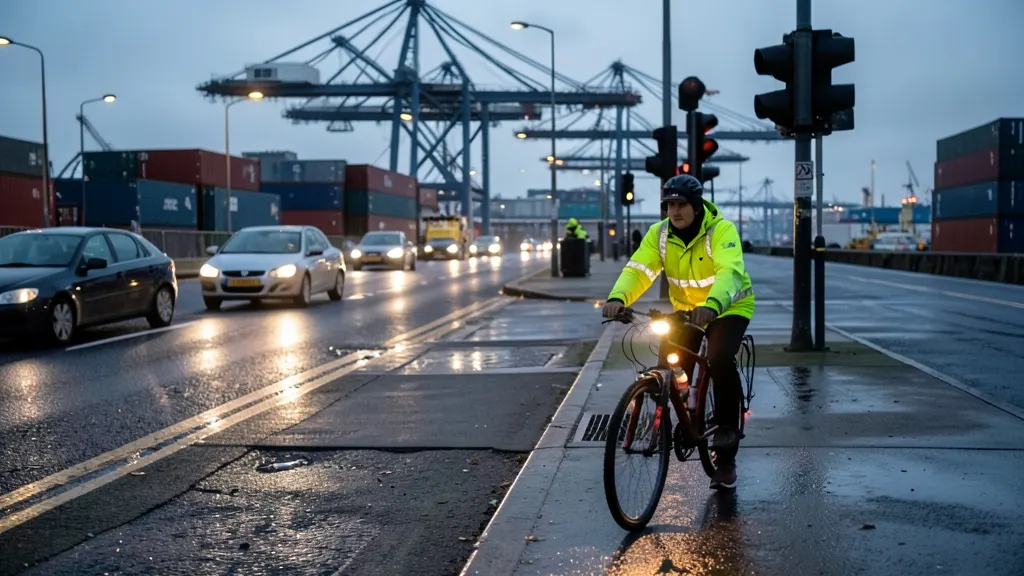
Gloucester is a cathedral city and the county town of Gloucestershire, with a population of 169,061 in its urban area at the 2021 census. It is also a port, linked via the Gloucester and Sharpness Canal to the Severn Estuary. The canal itself is a 16.5 mile (26.5 km) ship canal, completed in 1827, and it still shapes the way goods and people move through the area. The M5 motorway runs east of the city boundary, and the A38 runs north to south through Gloucester, so busy traffic is part of daily life for anyone who walks, rides or works near the main routes.
Light is the other half of the story. On the winter solstice the sun rises in Gloucester at 08:14 and sets at 16:00, leaving just 7 hours and 46 minutes of daylight. Across a full year there are 119 days when sunset comes before half past five in the evening or sunrise comes after quarter to eight in the morning. That means an ordinary commute is partly in the dark for a large slice of the year, and anything you wear to be seen has to earn its keep in low light as well as daylight.
What this guide covers
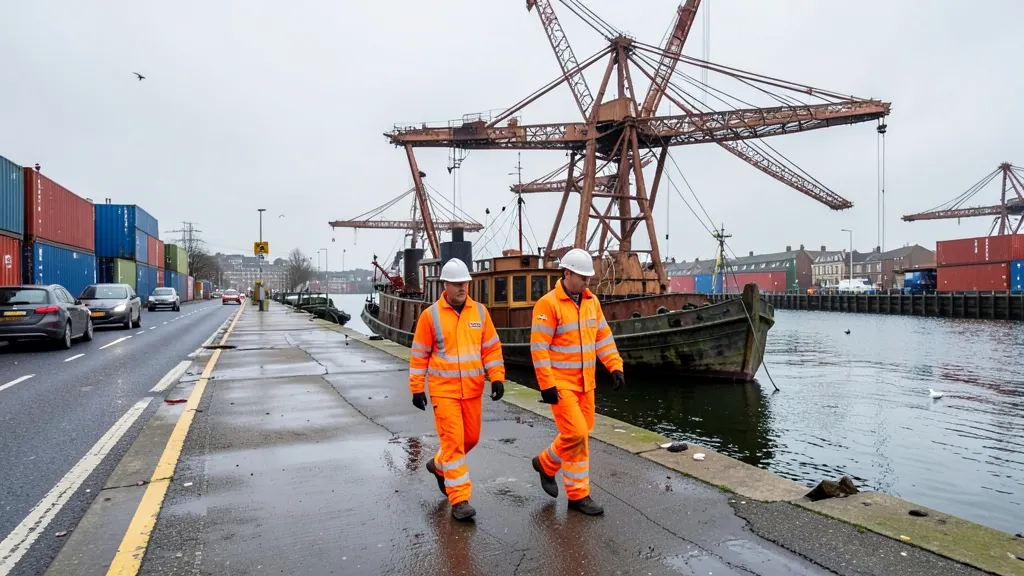
Gloucester's economy is dominated by the service industries, but its docks and canal connections support plenty of outdoor and site-based work, and the surrounding countryside draws riders and cyclists onto rural lanes and flat riverside routes. This hub pulls together three main themes.
If you work outdoors or on a site, see our page on Hi-vis for cycling and commuting in Gloucester below, and first take a look at our general workwear advice in High visibility clothing workwear: choosing a hi vis jacket. Horse riders can read Hi-vis for horse riding in Gloucester, and cyclists and commuters have their own dedicated page too.\n
Hi-vis for work and site wear
Employers have duties here. Under the Personal Protective Equipment at Work Regulations 1992, employers must ensure suitable PPE is provided to workers exposed to a risk to their health or safety, unless the risk is adequately controlled by other means. Since 6 April 2022 those duties also cover limb (b) workers, and the employer must provide the PPE free of charge. If you are choosing your own gear on top of what is provided, aim for garments certified to EN ISO 20471. Class 3 is the highest class, with at least 0.80 m2 of fluorescent background material and 0.20 m2 of retroreflective material. Class 2 requires at least 0.50 m2 of fluorescent material and 0.13 m2 of retroreflective material. Class 1, the lowest, needs 0.14 m2 of fluorescent background and 0.10 m2 of reflective material.
Some workplaces have extra colour rules. SATRA, a UK PPE testing body, states that rail standard RIS-3279-TOM requires an orange colour and garments meeting at least class 2 of EN ISO 20471, so if your job touches the railways, orange is not a style choice but a requirement.
Hi-vis for horse riding
Riders on rural lanes face the same low-light maths as everyone else. The Highway Code's Rule 17 says that at night you should wear something reflective to make it easier for others to see you, and Rule 3 adds that reflective materials such as armbands, sashes, waistcoats, jackets or footwear can be seen by drivers using headlights up to three times as far away as non-reflective materials. Our Hi-vis jackets for horse riding: a buyer's guide goes into cuts, fit and what to put on the horse as well as the rider.
Hi-vis for cycling and commuting
For cyclists, Rule 59 of the Highway Code says light-coloured or fluorescent clothing can help other road users see you in daylight and poor light, while reflective clothing or accessories such as belts, arm or ankle bands can increase visibility in the dark. Rule 60 requires a white front light and red rear light lit at night, plus a red rear reflector. Clothing helps but it does not replace legal lighting. The Gloucester cycling page covers commuting specifics, and our general Hi-vis jackets for cycling: a buyer's guide explains what to look for.
General guidance that applies to everything
A few points hold true whichever activity you are dressing for.
- Fit matters. A jacket that flaps or rides up covers less of you and less of the reflective tape. Try it over your normal layers.
- Fluorescent material works in daylight and poor light. Reflective material works in darkness under headlights. You generally need both, because Gloucester commutes often start in one and end in the other.
- Look after it. HSE guidance says reusable PPE must be cleaned and kept in good condition, and hi-vis jackets, trousers and coveralls must be cleaned regularly. Workers must report any loss, destruction or obvious defect. Dirt and grime kill reflectivity faster than anything else.
- Keep tape unobstructed. Bags, body warmers and zipped panels that cover reflective strips undo the point of the garment.
Gloucester's weather also argues for choosing with seasons in mind. Rain, early darkness and cold all land together in winter, so our Winter hi vis jackets: a practical buyer's guide and Waterproof hi vis jackets: myths and facts are worth a read before you buy. The clocks go back on 25 October 2026, when sunset in Gloucester that day is at 16:54, and from that point the evening commute is dark for most people.
Where to go next
- Hi-vis for cycling and commuting in Gloucester, covering routes, lighting law and jacket choices for daily rides.
- Hi-vis for horse riding in Gloucester, with local advice for riders.
- High visibility clothing workwear: choosing a hi vis jacket, for site workers and outdoor trades.
If you travel further afield, our regional guide at Hi-vis clothing in South West England gathers advice for the whole region. Robinswood Hill, the 100-hectare country park south of the city centre, is a reminder that green space sits close to the city, and walkers, runners and dog walkers up there benefit from the same visibility habits as everyone else.
Gloucester at a glance
- Nation: England
- Region: South West England
- Population: 169061
| Measure | Time |
|---|---|
| Sunrise on the winter solstice | 08:14 |
| Sunset on the winter solstice | 16:00 |
| Daylight on the winter solstice | 7h 46m |
| Sunset when the clocks go back (2026-10-25) | 16:54 |
| Days a year with a dark commute | 119 |
Frequently asked questions
What class of hi-vis jacket do I need for work in Gloucester?
It depends on the risk and your employer's assessment. EN ISO 20471 has three classes: class 1 needs at least 0.14 m2 of fluorescent material, class 2 at least 0.50 m2 and class 3 at least 0.80 m2, with corresponding minimum areas of retroreflective tape. Class 3 is the highest class and suits higher-risk situations such as work near motorways, while class 2 is common for many site roles. If your work involves the railways, the standard RIS-3279-TOM requires an orange colour and at least class 2.
Does my employer have to provide my hi-vis jacket?
Under the Personal Protective Equipment at Work Regulations 1992, employers must provide suitable PPE to workers exposed to a health or safety risk unless the risk is controlled by other means. Since 6 April 2022 the duties also cover limb (b) workers, and the employer must provide the PPE free of charge.
Why does hi-vis matter so much in Gloucester in winter?
On the winter solstice, sunrise in Gloucester is at 08:14 and sunset at 16:00, giving only 7 hours 46 minutes of daylight. There are 119 days a year when sunset comes before half past five or sunrise after quarter to eight, so many people commute partly in the dark. Reflective material is seen by drivers using headlights up to three times as far away as non-reflective material, which is why it matters on the evening journey home.
How should I look after a hi-vis jacket?
HSE guidance says reusable PPE must be cleaned and kept in good condition, and hi-vis jackets, trousers and coveralls must be cleaned regularly. Workers must report any loss, destruction or obvious defect. Washing according to the care label and keeping the garment hung up rather than screwed in a van helps the reflective tape keep working.
Is a hi-vis jacket enough for cycling at night?
No. Rule 60 of the Highway Code requires a cycle to have white front and red rear lights lit at night, plus a red rear reflector. Clothing adds to that rather than replacing it. Rule 59 says fluorescent clothing helps in daylight and poor light, while reflective clothing and accessories such as arm or ankle bands help in the dark.