Hi-vis clothing in Exeter
Last updated
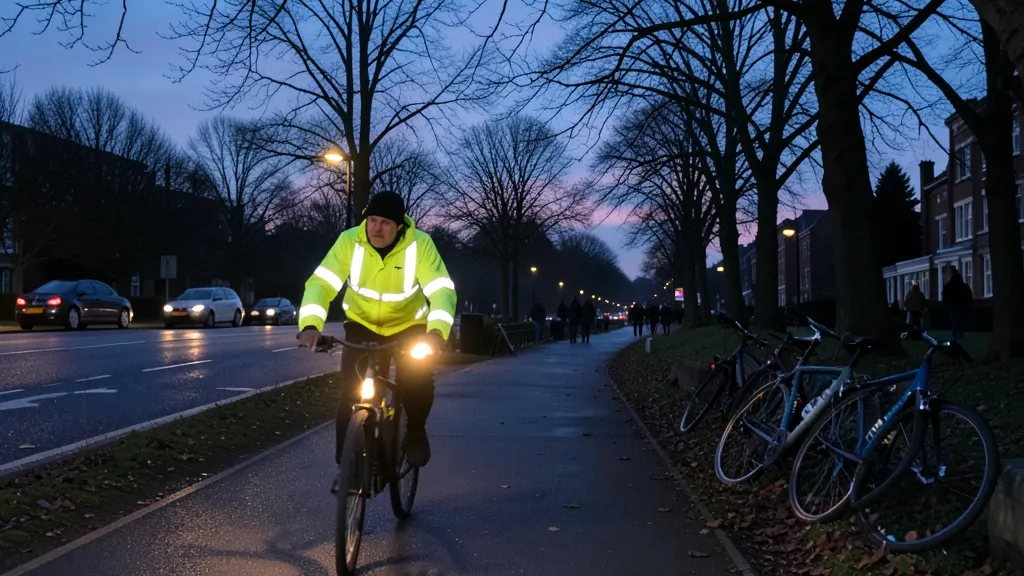
Exeter is the county town of Devon, with a population of 130,700 at the 2021 census. The Met Office, the University of Exeter and Devon County Council are all notable employers here, so the city combines office, campus and public sector work with plenty of green space on the doorstep. The M5 motorway has its south-west exit just south of the city, and traffic flows in and out along the valley throughout the day.
What makes hi-vis genuinely useful here is the light. On the winter solstice, sunrise in Exeter is at 08:13 and sunset at 16:10, giving just 7h 58m of daylight. There are 117 days a year when sunset comes before half past five in the evening or sunrise after quarter to eight in the morning. That means a normal commute, school run or evening dog walk is partly in the dark for a large slice of the year. When the clocks go back on 25 October 2026, sunset that day is at 17:02, and from there the evenings close in quickly.
What we cover for Exeter
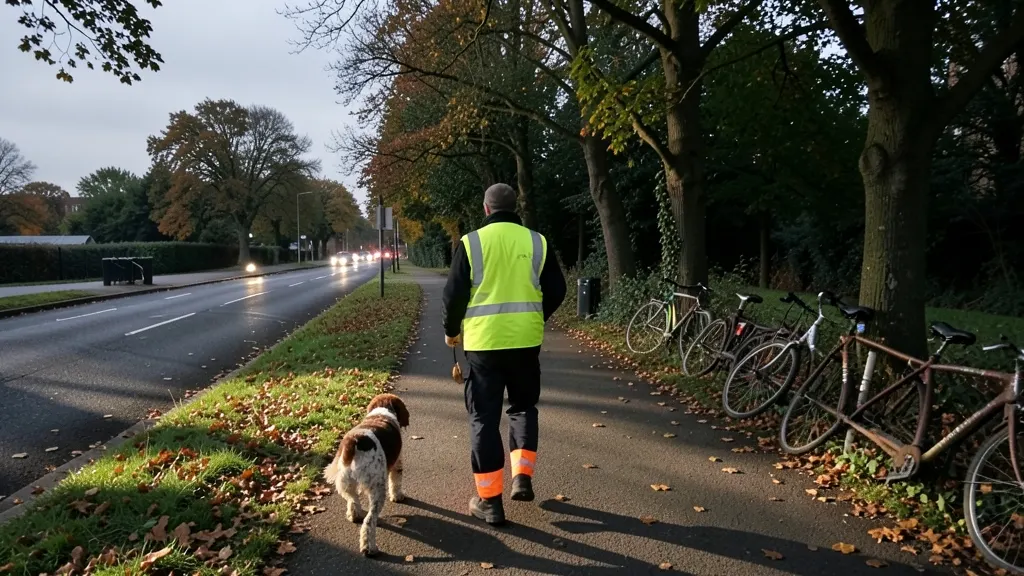
This page gathers our Exeter-specific guidance in one place. If you ride, the county's lanes and bridleways reward proper reflective kit, and our Hi-vis jackets for horse riding: a buyer's guide explains what to look for. Dog walkers will find local pointers in our page on Hi-vis for dog walking in Exeter, alongside the general advice in Hi-vis jackets for dog walking: how to choose. Cyclists and commuters have their own hub at Hi-vis for cycling and commuting in Exeter, backed by Hi-vis jackets for cycling: a buyer's guide.
The city's outdoor life explains the spread of themes. The Exe Estuary runs for approximately eight miles to the English Channel, and the Exe Valley Way footpath runs south from Starcross through the whole of the Exe estuary, almost 50 miles. Exeter also sits on Route 2 of the National Cycle Network, so riding into work or along the water is a realistic daily option rather than a weekend treat.
General hi-vis guidance that applies to everyone
Whatever you are doing, a few principles hold. Fluorescent colours work in daylight and poor light by converting ultraviolet energy into visible glow, which is why a fluorescent jacket reads so clearly on a grey afternoon. Reflective material works differently. It bounces light from headlights straight back to the driver. The Highway Code makes the difference plain: Rule 3 says reflective materials such as armbands, sashes, waistcoats, jackets or footwear can be seen by drivers using headlights up to three times as far away as non-reflective materials. Rule 59 says light-coloured or fluorescent clothing can help other road users see a cyclist in daylight and poor light, while reflective clothing or accessories (belt, arm or ankle bands) can increase visibility in the dark.
If you are buying a garment for regular use, check the label for EN ISO 20471. This standard has three classes, based on how much material the garment carries. Class 1 has at least 0.14 m2 of fluorescent background material and 0.10 m2 of retroreflective material. Class 2 rises to 0.50 m2 fluorescent and 0.13 m2 reflective, which is the level most commonly worn for commuting and roadside work. Class 3, the highest, requires at least 0.80 m2 of fluorescent background and 0.20 m2 of retroreflective material. For a winter jacket, our guide to Winter hi vis jackets: a practical buyer's guide goes into the details, and if rain is the main concern, Waterproof hi vis jackets: myths and facts sorts the marketing claims from the useful facts.
Looking after the kit matters too. HSE guidance says reusable PPE must be cleaned and kept in good condition, and hi-vis jackets, trousers and coveralls must be cleaned regularly. A grubby fluorescent panel loses much of its effect, and a reflective strip that is worn or flaked does nothing. Wash hi-vis garments inside out on a gentle cycle, avoid biological powders and fabric softeners, and replace anything with cracked or peeling reflective bands rather than trying to rescue it.
For anyone whose work in and around Exeter involves roadside or site exposure, the Personal Protective Equipment at Work Regulations 1992 require employers to ensure suitable PPE is provided to workers exposed to a risk to health or safety, unless the risk is adequately controlled by other means. Since 6 April 2022 those duties also cover limb (b) workers, and the employer must provide the PPE free of charge.
Find the right page for you
Pick the theme that matches your routine. Riders should start with Hi-vis jackets for horse riding: a buyer's guide and then think about what you and your horse both wear on the lanes. Dog walkers get local suggestions in Hi-vis for dog walking in Exeter. Commuters and leisure cyclists should head to Hi-vis for cycling and commuting in Exeter. If you travel further afield, our regional page on Hi-vis clothing in South West England collects advice for the whole area.
Exeter at a glance
- Nation: England
- Region: South West England
- Population: 130700
| Measure | Time |
|---|---|
| Sunrise on the winter solstice | 08:13 |
| Sunset on the winter solstice | 16:10 |
| Daylight on the winter solstice | 7h 58m |
| Sunset when the clocks go back (2026-10-25) | 17:02 |
| Days a year with a dark commute | 117 |
Frequently asked questions
Why does hi-vis matter so much in Exeter?
Exeter sees short winter days, with sunset at 16:10 on the winter solstice and only 7h 58m of daylight. There are 117 days a year when sunset comes before half past five or sunrise after quarter to eight, so many commutes and dog walks happen partly in the dark. Reflective kit helps drivers see you much sooner in those conditions.
Which EN ISO 20471 class should I choose?
Class 1 is the lowest, with at least 0.14 m2 of fluorescent material and 0.10 m2 of reflective material. Class 2, with 0.50 m2 fluorescent and 0.13 m2 reflective, suits most commuters and walkers. Class 3 is the highest, requiring at least 0.80 m2 fluorescent and 0.20 m2 retroreflective material, and is best for high-risk roadside situations.
Does fluorescent clothing work at night?
Not really. Fluorescent colours help in daylight and poor light, but they need daylight or daylight-quality light to glow. In the dark, it is the retroreflective bands that matter. The Highway Code notes that reflective materials can be seen by drivers using headlights up to three times as far away as non-reflective materials.
What does the Highway Code say about cyclists and visibility?
Rule 59 says light-coloured or fluorescent clothing can help other road users see a cyclist in daylight and poor light, while reflective clothing or accessories such as belts, arm or ankle bands can increase visibility in the dark. Rule 60 also requires a white front light, a red rear light and a red rear reflector when riding at night.
How should I care for a hi-vis jacket?
HSE guidance says reusable PPE must be cleaned and kept in good condition, with hi-vis jackets, trousers and coveralls cleaned regularly. Wash the garment inside out on a gentle cycle and skip fabric softener, which can coat reflective strips. If reflective bands crack or peel, replace the garment rather than trying to repair it.