Hi-vis clothing in Dundee: what to wear and when
Last updated
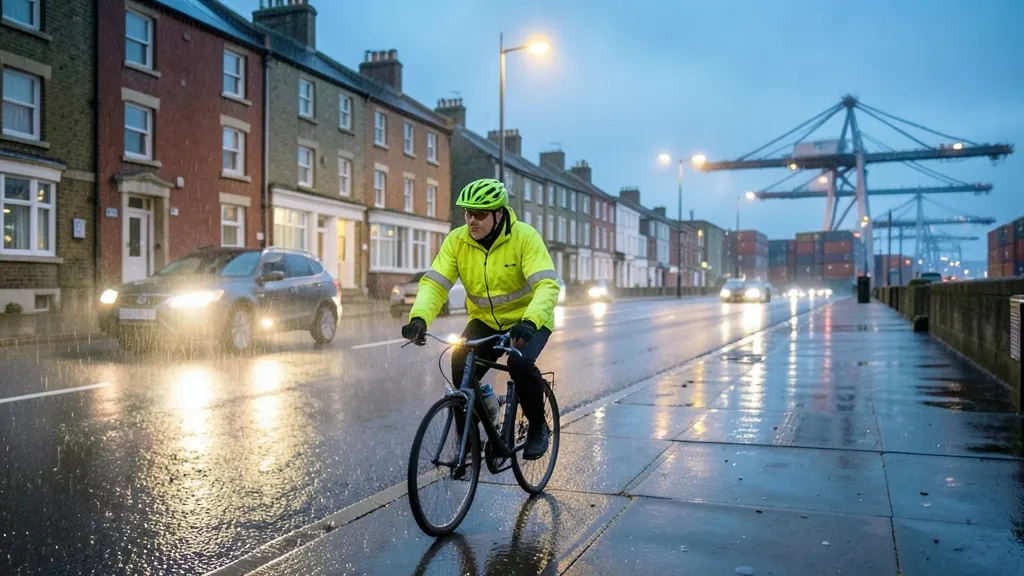
Dundee sits on the east coast of Scotland as a port city with a long working waterfront. It grew around its harbour, and its port activity shaped the city: extensive development of the waterfront area began in 1815 to cope with increased demand for port capacity. Today Dundee is home to around 148,390 people in the Dundee City council area, and it has moved from the old jute trade, remembered in the phrase jute, jam and journalism, towards work in technology, medicine and life sciences. The city is an international research and development hub in those fields, and one in seven of the population are university students.
All of this means plenty of people are outdoors at the start and end of the working day. Dundee Law, the 174 m hill that occupies the centre of the built up area, is a useful landmark for judging the light, but the short winter days are the real reason visibility matters here. On the winter solstice in Dundee, sunrise is at 08:44 and sunset is at 15:35, giving just 6 hours and 50 minutes of daylight. There are 129 days a year in Dundee when sunset comes before half past five in the evening or sunrise comes after quarter to eight in the morning, so an ordinary commute is partly in the dark. The clocks going back makes that plain: on 25 October 2026, sunset in Dundee is at 16:45.
What this guide covers
We have broken down hi-vis in Dundee into three practical themes.
Dark winter commutes
If you travel to work by bike, on foot or on a motorcycle in the months when the light fails by mid afternoon, this page is for you. It looks at how much reflective material you need to be seen by drivers using headlights, and how to combine hi-vis clothing with the lights your bike must legally carry after dark. Read Hi-vis for dark winter commutes in Dundee.
Work and site wear
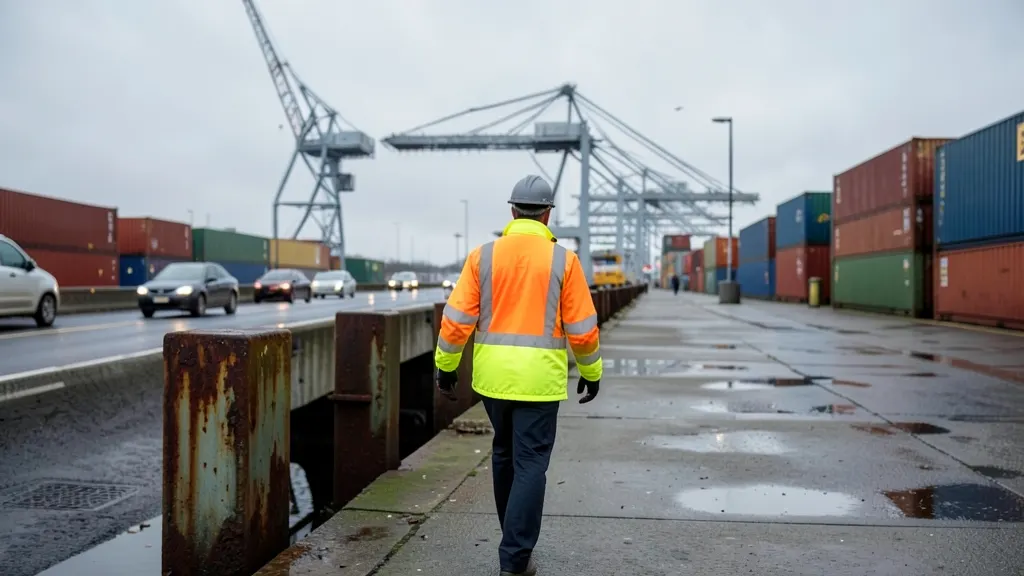
Dundee still has outdoor work connected with its port history and the major regeneration of its Waterfront, which began in 2001 under a 1 billion pound master plan to reconnect the area to the city centre. Construction, maintenance, logistics and marine related roles all involve working near vehicles and machinery, sometimes in poor light. If your employer supplies your gear, this page explains what the law requires of them and what to look for in a jacket. Read High visibility clothing workwear: choosing a hi vis jacket.
Running
Runners in Dundee can choose between flat routes along the riverside and Waterfront and hillier efforts on the slopes of Dundee Law. Both bring you onto shared paths and roads, often before sunrise or after sunset in winter. Read Hi-vis for running in Dundee.
General hi-vis guidance for Dundee
A few principles apply whatever you are doing outdoors here.
Fluorescent material works by converting ultraviolet light into visible light, so it is most effective in daylight, dusk and overcast conditions. Retroreflective material, the silvery bands and panels on a garment, works differently. It bounces light from headlights straight back towards the driver. The Highway Code explains this in Rule 3: in the dark, reflective materials such as armbands, sashes, waistcoats, jackets or footwear can be seen by drivers using headlights up to three times as far away as non-reflective materials.
For workwear, the relevant standard is EN ISO 20471, which has three classes. Class 1 is the minimum, with at least 0.14 square metres of fluorescent background material and 0.10 square metres of retroreflective material. Class 2 raises this to 0.50 and 0.13 square metres, and class 3, the highest, requires at least 0.80 square metres of fluorescent background and 0.20 square metres of retroreflective material. Garments classed at class 3 give the best chance of being seen in complex or fast moving environments such as a busy port or a live construction site.
There are legal duties too. Under the Personal Protective Equipment at Work Regulations 1992, employers must ensure suitable PPE is provided to workers exposed to a risk to their health or safety, unless the risk is adequately controlled by other means. Since 6 April 2022 those duties also cover limb (b) workers, and the employer must provide the PPE free of charge. HSE guidance adds that reusable PPE must be cleaned and kept in good condition, and hi-vis jackets, trousers and coveralls must be cleaned regularly. Workers must report any loss, destruction or obvious defect, so a faded or torn jacket should go back rather than stay in use.
For cyclists, the Highway Code makes a useful distinction. Rule 59 notes that light coloured or fluorescent clothing can help other road users see you in daylight and poor light, while reflective clothing or accessories such as belts and arm or ankle bands can increase visibility in the dark. Rule 60 is the legal bit: at night a cycle must have a white front light and red rear light lit, plus a red rear reflector. Rule 69 requires cyclists to obey all traffic signs and traffic light signals, and Rule 17 simply says that at night you should wear something reflective to make it easier for others to see you.
Motorcyclists get similar advice. Rule 86 says riders should make themselves as visible as possible from the side as well as the front and rear, for example with fluorescent clothing or strips, and Rule 87 adds that reflective clothing or strips should be worn when riding in the dark.
If you work on or near the railway, note that SATRA, a UK PPE testing body, states that rail standard RIS-3279-TOM requires an orange colour and garments that meet at least class 2 of EN ISO 20471.
Related pages
For broader reading, our page on Hi-vis clothing in Scotland: where you need it covers the national picture, and our guide to Winter hi vis jackets: a practical buyer's guide goes into warmth, layering and reflective detailing. Dundee weather rarely stays dry for long, so Waterproof hi vis jackets: myths and facts and Hi-vis jackets for cycling: a buyer's guide are also worth a look before you buy.
Dundee at a glance
- Nation: Scotland
- Region: Scotland
- Population: 148390
| Measure | Time |
|---|---|
| Sunrise on the winter solstice | 08:44 |
| Sunset on the winter solstice | 15:35 |
| Daylight on the winter solstice | 6h 50m |
| Sunset when the clocks go back (2026-10-25) | 16:45 |
| Days a year with a dark commute | 129 |
Frequently asked questions
How dark are winter commutes in Dundee?
Very dark for much of the working week. On the winter solstice, sunrise is at 08:44 and sunset at 15:35, giving 6 hours and 50 minutes of daylight. There are 129 days a year when sunset comes before half past five in the evening or sunrise after quarter to eight, so a normal commute is partly in the dark.
Does my employer have to provide hi-vis clothing?
Under the Personal Protective Equipment at Work Regulations 1992, employers must provide suitable PPE to workers exposed to a health or safety risk unless that risk is controlled by other means. Since 6 April 2022 this also covers limb (b) workers, and the employer must provide it free of charge.
What do the EN ISO 20471 classes mean?
The standard has three classes based on how much visible material a garment contains. Class 1 requires at least 0.14 square metres of fluorescent background material, class 2 requires 0.50 and class 3 requires 0.80, with retroreflective minimums of 0.10, 0.13 and 0.20 square metres respectively. Class 3 is the highest and suits the riskiest settings.
Is fluorescent or reflective material better for running at night?
Fluorescent material works best in daylight and poor light, while reflective material is what drivers see in headlights after dark. The Highway Code advises wearing something reflective at night, and notes that reflective materials can be seen by drivers up to three times further away than non-reflective ones.
Do cyclists in Dundee need reflective clothing by law?
The legal requirement for cyclists at night is a lit white front light, a lit red rear light and a red rear reflector, as set out in Rule 60 of the Highway Code. Reflective clothing is advisory rather than mandatory, but Rule 59 says reflective clothing or accessories such as belts and arm or ankle bands can increase your visibility in the dark.