Hi-vis clothing in Derry
Last updated
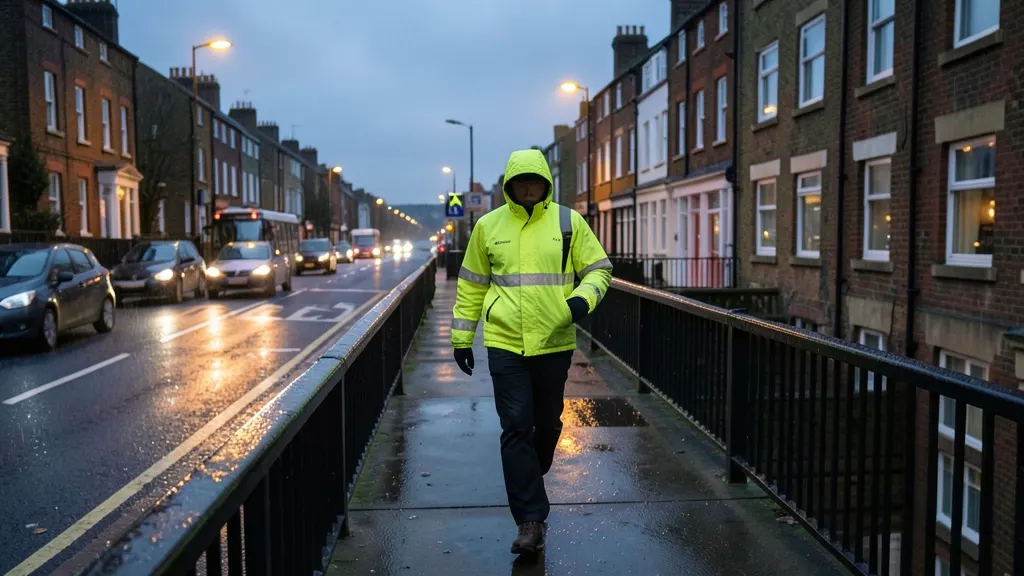
Derry is a city of around 85,279 people (2021 census), spread across both banks of the River Foyle and built on distinctively hilly ground. That combination of hills, river and a working city centre means plenty of journeys happen on roads shared by drivers, cyclists and pedestrians. In winter, those journeys very often happen in the dark.
The numbers make the case plainly. On the winter solstice in Derry, the sun rises at 08:52 and sets at 16:02, giving just 7 hours and 10 minutes of daylight. Across the year, there are 132 days when sunset falls before half past five in the evening or sunrise comes after quarter to eight in the morning. If you commute, walk the dog or run before or after work in those months, some of your time on the road will be in poor light or full darkness. When the clocks go back on 25 October 2026, the sunset in Derry that day is at 17:07, and the dark evenings settle in until spring.
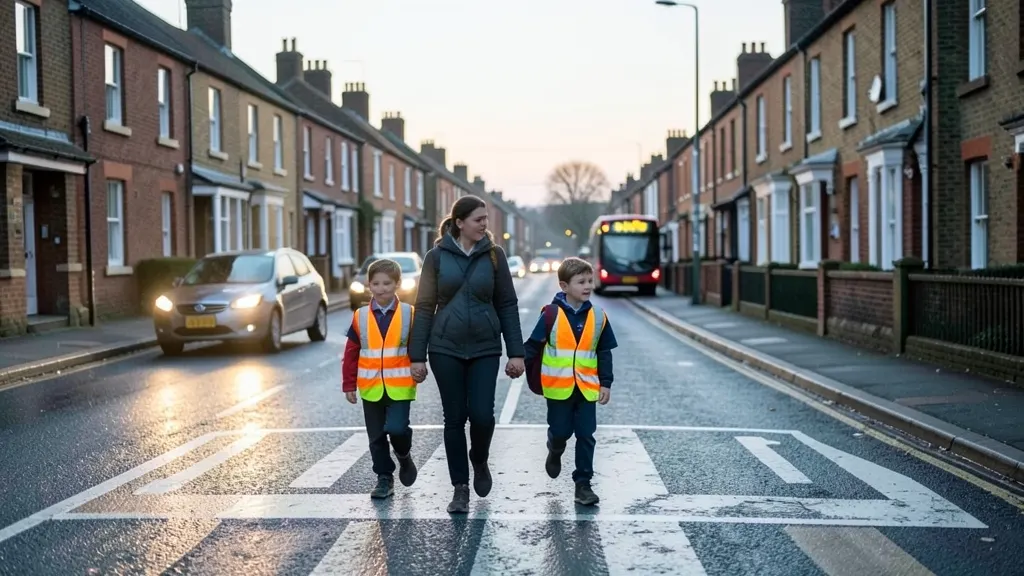
What this guide covers
We have split hi-vis advice for Derry into three themes, each with its own page.
Winter commutes
Dark mornings and early sunsets are the reality for Derry commuters from late autumn through to spring. Our guide to winter hi vis jackets explains what to look for in a jacket that keeps you visible and warm, and how fluorescent and reflective materials work together.
Running
The riverside paths are popular with runners, and the Peace Bridge route, opened on 25 June 2011, connects the city centre with Ebrington Square and St Columb's Park, giving a linked green corridor for training runs. Our page on hi-vis for running in Derry covers jackets, lights and layers for running in low light, with more detail in our general guide to hi-vis jackets for running.
The school run
School journeys around a busy city often cross main roads, including the A2 dual carriageway from Maydown to Eglinton that serves City of Derry Airport and connects with Londonderry Port. Our page on hi-vis for the school run and children in Derry looks at what children should wear, and our guide to kids hi vis jackets separates the myths from the facts.
General hi-vis guidance for Derry
A few principles apply whatever you are doing outdoors in the city.
Fluorescent material works in daylight and poor daylight, but it does little at night. Reflective material is what catches headlights in the dark. The Highway Code makes the distinction clear. Rule 3 advises helping other road users to see you, and notes that reflective materials such as armbands, sashes, waistcoats, jackets or footwear can be seen by drivers using headlights up to three times as far away as non-reflective materials. Rule 17 tells pedestrians that at night they should wear something reflective. For cyclists, Rule 59 says light-coloured or fluorescent clothing can help other road users see you in daylight and poor light, while reflective clothing or accessories such as belts, arm or ankle bands can increase visibility in the dark. Rule 60 adds that at night a cycle must have white front and red rear lights lit, along with a red rear reflector.
When buying a hi-vis jacket, check the standard. EN ISO 20471 has three classes. Class 1 requires a minimum of 0.14 m2 of fluorescent background material and 0.10 m2 of retroreflective material. Class 2 raises that to 0.50 m2 and 0.13 m2. Class 3, the highest, needs at least 0.80 m2 of fluorescent background material and 0.20 m2 of retroreflective material. For everyday walking and cycling in town, class 2 is usually the sensible choice. Class 3 suits high-risk situations such as working on or near fast roads.
Look after what you buy. Dirt and grime cut both fluorescence and reflectivity. HSE guidance says reusable PPE must be cleaned and kept in good condition, and hi-vis jackets, trousers and coveralls must be cleaned regularly. Wash your jacket according to its label and replace it when the reflective strips stop bouncing light back cleanly.
Workers have specific protections. Under the Personal Protective Equipment at Work Regulations 1992, employers must ensure suitable PPE is provided to workers exposed to a risk to their health or safety, unless the risk is adequately controlled by other means. Since 6 April 2022, those duties also cover limb (b) workers, and the employer must provide the PPE free of charge. Derry's economy relied significantly on the textile industry until relatively recently, and the city still has a substantial working population, including students at the Magee Campus of Ulster University, many of whom work or study across both sides of the river. If your job puts you on or near roads, ask your employer about hi-vis provision before you buy your own.
Where to go next
For full detail, read the themed pages for this city: hi-vis for running in Derry and hi-vis for the school run and children in Derry. They sit within our wider guide to hi-vis clothing in Northern Ireland: where to wear it, which covers towns and countryside beyond the city. If your priority is staying dry as well as seen, waterproof hi vis jackets: myths and facts will help you choose well, and hi-vis jackets for cycling: a buyer's guide covers the specific needs of cyclists crossing the Peace Bridge, the 235 m cycle and foot bridge across the River Foyle that links the Guildhall with Ebrington Square.
Derry at a glance
- Nation: Northern Ireland
- Region: Northern Ireland
- Population: 85279
| Measure | Time |
|---|---|
| Sunrise on the winter solstice | 08:52 |
| Sunset on the winter solstice | 16:02 |
| Daylight on the winter solstice | 7h 10m |
| Sunset when the clocks go back (2026-10-25) | 17:07 |
| Days a year with a dark commute | 132 |
Frequently asked questions
How many days a year is my commute in Derry partly in the dark?
In Derry there are 132 days a year when sunset comes before half past five in the evening or sunrise comes after quarter to eight in the morning. On those days a normal commute falls partly in darkness or poor light. The effect is most noticeable from late October onwards.
What is the difference between fluorescent and reflective hi-vis?
Fluorescent material helps you stand out in daylight and poor daylight. Reflective material is what works at night, because it bounces headlight beams back to drivers. The Highway Code notes that reflective materials can be seen by drivers using headlights up to three times as far away as non-reflective materials. For dark commuting, reflective is essential, not optional.
Which EN ISO 20471 class should I choose?
For everyday walking, running or cycling in Derry, class 2 is usually enough, as it requires a minimum of 0.50 m2 of fluorescent background material and 0.13 m2 of retroreflective material. Class 3 is the highest class, with at least 0.80 m2 of fluorescent material and 0.20 m2 of retroreflective material, and suits higher-risk settings such as working near fast roads.
Does my employer have to provide hi-vis clothing?
Under the Personal Protective Equipment at Work Regulations 1992, employers must ensure suitable PPE is provided to workers exposed to a risk to their health or safety, unless the risk is adequately controlled by other means. Since 6 April 2022 the duties also cover limb (b) workers, and the PPE must be provided free of charge. Ask your employer before buying your own work hi-vis.
What does the Highway Code say about reflective clothing?
Rule 17 says that at night pedestrians should wear something reflective. Rule 59 advises cyclists that light-coloured or fluorescent clothing helps in daylight and poor light, while reflective clothing or accessories such as belts, arm or ankle bands increase visibility in the dark. Rule 60 adds that at night a cycle must have white front and red rear lights lit and a red rear reflector.