Hi-vis clothing in Derby: a local guide
Last updated
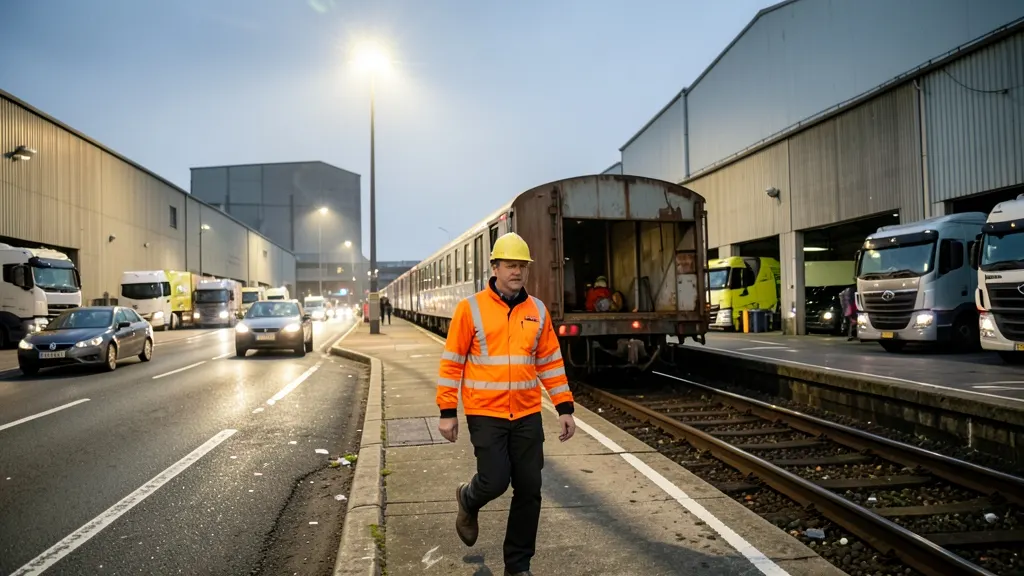
Derby is an industrial city in the East Midlands with a population of 275,344 as of 2025. It is best known as a place where things are built. Rolls-Royce manufactures engines here, Alstom builds trains at the Derby Litchurch Lane Works, and the city sits close to a major car plant whose UK headquarters are at Burnaston. Rail maintenance is a constant presence too, with East Midlands Railway running the Derby Etches Park depot and both Network Rail and Rail Operations Group maintaining trains in the city.
All this means a large share of Derby's working population spends its day around depots, workshops, delivery yards and busy industrial estates. High visibility clothing is part of the daily routine for many of them, and it matters just as much for everyone else getting about the city on foot, by bike or on a motorbike.
Why visibility matters so much in Derby
The numbers on daylight make the case on their own. On the winter solstice in Derby, the sun rises at 08:16 and sets at 15:51, giving just 7 hours and 35 minutes of daylight. The clocks go back on 25 October 2026, and on that day the sun sets in Derby at 16:48. Across the year there are 122 days when sunset falls before half past five in the evening or sunrise comes after quarter to eight in the morning. In plain terms, a normal commute in this city is partly done in the dark for a good chunk of the year.
Add the main roads and the picture is complete. The M1 passes east of the city, and the A6, A38, A50, A52 and A61 all carry fast traffic through or around it. Anyone crossing, cycling along or riding on these routes needs to be seen early, and a decent hi-vis jacket is the simplest way to do it. If you want the wider regional picture, see our guide to hi-vis jackets in the East Midlands.
What this guide covers for Derby
We have split this local guide into three themed pages, each dealing with a different way Derby people use hi-vis:
- Work and site wear. For the thousands of people working in engineering, rail maintenance and manufacturing in and around the city, hi-vis is often a requirement of the job, not a personal choice. Our workwear page explains how to choose a hi vis jacket that meets the right standard for your site.
- Motorcycling. Riders heading out of the city for a day in the hills, or commuting along the A38 or A52 in low winter light, benefit from fluorescent and reflective gear. Our Derby motorcycle page covers the specifics.
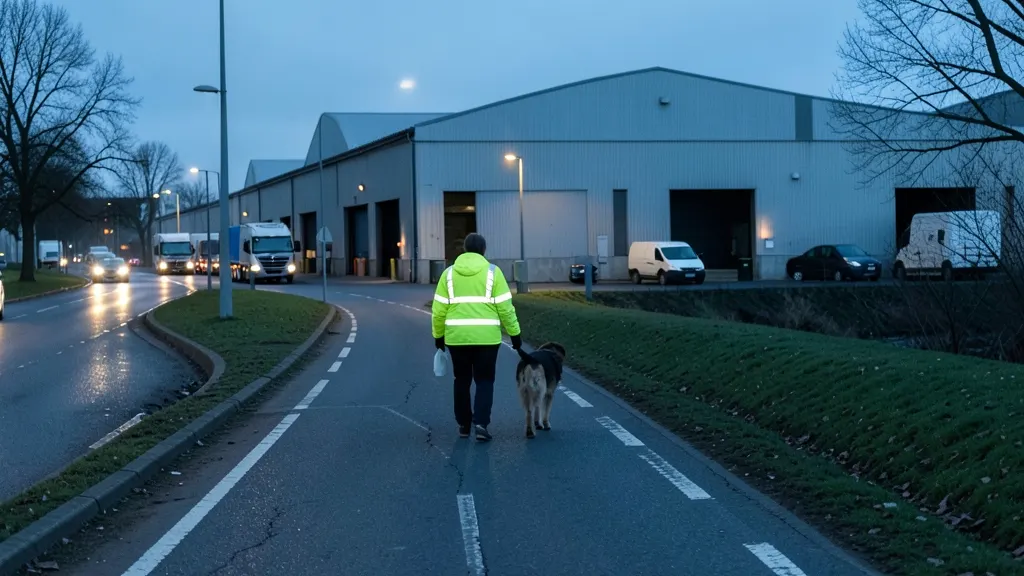
- Dog walking. From a 207-acre city park that draws a million visitors a year to an 80-acre park beside the river just north of the city centre, and the riverside walk and cycle path along the water, there are plenty of places to walk a dog before or after work in the dark. Our Derby dog walking page helps you pick the right gear.
Hi-vis guidance that applies to everyone
Whatever your reason for wearing it, the same basic principles hold.
Know the classes. EN ISO 20471 has three classes. Class 1 requires a minimum fluorescent background area of 0.14 m2 and 0.10 m2 of retroreflective material. Class 2 requires 0.50 m2 and 0.13 m2. Class 3, the highest, requires at least 0.80 m2 of fluorescent background material and 0.20 m2 of retroreflective material. The more of you that is covered, the more visible you are, especially at speed.
Fluorescent for day, reflective for dark. Fluorescent material works in daylight and poor light, but it does little at night. Reflective strips are what headlights pick up. The Highway Code makes the point directly: in the dark, reflective materials such as armbands, sashes, waistcoats, jackets or footwear can be seen by drivers using headlights up to three times as far away as non-reflective materials. A garment with both is what you want for a Derby winter.
Match the colour to the job. On many industrial sites, and on the railways in particular, orange is the required colour. SATRA, a UK PPE testing body, states that rail standard RIS-3279-TOM requires an orange colour and garments meeting at least class 2 of EN ISO 20471. If you work in rail maintenance in Derby, check your employer's requirements before buying anything.
Look after it. Dirty or damaged hi-vis does not work properly. HSE guidance says reusable PPE must be cleaned and kept in good condition, and hi-vis jackets, trousers and coveralls must be cleaned regularly. Workers must report any loss, destruction or obvious defect. A jacket that has lost its fluorescence or has frayed reflective banding is not doing the job you paid for.
Know your rights at work. Under the Personal Protective Equipment at Work Regulations 1992, employers must ensure suitable PPE is provided to workers exposed to a risk to health or safety, unless the risk is adequately controlled by other means. Since 6 April 2022 these duties also cover limb (b) workers, and the employer must provide the PPE free of charge. If you are expected to wear hi-vis for your job in a Derby factory or depot, it should not be coming out of your own pocket.
Where to go next
Pick the page that matches how you spend your dark mornings and evenings:
- For workwear, read about choosing a hi vis jacket for the job, and if you are outdoors in Derby's rain, our page on waterproof hi vis jackets sets out the myths and facts. For the colder months, our winter hi vis jackets guide is worth a look too.
- For riders, our motorcycle hi vis jackets page deals with the common misconceptions, and our Derby motorcycle page applies it to local roads.
- For dog walkers, the general advice on hi-vis jackets for dog walking applies anywhere, and our Derby dog walking page looks at the parks and riverside routes in more detail.
Derby at a glance
- Nation: England
- Region: East Midlands
- Population: 275344
| Measure | Time |
|---|---|
| Sunrise on the winter solstice | 08:16 |
| Sunset on the winter solstice | 15:51 |
| Daylight on the winter solstice | 7h 35m |
| Sunset when the clocks go back (2026-10-25) | 16:48 |
| Days a year with a dark commute | 122 |
Frequently asked questions
What class of hi-vis jacket do I need for work in Derby?
It depends on the site and the risk. EN ISO 20471 class 2, with a minimum fluorescent background area of 0.50 m2 and 0.13 m2 of retroreflective material, is the common requirement for many industrial settings. Rail work is different: SATRA states that rail standard RIS-3279-TOM requires an orange colour and garments meeting at least class 2 of EN ISO 20471. Check with your employer before you buy.
Does my employer have to provide my hi-vis jacket?
Under the Personal Protective Equipment at Work Regulations 1992, employers must provide suitable PPE to workers exposed to a health or safety risk, unless the risk is adequately controlled by other means. Since 6 April 2022, these duties also cover limb (b) workers and the employer must provide the PPE free of charge.
How dark are Derby winters, really?
On the winter solstice in Derby, sunrise is at 08:16 and sunset at 15:51, giving 7 hours and 35 minutes of daylight. There are 122 days a year when sunset comes before half past five in the evening or sunrise comes after quarter to eight in the morning, so a normal commute is partly in the dark.
Is fluorescent or reflective clothing better for cycling at night?
They do different jobs. The Highway Code says light-coloured or fluorescent clothing helps other road users see a cyclist in daylight and poor light, while reflective clothing or accessories such as belts, arm bands or ankle bands increase visibility in the dark. At night your cycle must also have a white front light, a red rear light and a red rear reflector lit and fitted.
How should I look after a hi-vis jacket?
HSE guidance says reusable PPE must be cleaned and kept in good condition, and hi-vis jackets, trousers and coveralls must be cleaned regularly. Report any loss, destruction or obvious defect. Grime and fading cut the fluorescent effect, and damaged reflective strips stop working, so a tired jacket should be replaced.