Hi-vis clothing in Coventry: a practical local guide
Last updated
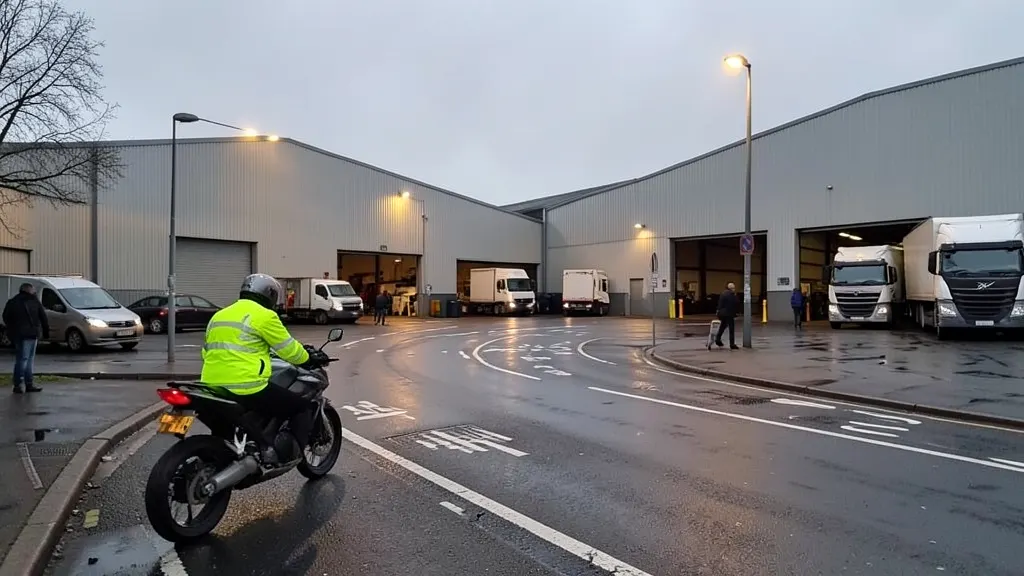
Coventry is a city built on wheels. Triumph motorcycles had their origins in 1902 in a Coventry factory, and by the 1890s Coventry had the largest bicycle industry in the world. The 2021 census put the population at 345,324, and the city remains a centre of motor and cycle manufacturing. That industrial character means a lot of people here move about in ways that put them near traffic or machinery: on motorcycles, in yards and depots, and on the daily commute by bike or on foot.
The local geography adds to the challenge. Coventry sits near the M1, M6, M40, M45 and M69 motorways, and the surrounding West Midlands Green Belt means much of the traffic funnels through the city itself. Then there is the light, or lack of it. On the winter solstice, sunrise in Coventry is at 08:14 and sunset at 15:54, giving just 7h 40m of daylight. There are 120 days a year when sunset comes before half past five in the evening or sunrise after quarter to eight in the morning, so a normal commute is partly in the dark. The clocks go back on 25 October 2026, when sunset in Coventry is at 16:50, and from that point the evenings close in fast.
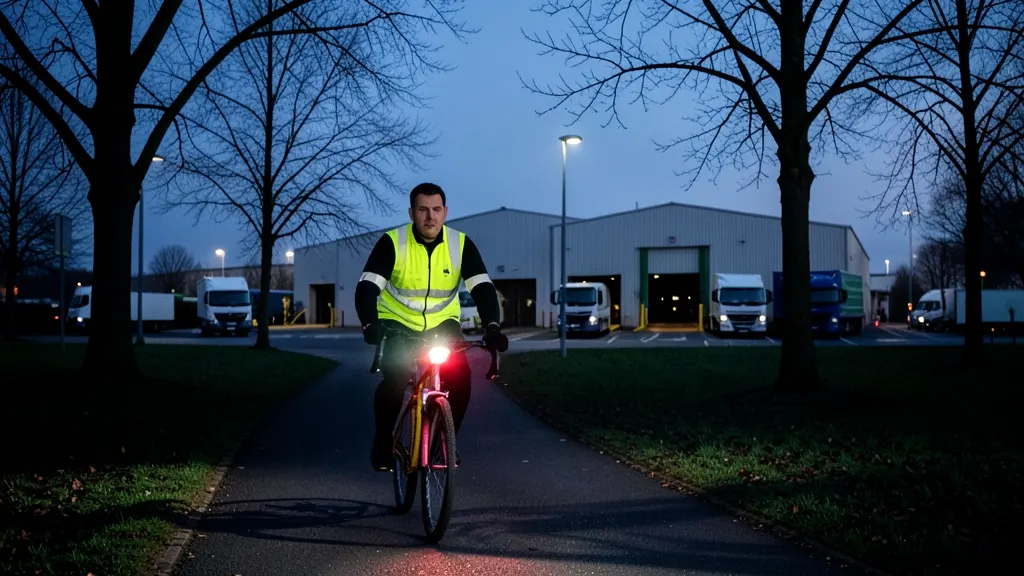
What this guide covers
We have put together themed pages for Coventry so you can jump straight to what matters to you.
For riders, Hi-vis for motorcyclists in Coventry looks at making yourself visible on the roads in and around the city. With the city's motorcycle manufacturing roots, plenty of Coventry riders cover long distances on fast routes as well as short urban hops, and visibility works differently in each setting.
For people who work outdoors, the engineering and logistics trade around the motorways keeps yards, depots and loading areas busy in all weathers. Our general advice on High visibility clothing workwear: choosing a hi vis jacket covers the standards and classes you are likely to encounter on site, and what employers must provide.
For cyclists and commuters, Hi-vis for cycling and commuting in Coventry looks at the practical choices for riding between home, work and the two large universities, which by the 2010s had become the biggest drivers of the local economy. Commuters here benefit from green spaces such as War Memorial Park, opened in June 1921 on the former Styvechale Common, which hosts the weekly parkrun, and Coombe Country Park just outside the boundary, Coventry City Council's only country park.
Hi-vis guidance that applies to everyone
Whatever you are doing in Coventry, a few principles hold true across all three themes.
Understand the difference between fluorescent and reflective. Fluorescent colours such as yellow and orange help in daylight and poor light by converting ultraviolet light into visible glow. They do very little in the dark. Reflective material, meaning retroreflective strips and panels, bounces headlight beams straight back at the driver. The Highway Code, in Rule 3, notes that reflective materials such as armbands, sashes, waistcoats, jackets or footwear can be seen by drivers using headlights up to three times as far away as non-reflective materials. Rule 59 makes the same point for cyclists: fluorescent clothing helps other road users see a cyclist in daylight and poor light, while reflective clothing or accessories such as a belt, arm or ankle bands increase visibility in the dark.
Know the classes. The standard for high visibility clothing is EN ISO 20471, which has three classes. Class 1 is the lowest, with a minimum fluorescent background area of 0.14 m2 and at least 0.10 m2 of retroreflective material. Class 2 needs 0.50 m2 of fluorescent background and 0.13 m2 of retroreflective material. Class 3 is the highest, with at least 0.80 m2 of fluorescent background material and 0.20 m2 of retroreflective material. As a rule of thumb, the faster the traffic around you, the higher the class you want.
For motorcyclists, the Highway Code is specific. Rule 86 says riders should make themselves as visible as possible from the side as well as the front and rear, for example with fluorescent clothing or strips. Rule 87 adds that when riding in the dark, motorcyclists should wear reflective clothing or strips. Rule 17 applies to all road users at night: wear something reflective to make it easier for others to see you.
For workers, the rules come from the Personal Protective Equipment at Work Regulations 1992, which require employers to ensure suitable PPE is provided to workers exposed to a risk to health or safety, unless the risk is adequately controlled by other means. Since 6 April 2022, those duties also cover limb (b) workers, and the employer must provide the PPE free of charge. Health and Safety Executive guidance says reusable PPE must be cleaned and kept in good condition, and that hi-vis jackets, trousers and coveralls must be cleaned regularly. Workers must report any loss, destruction or obvious defect. A jacket caked in road grime or workshop oil stops reflecting properly, so washing it matters as much as buying it.
Fit matters too. A jacket that flaps about in the wind on a motorcycle, or hangs loose near moving machinery, is both uncomfortable and a hazard in its own right. Look for adjustable cuffs, a drawcord hem and a cut that works over your normal layers. If you ride or walk through Coventry rain on a regular basis, our pages on Waterproof hi vis jackets: myths and facts and Winter hi vis jackets: a practical buyer's guide cover weatherproof options in detail.
Where to read next
Start with the Coventry page closest to your situation: Hi-vis for motorcyclists in Coventry or Hi-vis for cycling and commuting in Coventry. For questions about hi-vis on a motorcycle in general, including some common myths, see Motorcycle hi vis jackets: myths and facts. If your journeys take you beyond the city, Hi-vis clothing in the West Midlands: a regional guide widens the picture to the whole region.
Coventry at a glance
- Nation: England
- Region: West Midlands
- Population: 345324
| Measure | Time |
|---|---|
| Sunrise on the winter solstice | 08:14 |
| Sunset on the winter solstice | 15:54 |
| Daylight on the winter solstice | 7h 40m |
| Sunset when the clocks go back (2026-10-25) | 16:50 |
| Days a year with a dark commute | 120 |
Frequently asked questions
What class of hi-vis jacket do I need in Coventry?
It depends on where you wear it. EN ISO 20471 has three classes: class 1 needs at least 0.14 m2 of fluorescent background material and 0.10 m2 of retroreflective material, class 2 needs 0.50 m2 and 0.13 m2, and class 3 needs 0.80 m2 and 0.20 m2. For work near fast traffic or on sites, class 2 is the common minimum and class 3 suits the riskiest settings. For everyday cycling or dog walking, a good fluorescent jacket plus reflective accessories is often enough.
How dark are Coventry winters for commuters?
On the winter solstice, sunrise in Coventry is at 08:14 and sunset at 15:54, giving 7h 40m of daylight. There are 120 days a year when sunset comes before half past five in the evening or sunrise after quarter to eight in the morning. That means a normal commute is partly in the dark, so reflective material matters as much as fluorescent colour.
Do motorcyclists have to wear hi-vis in the UK?
There is no law requiring hi-vis on a motorcycle, but the Highway Code advises it. Rule 86 says riders should make themselves as visible as possible from the side as well as the front and rear, for example with fluorescent clothing or strips. Rule 87 says that when riding in the dark, motorcyclists should wear reflective clothing or strips.
Must my employer provide a hi-vis jacket for free?
Yes, if you are exposed to a risk that needs it. Under the Personal Protective Equipment at Work Regulations 1992, employers must ensure suitable PPE is provided, and since 6 April 2022 the duties also cover limb (b) workers. The employer must provide the PPE free of charge.
How do I keep a hi-vis jacket working properly?
Clean it regularly. Health and Safety Executive guidance says reusable PPE must be cleaned and kept in good condition, and that hi-vis jackets, trousers and coveralls must be cleaned regularly. Dirt and grime reduce both the fluorescent colour and the reflective strips. Report any loss, destruction or obvious defect so the garment can be replaced.