Hi-vis clothing in London
Last updated
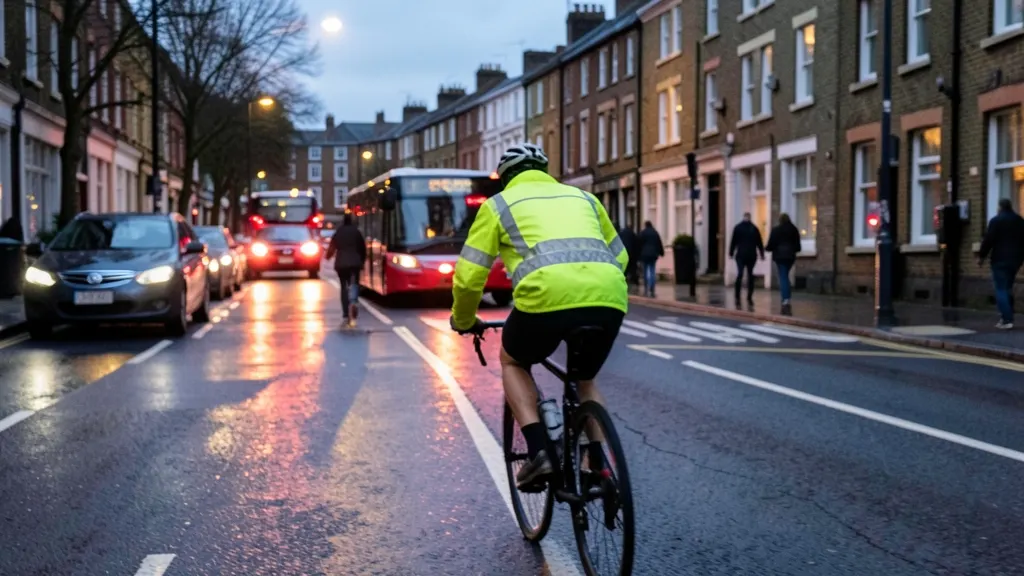
London is a city of just over 9.1 million people, and it never really slows down. Shift workers head to sites before dawn, cyclists thread through traffic, and millions of people commute home after the street lights have come on. If you spend any part of your day on a road, a railway or a building site, being seen is not a nice extra. It is part of staying safe.
The capital has the largest city economy in Europe and is one of the world's major financial centres, but alongside the offices there is a huge amount of hands-on work. Construction runs continuously, rail engineering keeps a vast network moving, and logistics operations supply everything from building materials to food deliveries. Around 670,000 people use a bicycle every day in the Greater London area, which is roughly 7% of the population, and many of them share busy roads with buses and lorries morning and evening.
Then there is the light, or the lack of it. On the winter solstice in London the sun rises at 08:03 and sets at 15:53, giving only 7 hours and 50 minutes of daylight. Across a whole year, London sees 121 days when sunset falls before half past five in the evening or sunrise comes after quarter to eight in the morning. For a lot of people that means at least one leg of the daily commute happens in the dark, which is exactly when hi-vis and reflective clothing earn their keep.
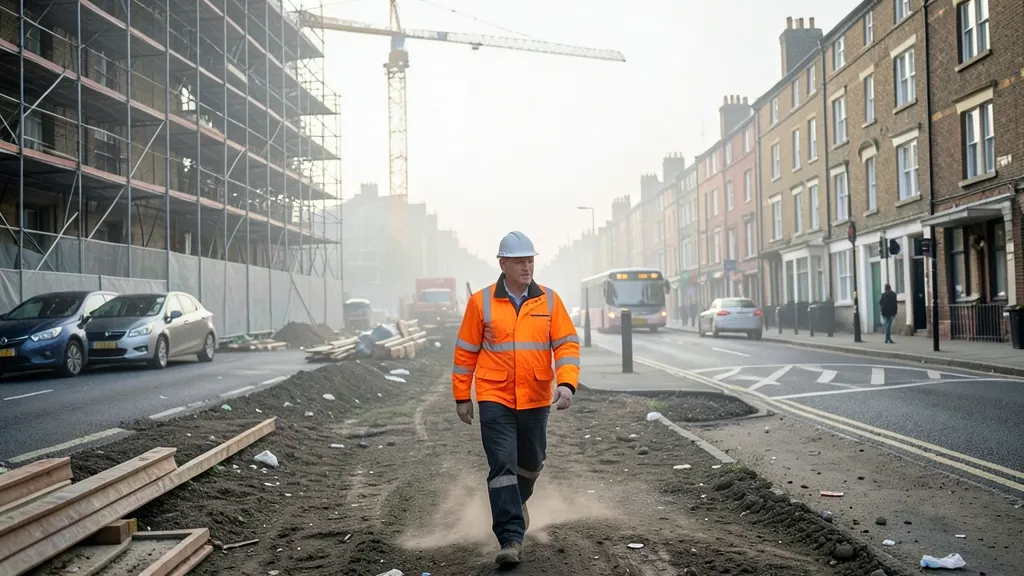
What this guide covers
Because different activities need different clothing, we have split this London hub into three themed pages.
If you work in construction, rail engineering or logistics, see Hi-vis for work and site wear in London. It explains what the law expects from employers, how the EN ISO 20471 classes work, and why rail work has its own colour rules.
If you cycle in the capital, Hi-vis for cycling and commuting in London covers jackets, lights and reflective accessories for daily riding on busy roads.
If you walk, wait at bus stops or ride a motorcycle through the winter months, Hi-vis for dark winter commutes in London looks at what to wear when the evenings close in early, including the stretch after the clocks go back.
Hi-vis advice that applies to everyone
Whatever you are doing, the same basic principles hold.
Match the garment to the situation
EN ISO 20471 has three classes. Class 1 needs a minimum of 0.14 m2 of fluorescent background material and 0.10 m2 of retroreflective material. Class 2 needs 0.50 m2 and 0.13 m2, and class 3, the highest, needs at least 0.80 m2 of fluorescent material and 0.20 m2 of retroreflective material. As a rough guide, class 2 suits many everyday work and commuting situations, while class 3 is the choice where traffic is fast or the wearer is alone on site. For paid work, the requirements can be stricter: under the Personal Protective Equipment at Work Regulations 1992, employers must provide suitable PPE to workers exposed to a risk to health or safety unless the risk is controlled by other means, and since 6 April 2022 those duties also cover limb (b) workers, with the PPE provided free of charge.
Fluorescent by day, reflective by night
Fluorescent material works in daylight and poor light because it converts ultraviolet into visible brightness. It does little in the dark. Reflective material is the opposite, doing its best work in headlights and street lamps. The Highway Code makes this distinction too. Rule 59 says light-coloured or fluorescent clothing helps other road users see a cyclist in daylight and poor light, while reflective items such as belts, arm or ankle bands increase visibility in the dark. Rule 3 adds that reflective materials such as armbands, sashes, waistcoats, jackets or footwear can be seen by drivers using headlights up to three times as far away as non-reflective materials. So a jacket with both fluorescent panels and reflective bands is the practical choice for anything that mixes day and dark.
Look after what you buy
Hi-vis only works if it is clean and intact. Grime, paint and general wear flatten both the fluorescence and the reflectivity. HSE guidance says reusable PPE must be cleaned and kept in good condition, hi-vis jackets, trousers and coveralls must be cleaned regularly, and workers must report any loss, destruction or obvious defect. The same logic applies to your own commuting gear. Wash it as the label directs, usually cool with no fabric conditioner, and replace it once the reflective strips stop catching the light.
Fit matters
A flapping jacket or a sagging hem hides the reflective bands exactly when you need them. Choose a cut that lets you move freely but sits close enough that the panels stay visible, and make sure a padded coat underneath does not swallow the whole thing.
Where to go next
For a broader look at the whole region, read Hi-vis jacket Greater London: your regional guide. To dig into specific clothing choices, see High visibility clothing workwear: choosing a hi vis jacket for site and work clothing, Hi-vis jackets for cycling: a buyer's guide for riding, and Winter hi vis jackets: a practical buyer's guide for the colder months. Rain is part of life here, so Waterproof hi vis jackets: myths and facts is worth a read too.
A quick word on the law and the code
For cyclists, Rule 60 requires a white front light and a red rear light lit at night, plus a red rear reflector. Rule 69 requires cyclists to obey all traffic signs and traffic light signals. For motorcyclists, Rule 86 recommends making yourself visible from the side as well as the front and rear, for example with fluorescent clothing or strips, and Rule 87 says reflective clothing or strips should be worn when riding in the dark. Rail workers should note that rail standard RIS-3279-TOM requires an orange colour and garments meeting at least class 2 of EN ISO 20471, according to SATRA, a UK PPE testing body.
None of this is complicated. Wear the right class for the job, keep it clean, and make sure there is something reflective on you whenever the light has gone.
London at a glance
- Nation: England
- Region: Greater London
- Population: 9122909
| Measure | Time |
|---|---|
| Sunrise on the winter solstice | 08:03 |
| Sunset on the winter solstice | 15:53 |
| Daylight on the winter solstice | 7h 50m |
| Sunset when the clocks go back (2026-10-25) | 16:46 |
| Days a year with a dark commute | 121 |
Frequently asked questions
What class of hi-vis do I need for work in London?
It depends on the risk. Class 2 of EN ISO 20471, with at least 0.50 m2 of fluorescent material, suits many work situations. Class 3, with at least 0.80 m2 of fluorescent material and 0.20 m2 of retroreflective material, is the highest class and is used where traffic is fast or the worker is exposed on their own. If you are employed, your employer must provide suitable PPE under the Personal Protective Equipment at Work Regulations 1992, free of charge.
Do I legally have to wear hi-vis when cycling in London?
No law requires a cyclist to wear hi-vis clothing. The Highway Code only advises it. Rule 59 says light-coloured or fluorescent clothing can help other road users see you in daylight and poor light, and reflective clothing or accessories can help in the dark. What is legally required at night is a lit white front light, a lit red rear light and a red rear reflector, as set out in Rule 60.
Is reflective clothing really better than bright colours at night?
Yes, in the dark. Fluorescent colours work in daylight but need light to glow. Reflective material bounces headlight straight back at drivers, and the Highway Code notes such materials can be seen up to three times as far away as non-reflective ones. For London winter commutes, where many journeys happen after sunset, reflective panels and accessories do the real work.
How dark does London get in winter?
On the winter solstice the sun rises at 08:03 and sets at 15:53, giving only 7 hours and 50 minutes of daylight. Across the year London has 121 days when sunset is before half past five in the evening or sunrise is after quarter to eight in the morning, so plenty of ordinary commutes are partly in the dark.
Do rail workers in London need a different colour of hi-vis?
Yes. SATRA, a UK PPE testing body, states that rail standard RIS-3279-TOM requires an orange colour and garments meeting at least class 2 of EN ISO 20471. If you work on or near the railway, check that your garment complies before you rely on it.