Hi-vis clothing in Glasgow
Last updated
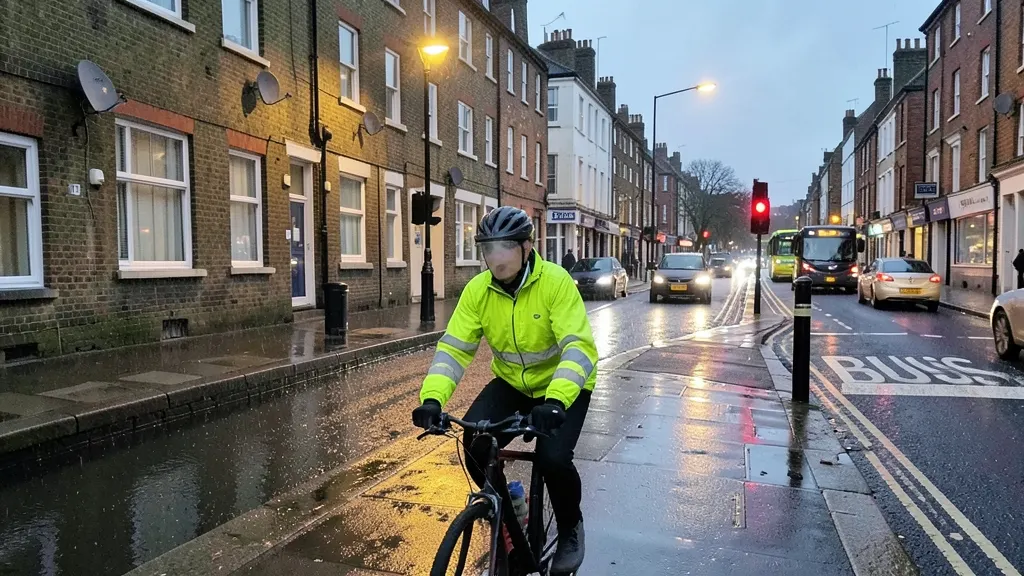
Glasgow is a city of around 654,330 people in the Glasgow City council area, and like any big Scottish city it asks a lot of anyone who moves around in it. The M8 motorway passes around the city centre and connects with the M77, M74, M73 and M80, so a single journey can easily mix busy roads, cycle paths and industrial sites. The city grew around heavy industry. Glasgow and the Clyde became the world centre of shipbuilding, and engineering and rail were also major industries. Today university education and research, finance and industry are all part of the economy.
All of that means people are out and about at all hours, and in Scotland the daylight hours do not always cooperate. On the winter solstice in Glasgow, sunrise is at 08:45 and sunset is at 15:44, giving 6h 59m of daylight. Many people travel to and from work or study entirely in the dark. A hi vis jacket is one of the simplest tools for making sure you get seen, whatever your reason for being out.
What this guide covers
We have split our Glasgow advice into three themed pages, each aimed at how people in this city actually use hi-vis.
The first is about cycling and commuting. National Cycle Route 75 runs from Edinburgh to Tarbert on the Kintyre peninsula, via Glasgow, and the Forth and Clyde Canal is 35 miles (56 km) long, running from the River Carron at Grangemouth to the River Clyde at Bowling. That gives commuters long stretches of traffic-free path, but any route into the city centre still crosses roads where drivers need to spot you quickly. Our Hi-vis for cycling and commuting in Glasgow page goes into detail.
The second is about dark winter commutes. In Glasgow there are 128 days a year when sunset comes before half past five in the evening or sunrise after quarter to eight in the morning, so a normal commute is partly in the dark. The clocks go back on 25 October 2026, when sunset in Glasgow is at 16:52, and from there the evenings close in fast. See Hi-vis for dark winter commutes in Glasgow.
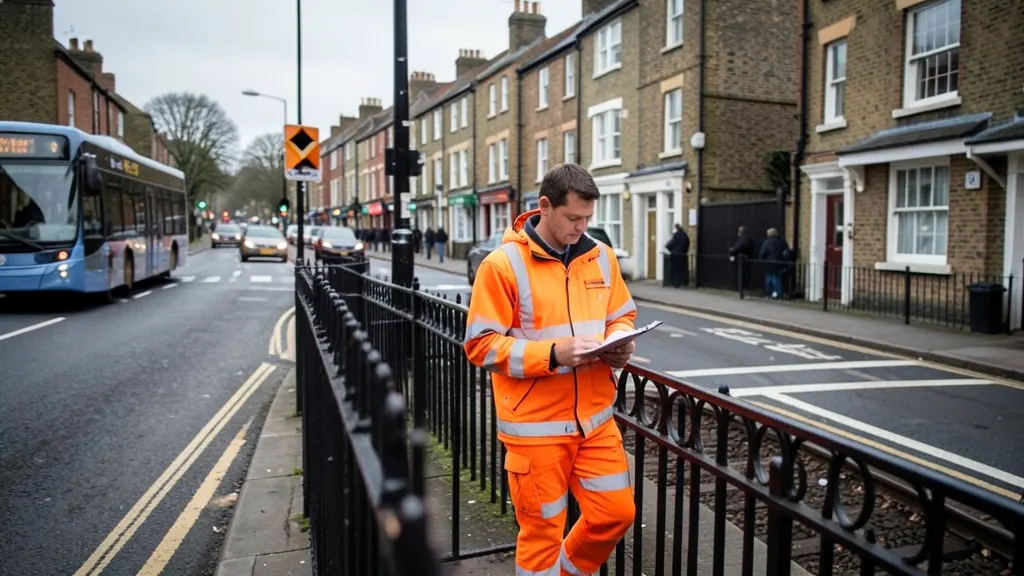
The third is about work and site wear. Shipbuilding may be a smaller part of the economy than it once was, but engineering, rail and construction still employ large numbers of people on site, and the city centre's universities bring their own facilities and maintenance work. If your employer issues or expects hi-vis, read Hi-vis for work and site wear in Glasgow.
Hi-vis guidance that applies to everyone
A few principles carry across all three themes.
Understand the classes. EN ISO 20471 has three classes. The minimum fluorescent background area is 0.14 m2 for class 1, 0.50 m2 for class 2 and 0.80 m2 for class 3. The minimum retroreflective area is 0.10, 0.13 and 0.20 m2 respectively. Class 3 is the highest class, and it is what you want on fast roads or very dark conditions. For many urban uses, class 2 is a sensible middle ground.
Know the law on workwear. Under the Personal Protective Equipment at Work Regulations 1992, employers must ensure suitable PPE is provided to workers exposed to a risk to health or safety, unless the risk is adequately controlled by other means. Since 6 April 2022 the PPE duties also cover limb (b) workers, and the employer must provide the PPE free of charge. If you work on or near the railway, rail standard RIS-3279-TOM requires an orange colour and garments that meet at least class 2 of EN ISO 20471, according to SATRA, a UK PPE testing body.
Keep it clean. Fluorescent material only works if it is actually fluorescent. HSE guidance says reusable PPE must be cleaned and kept in good condition, and that hi-vis jackets, trousers and coveralls must be cleaned regularly. Workers must report any loss, destruction or obvious defect. The same logic applies to your own jacket: a grubby hem and grey sleeve bands will not do the job.
Layer visibility with lights. Clothing is only part of the picture. The Highway Code advises, at Rule 3, that reflective materials such as armbands, sashes, waistcoats, jackets or footwear can be seen by drivers using headlights up to three times as far away as non-reflective materials. Rule 60 requires that at night a cycle must have white front and red rear lights lit, plus a red rear reflector. A jacket plus lights is far better than either on its own.
Choosing your jacket
For cyclists, Rule 59 says light-coloured or fluorescent clothing helps other road users see you in daylight and poor light, while reflective clothing or accessories such as belts, arm or ankle bands increase visibility in the dark. Our Hi-vis jackets for cycling: a buyer's guide covers the details. Glasgow's rain makes waterproofing a real consideration, and our page on Waterproof hi vis jackets: myths and facts sorts the claims from the reality.
For winter, Winter hi vis jackets: a practical buyer's guide looks at warmth, layering and reflectivity for the darkest weeks of the year. For site work, High visibility clothing workwear: choosing a hi vis jacket covers classes, standards and what to expect from an employer. If you want the wider Scottish picture, including rural roads and other cities, start with Hi-vis clothing in Scotland: where you need it.
Wherever you are heading in Glasgow, the aim is the same: be visible early enough that a driver, rider or workmate has time to react.
Glasgow at a glance
- Nation: Scotland
- Region: Scotland
- Population: 654330
| Measure | Time |
|---|---|
| Sunrise on the winter solstice | 08:45 |
| Sunset on the winter solstice | 15:44 |
| Daylight on the winter solstice | 6h 59m |
| Sunset when the clocks go back (2026-10-25) | 16:52 |
| Days a year with a dark commute | 128 |
Frequently asked questions
What class of hi vis jacket do I need in Glasgow?
It depends on where you wear it. EN ISO 20471 has three classes, with class 3 offering the largest areas of fluorescent and retroreflective material, so it suits dark conditions and faster roads. For everyday urban cycling, class 2 is often enough. If you work near the railway, rail standard RIS-3279-TOM requires orange garments meeting at least class 2.
How dark are Glasgow winters for commuting?
On the winter solstice, sunrise in Glasgow is at 08:45 and sunset at 15:44, giving 6h 59m of daylight. There are 128 days a year when sunset comes before half past five or sunrise after quarter to eight, so many commutes are partly in the dark. Reflective material matters as much as fluorescent in these conditions.
Does my employer have to provide hi-vis clothing?
Under the Personal Protective Equipment at Work Regulations 1992, employers must provide suitable PPE to workers exposed to health or safety risks unless the risk is controlled by other means. Since 6 April 2022 these duties also cover limb (b) workers, and the PPE must be provided free of charge.
Can I rely on a hi vis jacket alone when cycling at night?
No. Rule 60 requires a cycle to have a white front light and red rear light lit at night, plus a red rear reflector. Rule 59 advises fluorescent clothing for daylight and poor light and reflective clothing or accessories for the dark, and Rule 17 says wear something reflective at night. Lights and reflective gear work together.